






As artificial intelligence steadily moves from being a back-end enabler to a front-end decision-maker, the very foundations of digital marketing are undergoing a quiet but consequential shift. Discovery is no longer linear, visibility is no longer about rankings alone, and persuasion is increasingly mediated by algorithms rather than direct brand-consumer interaction. In this evolving landscape, the rules that once defined performance, content, and consumer journeys are being rewritten in real time.
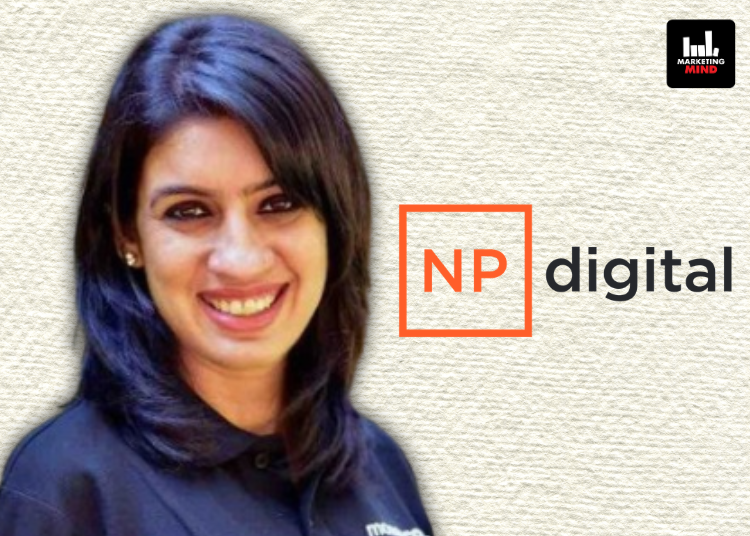
According to Rubeena Singh, Managing Director at NP Digital, this transition is not just technological, but deeply philosophical. She points to a fundamental behavioural shift, from “searching” to “asking”, where consumers are no longer just exploring options but delegating decisions to AI systems, fundamentally altering how brands need to think about visibility, authority and trust.
At the same time, as AI lowers the barrier to content creation and amplifies distribution through algorithmic systems, it is also accelerating a paradox – an abundance of content paired with a growing scarcity of trust. In such an environment, Singh emphasises that brands must move beyond chasing volume and instead invest in credibility, consistency and genuine expertise – the very signals that will determine whether they are surfaced as answers in an AI-first ecosystem.
Excerpts from the interview:
As AI starts to reshape discovery, what’s one fundamental shift in consumer behaviour that marketers are still underestimating today?
The shift from searching to asking. It sounds simple but the implications are profound. When a consumer types a query into a search engine, they are signalling intent and then making a choice from a set of results. When they ask an AI assistant a question, they are delegating a significant part of that choice. They are trusting the system to filter, synthesise and recommend on their behalf. That is a fundamentally different relationship between a consumer and information, and most marketers are still optimising for the old one.
The underestimation lies in what this means for brand positioning. In a search world, visibility was about being in the consideration set. In an AI driven world, it is about being the answer. Those require very different strategies, and the gap between brands that understand this and those that do not is going to widen considerably over the next few years.
Search is no longer just about keywords. How should brands rethink “visibility” in a world where answers are increasingly generated, not searched?
Visibility in an AI-driven world is essentially a question of authority and relevance across a much broader content ecosystem. Brands need to stop thinking about ranking for specific keywords and start thinking about the context – being genuinely, demonstrably credible in their category. That means investing in content that answers real questions comprehensively, building presence across platforms and communities that AI systems treat as reliable signals, and ensuring that the information available about a brand across the web is consistent, accurate and useful.
The deeper shift is philosophical. SEO was largely about telling search engines what you wanted to be known for. GEO, the optimisation for AI-generated responses, is about actually being known for it, through genuine expertise, credible citations and the kind of third-party validation Brands that have invested in real thought leadership over the years are finding themselves with a meaningful head start.
With AI making content creation easier, do you think we’re heading towards a surplus of content and a scarcity of trust? How should brands navigate that?
We are already getting there. The volume of content being produced has outpaced the consumer’s ability to consume it. Trust has become a scarce resource. When everything looks credible and polished, credibility itself loses its signal value. That is the paradox AI-generated content has accelerated.
The way through it is not to do more, but to invest more deliberately in what makes content trustworthy: genuine expertise, a consistent and recognisable point of view, transparency about sources and a willingness to say things that are specific and sometimes uncomfortable rather than safe and generic. Brands that use AI to produce volume without investing in the quality and authenticity that earns trust will find themselves contributing to the noise rather than cutting through it. The ones that use AI to do the grunge work while freeing up human thinking for the parts that actually require judgment will be in a much stronger position.
Performance marketing has long been driven by measurable metrics. How does that framework evolve when discovery itself becomes less linear and less trackable?
This is one of the most important questions the industry needs to sit with right now. The performance marketing model was built on attribution: the ability to draw a line between an action and an outcome. As discovery becomes more diffuse, with consumers encountering brands across AI responses, community platforms, voice interfaces and ambient digital touchpoints, that path gets harder to draw.
The evolution I think we will see, and need to see, is a more mature relationship between brand and performance investment. For a long time, the measurability of performance marketing made it easy to justify at the expense of brand building, which is harder to attribute. In a more complex world, brands that have invested in genuine awareness and authority will have a natural advantage in AI-driven recommendation environments. The frameworks need to expand to account for influence that does not always come with a trackable click attached to it.
What’s one common mistake brands are making right now when they try to integrate AI into their marketing efforts?
Using AI to do more of the same thing faster, rather than using it to do genuinely different things better. The most common version of this is deploying AI for content volume: more blog posts, more social captions, more variations of an existing ad. It reduces cost and increases output, but it does not fundamentally improve the quality of thinking or the relevance of the communication.
The more interesting application, and the one fewer brands are investing in, is using AI to improve decision-making: better audience understanding, faster synthesis of consumer signals, more intelligent allocation of media investment. That requires a different kind of organisational readiness, people who know how to ask the right questions of these systems and how to interpret what comes back. The brands that get ahead will be the ones that treat AI as a paradigm shift rather than a production tool.
As algorithms take on a bigger role in shaping what consumers see, where does brand building fit in? Does it become more important or less?
More important, significantly so. Here is the logic: when algorithms control distribution, the brands that travel furthest are those with the strongest pre-existing signals of credibility and relevance. An algorithm does not promote an unknown; it amplifies what already has momentum. That momentum comes from brand equity built over time.
There is also a trust dimension. In a media environment where consumers are increasingly aware that what they see is curated and optimised, the brands they return to and recommend are the ones they have an emotional relationship with. That relationship is built through brand, not through performance. The brands that will thrive in an algorithm-dominated landscape are the ones that understand brand and performance as two parts of the same strategy rather than competing budget line items.
Looking ahead, what will define marketing leadership in an AI-first world: technical understanding, creative thinking, or something entirely different?
Neither alone, and I think that is the honest answer. Technical understanding without the ability to translate it into human meaning produces clever solutions that nobody connects with. Creative thinking without the ability to operate within an increasingly data-driven, AI-mediated environment produces beautiful work that does not reach the right people at the right moment.
What I think will actually define the next generation of marketing leaders is something closer to judgment: the ability to know when to trust the data and when to trust your instincts, when to let the algorithm optimise and when to override it, when to invest in what is measurable and when to invest in what matters but cannot yet be measured. That quality is harder to train and harder to automate. It comes from experience, intellectual curiosity and a genuine understanding of human behaviour. Those are the leaders worth developing.
As AI begins to influence not just discovery but decision-making, how should brands rethink persuasion in a world where algorithms mediate choices?
Persuasion needs to move upstream. In a world where the algorithm is making or heavily influencing the final recommendation, the brand’s job is to have already built the authority and trust that earns that recommendation. The traditional funnel, where persuasion happened at the point of consideration or purchase, is being compressed. By the time an AI surfaces your brand to a consumer, a significant part of the persuasion has already occurred, or it has not.
This means brand storytelling, community building and genuine expertise demonstration are no longer soft investments. They are the inputs that determine whether you are in the AI’s recommendation set at all. Brands that wait to persuade at the point of transaction will find themselves competing for a smaller and smaller slice of an already-decided consumer.
We’re moving towards a zero-click ecosystem. How do brands stay relevant when consumers may never actually visit their platforms?
By ensuring that what an AI says about them is accurate, compelling and consistent with what they actually stand for. In a zero-click world, your brand is increasingly what is said about it in spaces you do not own. That is a significant shift in control and it requires a significant shift in strategy.
It puts a premium on a few things: the quality and consistency of owned content that AI systems can draw from, active presence in the communities and platforms that carry weight as credible sources, and the kind of genuine customer satisfaction that generates authentic third-party advocacy. A brand that is loved by its customers will be talked about in ways that AI systems pick up on. A brand that is merely functional will be described functionally, which is a much thinner basis for recommendation. In a zero-click world, reputation is not a soft asset, it is a distribution mechanism.
What’s one belief about digital marketing that you think will become obsolete in the next few years because of AI?
That more data automatically means better decisions. For a long time, the ability to collect and process large volumes of consumer data was a genuine competitive advantage. The more you knew, the better you could target, personalise and optimise. AI has democratised access to data processing at scale, which means the advantage is no longer in having data but in knowing what questions to ask of it.
The brands and agencies that are still competing on data volume alone will find that advantage eroding quickly. What replaces it is interpretive intelligence: the ability to extract the right insight from the right data at the right moment and translate it into a decision that actually improves the consumer experience. That is a human skill augmented by AI, not a technological capability that replaces human judgment.
Digital marketing has matured over the years. Are we now in a phase of optimisation rather than disruption, and what does that mean for innovation?
Parts of digital marketing are absolutely in an optimisation phase, paid search, programmatic buying, email automation: these are mature disciplines with well-established playbooks. But AI is introducing a genuine layer of disruption underneath the optimisation, changing the infrastructure of discovery, content and decision-making in ways that will require the playbooks to be rewritten.
I think the more interesting question for marketers is which parts of their current practice are in genuine need of rethinking versus which parts just need to be done better. The risk of calling everything optimisation is that you miss the disruption happening underneath. The risk of treating everything as disruption is that you constantly rebuild what was already working. The judgment to distinguish between the two is what separates good marketing leadership from reactive marketing leadership.
With brands present across multiple digital touchpoints, what does “consistency” really mean today: same message everywhere or context-led storytelling across platforms?
Context-led storytelling, without question, but anchored to a consistent truth. The mistake many brands make is conflating message uniformity with brand consistency. Repeating the same copy across every platform is not consistency; it is laziness. And consumers, who move fluidly between platforms with very different native languages and behaviours, recognise it immediately.
Real consistency is about having a clear, unwavering sense of what you stand for and then expressing that in ways that are native to each context. What a brand says in a fifteen-second reel, a long-form article, a community forum and a conversational AI response should feel like it comes from the same place, even if it sounds completely different. That requires a level of brand clarity that many organisations underinvest in, but it is precisely what holds together in a fragmented, multi-platform, increasingly AI-mediated media environment.