






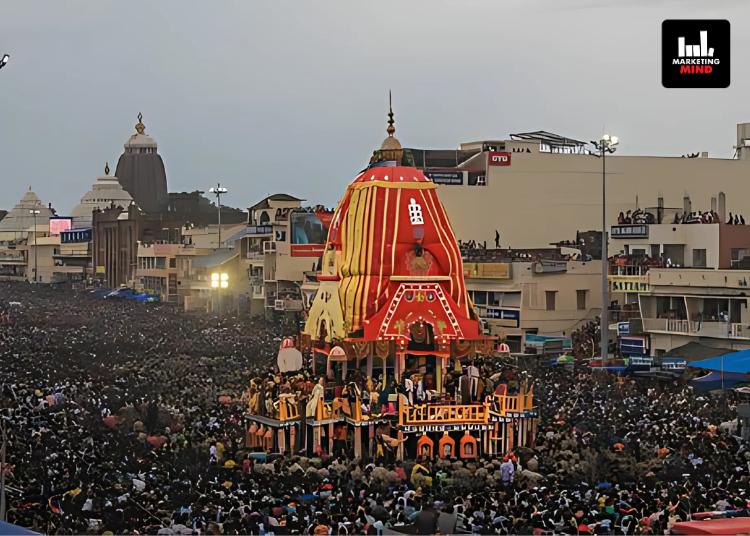
Rath Yatra 2025 has emerged as a pivotal moment in India’s marketing calendar, transforming from a traditional religious procession into a dynamic platform for brands to engage with millions of devotees through service-oriented and culturally resonant initiatives. This year witnessed a significant shift towards experiential marketing, with brands prioritising empathy, utility, and regional authenticity over conventional advertising methods.
Industry players have observed a substantial increase in brand investments during the festival, with overall spending rising from Rs 30 crore in 2024 to nearly Rs 50 crore in 2025. Out-of-home (OOH) advertising demand surged by 30-40%, and ad rates experienced a 20-25% hike, reflecting the growing recognition of Rath Yatra as a prime opportunity for immersive brand storytelling.
Brands across various sectors, including FMCG, edtech, and healthcare, have embraced innovative approaches such as AI-powered campaigns, geofenced storytelling zones, and on-ground amenities like hydration booths and cooling zones to enhance the pilgrim experience. These initiatives not only provided practical support to devotees but also fostered deeper emotional connections.
This shift was visible across brand efforts on ground. Coca-Cola deployed hydration carts along the route and launched a clean-up initiative called ‘Maidan Saaf’, installing over 200 PET collection bins and mobilising 180 volunteers. Sunfeast Marie Light distributed sandalwood-and-menthol cooling caps, specially designed to provide relief under the harsh sun. On the other hand, Omnigel took it a step further with its Rahat Seva Kendra near the beach, offering massages for sore feet, backs, and shoulders. These weren’t just clever activations or visibility grabs- they were literal relief in moments of need.
“A nine-day procession can power a quarter’s growth when we treat devotees as discerning audiences,” said Yuvrraj Agarwaal, Chief Strategy Officer at Laqshya Media Group.

“OOH demand around Rath Yatra jumped 30–40% this year, with total spends projected to hit Rs 50 crore,” he said. “Static hoardings are passe now it’s about hydration carts, mist tunnels, rest zones and QR-triggered storytelling.”
Laqshya’s DOOH formats along the Grand Route traded at ~20% above 2024 card rates, driven by bundled service offerings and crowd-flow data.“At Rath Yatra, a Rs 5-lakh kiosk can stride beside a Rs 12-crore title sponsor impact is democratic, investment elastic,” Agarwaal said.
He pointed to formats like Coca-Cola’s mist-fan rest zones and ITC’s AI darshan booth as proof that “the sweetest OOH interventions feel more like a blessing than a billboard.” With Rath Yatra driving a 20–30% YoY uplift in Eastern OOH and feeding into India’s Rs 4,650 crore religious-event media mix, its significance is hard to miss.
“Festivals are the spice in our revenue. Curry is light in weight but rich in flavour and margin.” He added
Brands like Polycab created mobile charging stations and cooling zones for public relief, upgraded police booths for smoother security access, and installed beachfront watchtowers to aid coast guards. Even POGO joined in capturing kids’ “Jai Jagannath” chants and turning them into a vibrant AV montage.
Similarly, Haresh Nayak, Founder and CEO at Connect Network, said, “Success depends on aligning with the emotion of the moment.”

“Brands allocate nearly 10-12% of their rural quarterly budgets solely for Rath Yatra. This is no longer a CSR checkbox. It’s a platform where emotion, location, and service intersect,” he said.
Nayak’s team enabled QR-aided helpdesks, e-mobility hubs, and inclusive zones like hearing-aid counters and medical tents. “We had campaigns go viral without a single rupee spent on digital because they responded to real pilgrim needs,” Nayak mentioned.
Sensor-driven cooling mists activated by chant-recognition, footfall-based sampling, and AI-powered crowd flow analysis added layers of experience and precision.
“The best-performing brands weren’t the loudest – they were the most useful. We’re not buying slots anymore. We’re buying relevance,” he added.
Aashirvaad’s ‘Bhakti Pathe’ activation used holograms, prasad-making games, and photo filters to modernise rituals without diluting them. Pulse Candy, meanwhile, created an AI-led retelling of the festival’s mythological origin, accompanied by social trivia to engage digital-first audiences.
Rajesh Radhakrishnan, Co-Founder and CMO at Vritti Mindwave Media, said, “This isn’t performance marketing, it’s participation marketing.”

With Rath Yatra spending rising from Rs 30 crore in 2024 to nearly Rs 50 crore this year, Radhakrishnan believes marketers are redefining ROI.
“Impressions and click-throughs don’t apply here. Pilgrims remember who gave them shade, water, or rest. Vritti’s activations included VR-enabled darshan zones, app-integrated spiritual content, and audio-equipped rest stops tied to the chariot’s position,” he mentioned.
“The ad rates rose 25%, with experiential formats dominating. We had 14 audio zones along the route playing spiritual content relevant to that spot. People engaged because it enriched the experience, not interrupted it. Interestingly, regional brands outperformed national players in cultural fluency. They understood rituals and visuals better. That made their activities feel native, not forced. A post-yatra brand recall survey showed over 70% of pilgrims could name the service provider they interacted with. That’s not brand presence – that’s brand memory,” Radhakrishnan noted.
It’s no longer an afterthought. It’s a media property with built-in emotion. Rath Yatra today commands both spiritual reverence and strategic value; brands are moving from pure visibility to acts of service. Whether it’s LED vans with bhajan visuals, weather kiosks for farmers, or devotional giveaways in Odia, the shift is clear: utility, empathy, and contextuality are now the pillars of effective rural OOH,” said Sarabjit Singh Puri, Chairman, Fateh Rural Limited.
According to Sarabjit Singh Puri, Chairman at Fateh Rural, 12–15% of regional marketing budgets for Q2 were redirected to Rath Yatra.

“The surprise? Edtech brands. They hosted devotional quizzes and lore-based games that really clicked with younger pilgrims. Puri oversaw activations for FMCG, agri-input, insurance, and devotional app clients. Footwear stalls for barefoot devotees, sanitation cubicles with LED lighting, and smart carpets that pulsed with chants weren’t gimmicks. They were moments of meaning,” he said.
Furthermore, he went on to say that one standout campaign launched a women’s health counter during chariot halts. The response was overwhelming. It wasn’t just about hygiene, it was about dignity in a sacred space.
“Puri believes pilgrimage marketing now requires a blend of humility, tech, and cultural fluency. If you show up to serve, you earn goodwill. If you show up to sell, you get ignored,” Singh noted.
Rath Yatra 2025 signals a new era in faith-driven marketing. Unlike spectacle-based festivals, this platform rewards empathy, regional nuance, and problem-solving over celebrity-led blitzes.
With pilgrim footfalls rivaling the Kumbh Mela, and spending of crores of rupees, Rath Yatra is no longer a religious event with branding on the sidelines; it’s a mainstream media moment with built-in emotion, reach, and memorability.