







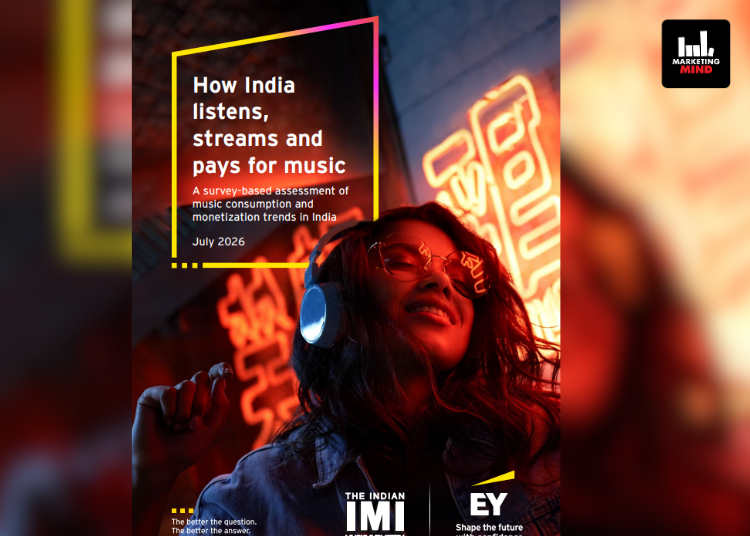
Despite near-universal music consumption among smartphone users, paid music streaming remains significantly underpenetrated in India, according to a joint report by EY and the Indian Music Industry (IMI).
The report, How India Listens, Streams and Pays for Music, found that 96% of smartphone users listen to music, with 80% spending more than an hour each day doing so. However, only 38% of respondents said they had ever paid for a music streaming service, compared with 86% who had paid for video streaming services.
India had an estimated 14 million paid music subscriptions as of December 2025. The report projects this figure could grow to 28-30 million by 2028 if current monetisation efforts, product innovation and partnerships continue.
The study found that digital streaming platforms (DSPs) are the preferred destination for music consumption, with 60% of respondents using them, while YouTube was used by 32%. However, YouTube remains the largest platform for music discovery, driven by reels and short-form video consumption.
Among users who pay for music, ad-free listening, the ability to play songs in any order and high audio quality emerged as the biggest reasons for subscribing. Conversely, non-paying users cited YouTube’s free availability, lack of meaningful differences between free and paid services, and pricing as the primary barriers to subscribing.
The report also found that 61% of respondents would consider paying for music if free options were removed and pricing remained reasonable. However, 39% said they would never pay, with 70% of them indicating they would switch to YouTube and 28% saying they would turn to pirated sources instead.
The report found that YouTube remains the most-used platform for music consumption among surveyed smartphone users, with 32% of respondents using the platform to listen to music. It was closely followed by Spotify (31%), while Amazon Music (17%), JioSaavn (16%), Gaana (11%), and Apple Music (8%) rounded out the list of the most-used music streaming services.
Based on the findings, EY and IMI recommend strengthening the differentiation between free and paid services, expanding bundling partnerships, integrating music with creator ecosystems and live experiences, and positioning music as a premium digital product rather than a free utility.