


The marketing industry has never suffered from a shortage of trends. Every few years, a new platform, technology or buzzword has promised to rewrite the rules of brand building. Yet the brands that have consistently stayed relevant have rarely been the ones chasing every new wave. They have been the ones asking a far simpler question: What does the consumer actually need?
That question has perhaps become even more critical today, as artificial intelligence has transformed marketing operations, creators have become influential media channels and digital ecosystems have fragmented consumer attention like never before. In such a landscape, the challenge has no longer been finding new ways to market, it has been knowing which ones genuinely deserve a brand’s attention.
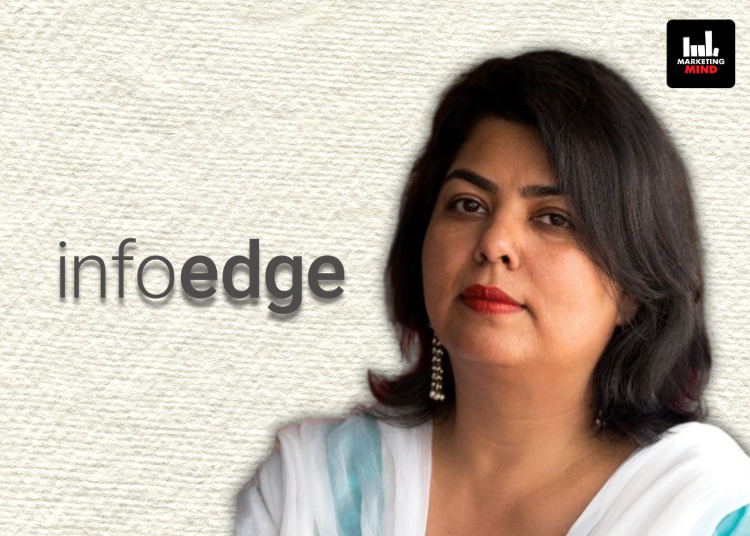
Sumeet Singh, Group Chief Marketing Officer, Info Edge India, has argued that the answer has always begun with consumer understanding. Speaking to Marketing Mind, Singh has reflected on why brands have never been built by advertising alone, how AI has empowered marketers to scale relevance instead of merely reducing costs, and why modern marketing leaders have increasingly needed to think like product builders rather than communication specialists.
For an organisation like Info Edge, where brands operate across jobs, real estate, matrimony and education, marketing has never been about replicating success across categories. Instead, Singh explained that every brand has been built around its own audience, with independent teams and distinct strategies.
“I personally strongly believe in consumer insights and customer insights. Our target groups, customers and consumers are different in each case. Each of these brands has an individual marketing team, and we keep the consumer at the centre of everything we are planning.”
Rather than following platform trends blindly, Singh stressed that every marketing decision has begun with one simple question: Is the audience actually there?
“We will not do something simply because everybody else is doing it. It might be great to be on Instagram for two brands, but another brand might not belong there. For parents, I might still choose Facebook. For Shiksha, I might even go to Snapchat. Because we keep the consumer at the centre, our marketing strategies are made around the target audience.”
That philosophy, she said, has also shaped how Info Edge has embraced the creator economy. “The influence that creators are having today is fascinating. There are creators for every topic, every age group, every language and every part of this country. Whether it is rural, semi-urban or urban, creators have emerged everywhere. If you’re not utilising that content ecosystem, you’re missing the opportunity to create meaningful influence.”
She also pointed to the rise of micro-dramas and short-form storytelling as another behavioural shift that marketers can no longer ignore, signalling that entertainment itself has continued to evolve alongside consumer attention spans.
AI Has Not Replaced Marketing, It Has Multiplied Its Possibilities
While AI has dominated boardroom conversations, Singh argued that its biggest contribution has never simply been cost reduction. Instead, it has fundamentally expanded the scale at which personalised marketing can operate.
“The biggest takeaway is not that AI is cutting costs. It is enabling hyper-personalisation and enabling scale. That is the real takeaway.”
She explained that marketing has moved beyond broad consumer cohorts towards individual-level experiences. “Earlier, I would have put people into similar cohorts. Today I can hyper-personalise separately for every individual. That enables much better user journeys.”
The impact has extended far beyond audience targeting. “Today we are producing around one and a half lakh videos every month across our brands. We couldn’t have imagined this kind of scale before. We’re doing it in-house, powered through Gen AI.”
The technology, according to Singh, has simultaneously improved efficiency while significantly reducing production costs. “It has brought production costs down dramatically. It has improved efficiency in both time and cost, while also enabling us to create volumes that simply weren’t possible earlier.”
However, she dismissed the narrative that AI has primarily been about replacing people. “Every new technology creates new kinds of jobs. If someone today knows how to use Gen AI tools, that person immediately becomes more valuable. I actually believe the greater risk is not learning these tools.”
Brands Have Never Been Built by Advertising Alone
Perhaps Singh’s strongest argument has challenged one of marketing’s oldest assumptions, that advertising sits at the centre of brand building.
Instead, she insisted that product experience has always been the real brand architect. “A brand is not built by advertising. Advertising accelerates it. A brand is built by the quality of the product and the experience you deliver.”
She explained that even the most successful campaign cannot compensate for a disappointing product. “I can build a brilliant ad. It will bring more people to experience the product. But if the product doesn’t deliver, the brand doesn’t get built.”
That belief has naturally changed how she has viewed the role of marketers. “Marketing leaders should have ownership of the product as well. If you’re only thinking of yourself as an advertising leader or a brand custodian, then I’m worried. Every consumer insight is ultimately an insight about the product or the experience.”
For Singh, the traditional divide between marketing, product and technology has increasingly become irrelevant. “The lines are emerging because tools are helping everyone contribute across functions. Marketing, product and technology have all been working together.”
Performance Marketing Has Never Been the Finish Line
As digital businesses continue to prioritise measurable growth, Singh maintained that acquisition and retention have never been competing priorities. “It is never an either-or strategy. We must always bring in enough new users while simultaneously having a retention strategy. If you have a leaking bucket, you’ll keep acquiring users forever.”
She extended the same thinking to startups that prioritise performance marketing over brand building. “A startup should first invest in building a great product and experience before putting money into advertising.”
While performance marketing has remained essential, Singh argued that visibility without substance has rarely created enduring brands. “Brand is built by product, experience and marketing. Marketing simply accelerates that journey.”
Throughout the conversation, Singh has returned to one consistent idea: great marketing has never begun with campaigns, platforms or technology. It has always begun with understanding people. Everything else, including AI, creators, performance marketing and advertising, has merely become a means of delivering that understanding at greater scale.