






Media planning and brand building are undergoing a fundamental shift as companies move beyond traditional metrics such as reach and impressions to focus on consumer perception, behavioural impact and long-term brand affinity. As digital ecosystems evolve and competition intensifies, brands are increasingly balancing performance-driven marketing with emotional recall, customer experience and platform-led engagement strategies.
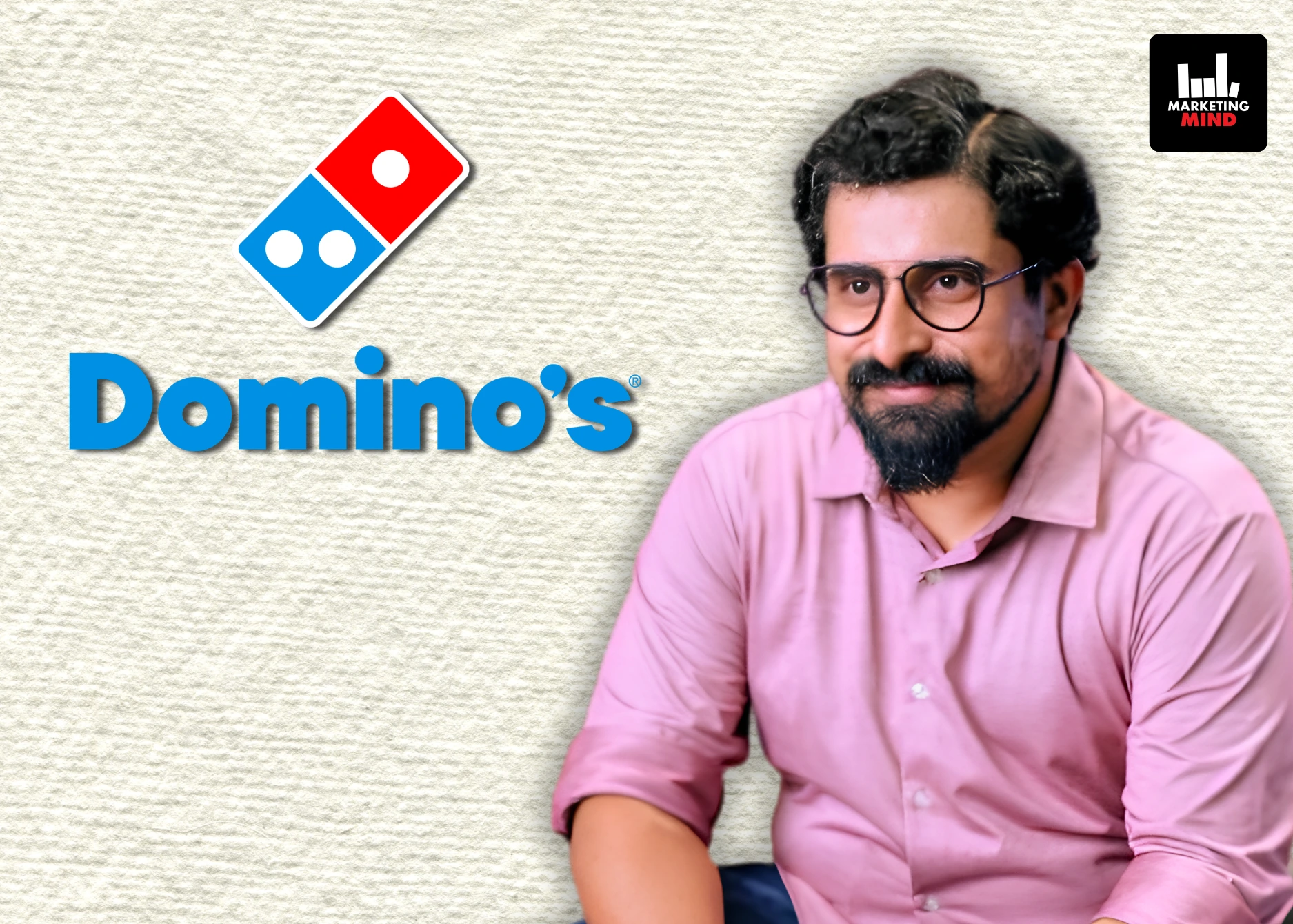
On the sidelines of the MMA Impact India 2026, Sajit Gopal, Media Head at Domino’s, sat down with Marketing Mind for a candid one-on-one conversation about what really goes into media strategy, moving beyond reach and frequency to the harder, messier work of measuring real impact.
From Agency to Brand: The 80/20 Reality
Having worked on both the agency and brand sides, Gopal has learned where theories break down. “On the agency side, it’s mostly about driving reach, frequency, and visibility,” he said. “But once you move to the brand side, only about 20% of our time goes into deciding which media to use. The remaining 80% is spent on understanding how media affects business perception and consumer mindset. That’s the practical reality,” Gopal noted.
He admitted that the role never really leaves you. “The downside is that you can never truly switch off. You’re always thinking about what’s happening. You become more project-driven and much more data-oriented,” he recalled.
Data, he noted, can be deceptive. “Over the last five years, the easiest metrics to measure have become the most popular. But they don’t tell you much about timing or context. What cannot be measured is just as important,” said Gopal.
He gave an example, where he explained, “I can reach 100 million people in 100 million different ways. But which of those ways is the most efficient? That’s the real question. Right now, we’re looking at impact and mindset, which are far harder to measure. That’s both a growing challenge and a learning opportunity.”
Convenience and Indulgence: Walking a Tightrope
Domino’s has long balanced two promises: speed and a sense of treat. According to Gopal, you cannot lean too heavily on either.
“You can never focus on just one parameter,” he said. “Media is multi-faceted. Growth comes from stores, from CRM, from WhatsApp, from mass media, from TV. It’s always a struggle to optimise what works and what doesn’t.”
He stressed that Domino’s brand value is built on many layers. “It’s not one single element. It’s a combination of everything that delivers on the brand promise. Indulgence is a big part, but it’s not the only part. Indulgence cannot come at the cost of convenience, and convenience cannot come at an unreasonable price.”
He added that even the products must keep evolving. “There’s a set of products that has to be re-engineered again and again. What works today may not work tomorrow.”
Aggregators vs. Owning the Delivery
When asked about platforms like Swiggy and Zomato, who are now running their own cloud kitchens, Gopal was clear-eyed but not defensive.
“Believe it or not, Domino’s was among the first to have a dedicated delivery network,” he said. “We were in this business long before it became a trend. Ten years ago, when you picked up the phone to order food, we were already doing 30-minute delivery before that was even a recognised concept.”
He acknowledged that aggregators have expanded the market. “With platforms like Swiggy and Zomato, ordering food has become a habit for almost everyone. Frequency has gone up significantly,” he observed.
But he pointed to a key advantage, wherein he revealed, “We own our delivery setup. That gives us better control over quality and hygiene. That works in our favour. Our app also gives us strong first-party data.”
Still, he said, aggregators cannot be ignored. “They are big platforms. We can’t say no to them. But we have to find a balance. Even today, most of our business doesn’t come from them. And even when we work with these platforms, we still use our own delivery partners. Because it’s not just about making pizzas, it’s about getting them to the customer in the right way,” Gopal said.
More Than Pizza: The Power of a Red Bike
For Gopal, Domino’s is not just food. It’s a collection of memories and visuals. “If you look at Domino’s, the pizza itself is only part of the brand,” he said. “The memory associated with it is equally important. Take our delivery bikes, for example. That’s a very recognisable asset. People remember the colour. It’s a fond memory that keeps coming back.
He called that a lasting strength. “That has always been a unique selling point, and it always will be,” he emphasised. But he ended with an honest admission about the future, wherein he quoted, “With the environment changing every day, you never know what’s coming next. It’s an ongoing process.”