





If there’s one industry that refuses to stand still, it’s the media. Platforms rise and fall, formats evolve, consumer attention fragments, and every few years technology rewrites the rules again.
But in the middle of this constant churn lies a fascinating vantage point, the one from where you don’t just observe the shifts but actively shape how brands respond to them.
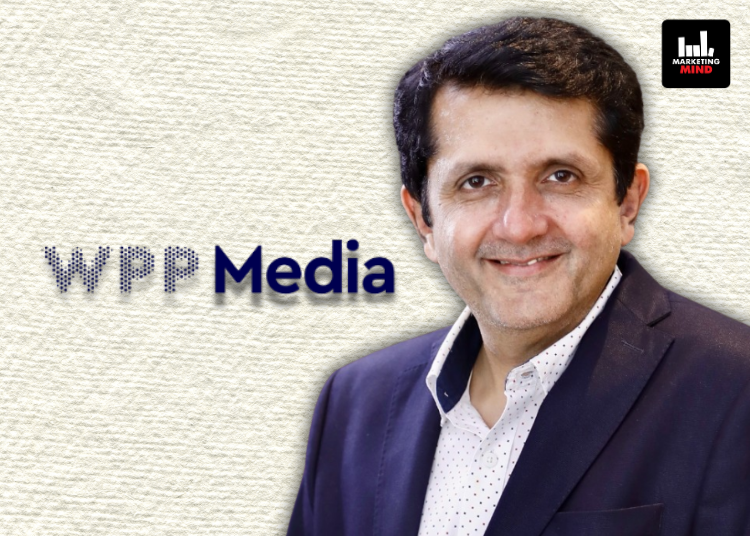
For Amin Lakhani, President – Client Solutions, WPP Media South Asia, this complexity sits at the centre of his new mandate. Having transitioned from leading an agency like Mindshare to now driving client solutions across the broader WPP Media ecosystem, his role has expanded from managing agency operations to architecting integrated solutions for brands navigating a rapidly evolving media environment.
But while the scale of responsibility has grown, the philosophy guiding it remains simple.
“The first thing is that we have evolved as a company,” he said. “We are bringing a lot more things together right now to unlock and make room for us to be able to invest in the right direction to make us future ready.”
At the heart of this shift lies a renewed focus on strategic partnerships with clients.
“What I continue to enjoy in the new role is thinking about the client first,” he said. “Client at the heart of everything and really partnering and elevating our client relationship to a strategic level.”
For Lakhani, that means ensuring agencies are present where the most important decisions are made.
“We want to have a seat at the table where decisions are getting made, where strategies are getting done,” he said. “And then work backwards as to how we rally with our teams to bring that to life.”
Making sense of a fragmented media ecosystem through AI
The modern media ecosystem is more fragmented than ever before. Consumers today spend time across multiple platforms, formats and devices, leaving behind enormous volumes of data that can either overwhelm marketers or empower them.
This is where AI-led systems such as WPP Open are playing a critical role. “WPP Open is actually an operating system that we are bringing to life which will really unlock the value of what AI can do for us as well as our clients,” Lakhani said. According to him, the growing complexity of media behaviour has made machine-led intelligence essential. “In an increasingly complex and fragmented media ecosystem where consumers are spending time across multiple touchpoints, leaving data footprints and consuming content in different formats, it was time that we required a machine to really make sense of this entire madness,” he said.
The platform has also streamlined the journey from planning to execution and measurement. “It helps simplify the entire act of starting from the brief to deployment in media to measuring what has worked and what has not worked and building this loop back into an AI-powered ecosystem,” he said.
At the same time, the system has been designed to ensure that each client receives a tailored solution. “We are creating separate instances for separate clients and these are completely firewalled,” he said. “The data continues to remain in the instance of the client and the planning and deployment frameworks are built around the way the client works.”
This means that strategies remain highly customised. “It will be very different for a CPG client versus an auto client versus a BFSI client,” he said.
Why brands need unique growth playbooks rather than cookie-cutter strategies
Despite the increasing sophistication of marketing technology, Lakhani believes that there can never be a universal formula for brand growth. “I wish there was a one-size-fits-all or a cookie-cutter approach,” he said. “But that would be simplifying it too much.” The reason lies in the unique relationships brands build with their consumers.
“Each category is different, each brand is different,” he said. “The consumer’s perception, the memory structures that the brands are building and the relationship that each consumer has with the brand is very unique.” For agencies and marketers, this means investing time in understanding the brand’s world within the consumer’s mind. “What we are trying to do is identify and decode what the brand world looks like within the larger consumer ecosystem,” he said.
India’s fast-growing media landscape is creating unprecedented opportunity
If there is one market where these shifts are unfolding at remarkable speed, it is India. “Media and marketing solutions as a subject itself is very interesting,” Lakhani said. Part of the excitement comes from observing how consumer behaviour continues to evolve.
“We are at a vantage point from where we are seeing how consumers are evolving in consuming media,” he said. “How media has become fragmented and how the new generation is consuming content.” At the same time, India’s growth trajectory has amplified these opportunities. “It’s a very exciting time to be in India,” he said. “India happens to be one of the fastest-growing markets in the world.”
According to him, the country is expected to significantly outperform global averages. “We are anticipating close to double-digit growth,” he said. “India will grow at almost two times the global average.”
For professionals in media and marketing, he believes the momentum is hard to ignore. “There has never been a dull day in the media,” he said.
Why AI adoption and consumer trust will define the next phase of marketing
While AI continues to dominate conversations across industries, Lakhani believes the real push toward adoption is already being driven by consumers themselves. “Consumers have already moved forward with AI,” he said.
He pointed to the rapid shift in search behaviour as one example. “We have seen search behaviour changing from keywords to asking questions and interacting with technology in a way that we didn’t imagine even a year ago,” he said.
As a result, businesses cannot afford to delay adoption. “How will brands stay behind? How will businesses stay behind?” he said. “They are becoming sharper and more intelligent.” In fact, he believes ignoring AI would mean missing clear growth opportunities.
“There isn’t really a choice of not going there,” he said. “Not doing anything about it is just leaving money on the table.”
At the same time, another powerful force is shaping the future of marketing, trust. “I’m very excited about data-driven marketing and intelligence-led growth,” he said. “But I’m also seeing that trust is the new algorithm.”
For brands, that means rethinking how data is collected and used. “What we are trying to help clients do is create privacy by design and not default,” he said. The idea is to use data responsibly while protecting consumer experience. “We want to take help from data availability rather than be invasive about it and destroy the consumer experience that the brand should really be creating,” he said.
Ultimately, Lakhani believes the brands that win will be the ones that balance technology with trust and long-term brand building. “Clients don’t want to look at it as a segregation between branding and performance,” he said. “They have a growth budget and a growth ambition.”
The brands that invest across the funnel, he believes, will outperform the rest. “In a way we have moved into an ‘and’ scenario,” he said. “It is not performance or branding. It is performance and branding.”
And for agencies navigating this new era, the biggest risk lies not in technology but in complacency. “The entire resistance to evolve and change, to unlearn and relearn,” he said.
“If we are averse to these principles, then no marks for guessing, we will outrun ourselves and become outdated,” he said. “And in a fast-moving industry like ours, that’s the quickest way to become dinosaurs.”
But for those willing to stay curious and hungry, the future of media remains wide open.