



Every once in a while, media and technology have not merely evolved, they have quietly renegotiated the contract between culture and participation. The present moment has felt eerily similar. The lines between audience, artist, and ecosystem architect have blurred. Storytelling has stopped being a broadcast. It has started becoming a dialogue, a collaboration, a living organism that has responded to those who have engaged with it.
The shift has not been about replacing human creativity with artificial intelligence. It has instead been about redistributing creative power, allowing culture to be built not just by studios and stars, but by communities, fandoms, and individuals who have carried stories in memory long before they have carried them in software.
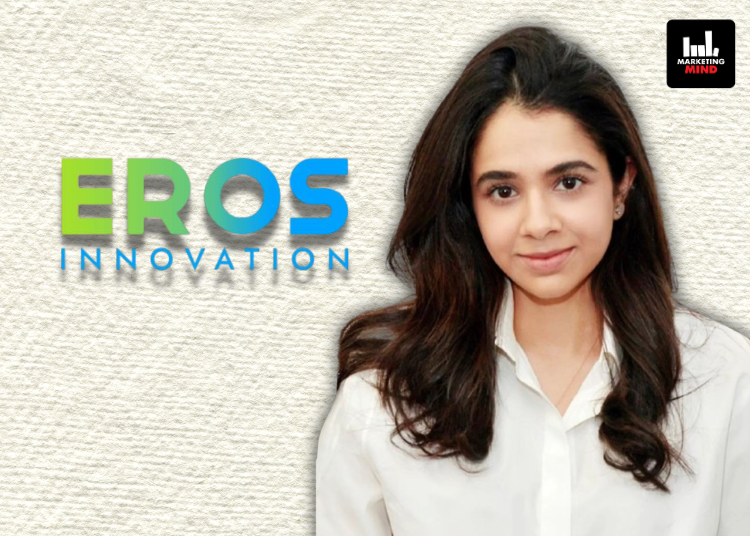
In this moment of transition, Ridhima Lulla, Co-Founder and Co-President of Eros Innovation, has framed the conversation not as technology first, but as culture first, where AI has been positioned as a tool of amplification, not authorship.
The Audience Has Become the Architect
“For 50 years, people watched Eros stories. Now we’re inviting them inside,” she said, explaining how the platform shift has been conceptualised not as a product pivot but as a cultural invitation.
“Eros Universe turns viewers into creators, not through complicated technology, but by giving them real creative control,” she added, emphasising that accessibility has remained the cornerstone of adoption.
She said the rollout strategy has been deliberately community-first. “We’re opening the platform via a curated waitlist to creators first, people who want to build. It’s intentional. It’s community-led.”
“Our focus is simple, access to powerful but intuitive AI tools, the ability to remix, reimagine and create, and attribution and monetisation so creativity is respected and rewarded,” she said, reinforcing that ownership has been designed into the ecosystem.
“For decades, you watched the stars and creators. Now you become one. Ab Har Indian Banega Star,” she added, positioning the shift as emotional as much as technological.
The transition has effectively redefined entertainment participation, not as passive engagement, but as cultural authorship.
Cultural AI Has Learned Emotion, Not Just Language
“Most global AI models understand English prompts. Ours will understand emotion, in our regional languages and more importantly, the cultural nuance behind those words,” she said, underscoring the philosophical difference in model training.
“When we talk about Sovereign Cultural AI, our models are being trained on licensed Indian storytelling, decades of films, music, scripts, character archetypes, ragas, rasas,” she added, explaining the depth-first approach.
She said the objective has been contextual intelligence. “So the system understands family honour. Festival emotion. Diaspora nostalgia. Mythological symbolism. The layered way we express love, duty, rebellion and faith.”
“In a Western-dominated AI landscape, that cultural intelligence becomes our advantage,” she added, framing culture itself as competitive infrastructure.
This has marked a decisive movement from translation-based AI to interpretation-based AI, where technology has begun recognising emotional grammar.
Marketing Has Become Living, Participatory IP
“Globally, we are seeing a shift in marketing from campaign-based to creator-based,” she said, pointing to structural shifts in brand storytelling.
“Instead of a four-week promotion, brands can activate living, interactive IP inside the app,” she added, outlining how engagement has moved from time-bound to continuous.
“A legendary character doesn’t just appear in an ad, they respond in real time. They personalise messaging. They show up inside fan-created scenes. They adapt across languages instantly,” she said, describing the new mechanics of interaction.
“That changes everything. Digital IP becomes programmable and participatory,” she added.
She was clear about ethical guardrails. “This isn’t replication. Every digital twin operates ethically within licensed character rights, legal frameworks and estate approvals. Respect for legacy is non-negotiable.”
“Through our GenAI ecosystem, we’ve built an Ethical AI Activation Framework trained only on licensed data,” she said.
“It ensures licensed training data, transparent usage, and clear monetisation and rights structures,” she added.
“In a world full of deepfakes and synthetic noise, the first question every global partner asks is: ‘Is this safe?’” she said. “Scale without trust collapses. Trust with scale becomes infrastructure,” she added. The positioning has made ethics not compliance, but brand architecture.
The Future Has Balanced Personal Intimacy With Shared Cultural Moments
“Personal feeds create intimacy. Big cinematic moments create energy and awareness. I don’t see them as opposites at all,” she said, reframing the personalisation debate. “Inside the app, AI gives you a deeply personalised experience, your language, your nostalgia, your favourite genres, even the kind of emotion you lean towards,” she added.
“But culture isn’t created in isolation. You still need premieres. Interactive watch parties. Shared spikes where everyone is watching, creating and reacting at the same time,” she said.
“So for me, it’s simple, every day is personal. But every so often, we come together,” she added.
On legacy content, she said, “Our library isn’t nostalgia sitting on a shelf. It’s living cultural influence.”
“It helps us introduce classics to younger generations in formats they actually engage with, shorter, interactive, AI-enhanced,” she added. “The films become foundations, not just finished products. Cinema stops being static,” she said.
On creativity’s future, she said, “Creativity will always be driven by emotion.” “The one skill AI can’t replace is emotional truth,” she added.
“In 2026 and beyond, the most valuable creators won’t be the ones who generate the most content. They’ll be the ones who feel deeply, observe honestly and translate that into story,” she said. “The most valuable skill won’t be prompt-writing. It will be cultural intuition, the ability to feel what resonates before the data tells you,” she added.
Looking ahead, she summarised the roadmap simply. “2025 has been about building, infrastructure, deploying tools, laying the foundation properly,” she said. “2026 is about convergence. You’ll start seeing projects coming to life very soon. Watch this space,” she added.