







There’s something oddly comforting about watching a photo slowly appear. For a few seconds, everyone pauses, no phones, no distractions, just waiting for a moment to take shape. That small ritual is what Fujifilm instax has quietly brought back into everyday life.
In India, that instinct has shaped how the brand shows up in culture, choosing moments and communities where expression comes first and branding follows.
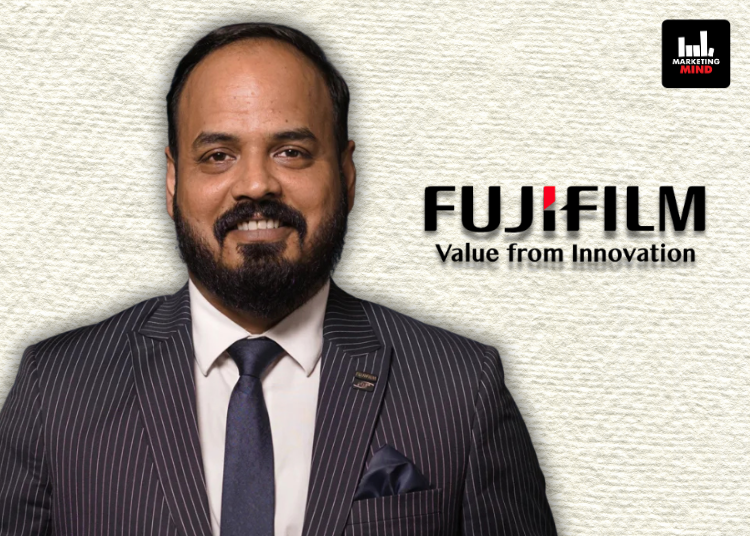
Fujifilm instax has redefined cultural marketing in India as Arun Babu, Associate Director & Head of Electronic Imaging, instax and Optical Devices Business, FUJIFILM India, Shaun Springer, CEO, Fujifilm instax Undisputed and Taisuke Miyazaki, Business Advisor , instax(Instant Photo Systems) Business, FUJIFILM India have unpacked how nostalgia, breaking culture and instant memory-making have converged into one of the brand’s most meaningful collaborations yet.
“Instax is a nostalgia-led product, but it has never been about living in the past,” Babu said. “It has always been about staying relevant to the core audience, Gen Zs and Millennials, who want to express themselves without filters, without bias, and without permission.”
Why Undisputed Has Been Less a Partnership and More a Philosophy
To understand why Undisputed has mattered, one must first understand what it has stood for. Breaking, as a culture, has never waited for approval. It has arrived uninvited, danced unapologetically, and left behind a community.
That, Fujifilm instax has recognised, is precisely the point. “Undisputed is a phenomenon,” Babu explained. “It brings together a community that expresses itself through dance, without any bias of gender, culture, ethnicity or age. That is exactly where instax fits. We capture those moments. We make them memories.”
Shaun Springer, CEO, Fujifilm instax Undisputed, has echoed the sentiment with a global lens.
“For us, this partnership has been a celebration, of culture, of sport, of nostalgia,” Springer said. “India already has a deep nostalgia for creativity and breaking. Instax allows us to capture that analog emotion and celebrate it in a format Gen Z loves and can share.” It has been less about logos on stages and more about values on display.
“It allows openness. It allows expression. It allows memory-making to become part of the performance itself,” Springer added.

The Quiet Brilliance of Selling Imperfection in a Perfect World
In an era obsessed with AI filters, hyper-polished feeds and algorithmic approval, instax has chosen an act of quiet rebellion: imperfection.
Light leaks. Grain. Soft edges. Things once dismissed as flaws have been reframed as features.
“Today’s generation creates perfect images, but where do they go?” Babu asked, pointedly. “They sit in storage. Forgotten. Instax gives memories a form, you can touch them, feel them, live with them.” And form, it turns out, changes everything.
“People put these images on their fridges, in their offices, inside their homes,” he said. “They keep those memories alive.”
Perhaps the most striking example has been deeply personal. “I have a recorded message of my wife stored in a QR code on an instax image,” Babu shared. “When I travel, I scan it and hear her voice. These are small emotions, but they matter deeply, especially to a generation that feels a lot but expresses very little.”
From Stillness to Stories: Why 15 Seconds Has Changed Everything
The introduction of 15-second instax movies has marked a quiet but profound shift, from capturing moments to telling stories. “There is a gap between images and videos today,” Babu explained.
“Gen Z lives in that space, between stillness and motion. We wanted to create a product that lives there too.” The logic, intriguingly, has been simple. “If ads can tell stories in seven or ten seconds,” he said, “why can’t people tell stories in fifteen?”
The collaboration with filmmaker Imtiaz Ali has only sharpened that belief.
“He makes small moments feel eternal,” Babu said. “That is exactly what this product is about.” Not reels for virality, but memories for permanence.
“A 15-second instax movie is something you keep forever,” Babu said. “A reel is something you scroll past.”
Marketing Without Shouting: Culture as the Long Game
Instax’s India strategy has not been about choosing one tribe, it has been about embracing many.
“India is too diverse for a single cultural lens,” Babu said. “So we show up everywhere, breaking competitions, biking communities, reality shows, cricket, festivals.”
From Bigg Boss to Splitsvilla, from World Cups to underground dance battles, the brand has moved fluidly between mainstream and subculture.
“Some collaborations are about brand windows,” Babu explained. “Others are about building long-term image and memory.”
The metrics, tellingly, have followed. “We grew by nearly 55% last year,” he said. “But more importantly, our brand perception has consistently improved.”
From a business standpoint, Taisuke Miyazaki, Business Advisor, instax Business, FUJIFILM India, has been clear-eyed yet optimistic. “Instax is not just a camera anymore,” Miyazaki said.
“It is a tool for self-expression. That opens infinite possibilities for collaboration.”
The Emotion That Will Carry instax Into Its Second Century
As Fujifilm edges closer to a hundred years, the question has felt inevitable: what emotion will keep it relevant? Babu’s answer has been simple, and telling.
“Instant memory-making,” he said. “Whether it’s video or still, it’s about capturing emotion in the moment.”
Perhaps that is why instax has endured. Not because it has chased trends, but because it has chased feelings.
In a world that has been obsessed with perfection, instax has quietly reminded us that memory is messy, emotional and gloriously human. And that, in the end, has been the most radical marketing strategy of all.