






There is a peculiar irony to modern marketing. It has been busy. Very busy. Brands have been posting more, spending more, tracking more, and refreshing dashboards more often than they would like to admit. Campaigns have gone live, reports have been downloaded, numbers have been celebrated, debated, and occasionally screenshot for internal glory. And yet, somewhere between the clicks and the conversions, a slightly uncomfortable question has kept popping up: is anyone actually remembering us?
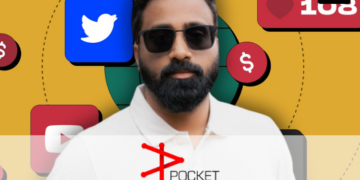
This quiet anxiety, of being everywhere but not quite landing anywhere, is something Adnan Pocketwala, Growth Partner at OrmaxWhatNext, has been encountering regularly while working with founder-led and growth-stage brands. In a conversation with Marketing Mind, Pocketwala unpacked why marketing has become louder but not necessarily clearer, why activity has often been mistaken for progress, and why positioning, once the starting point of brand thinking, has slowly slipped down the priority list.
“Most brands haven’t had a demand problem,” he said. “They’ve had a positioning problem.”
Positioning: The Question Brands Have Avoided Answering Properly
Pocketwala argued that positioning has never been about clever taglines or campaign launches. It has always been about clarity. “Positioning has answered four questions,” he said. “What makes you special? Who are you talking to? What is your promise to that consumer? And how do you want them to feel at the end of the day?”
Brands that have failed to answer these questions, he added, have expected advertising to do the heavy lifting. “If your positioning hasn’t been clear, advertising hasn’t fixed it. It has only added to the noise,” he said.
Pointing to IndiGo Airlines, Pocketwala explained how clarity has sharpened communication. “They’ve defined themselves as a business carrier. They’ve known who they’re talking to, people for whom time matters. ‘On time, every time’ hasn’t been a line, it’s been a promise.”
Once that promise has been clear, he added, everything, from colour to conduct, has followed. “Advertising hasn’t created the positioning. It’s only exaggerated.”
Has AI Taken Over Marketing, Or Exposed Its Weak Spots?
In the ongoing AI-versus-human debate, Pocketwala stayed grounded. “AI has been a tool,” he has said. “Just like computers were a tool. People who have learned to use it have improved. People who haven’t have panicked.”
The larger concern, he added, has not been automation but overdependence. “My biggest fear has been that we are creating marketers who believe thinking itself can be outsourced,” he said.
Marketing, according to him, has been split between two forces. “Performance marketing has spoken to today’s consumer. Brand building has spoken to tomorrow’s consumer. Growth has demanded a balance, and many brands haven’t found it yet.”
The Founder Mistake That Has Kept Repeating
Working closely with promoter-driven brands, Pocketwala noticed one common misunderstanding. “Founders have confused stimulus with response,” he said.
“If I tell you ‘trust me’, nothing happens. But if the way I behave, speak, and show up makes you feel trust, then something changed.” Too many founders, he added, have relied on declarations instead of experiences. “You can’t keep saying ‘we are innovative’ and expect people to feel innovation. Communication has to make people experience it.”
Why Growing Brands Haven’t Scaled Faster
While budget constraints have been real, Pocketwala believed the deeper issue has been clarity. “Many brands haven’t been clear about who they’re actually talking to,” he said.
Recalling a detergent-pod brand positioned on convenience, he explained, “I’ve asked them, who does the laundry in Indian homes? If it’s the maid, who exactly are you offering convenience to?”
Without that understanding, he said, growth has stalled. “You may have had a solution, but without clarity on the user and the moment, scale hasn’t followed.”
Have Metrics Taken Over Marketing?
On the industry’s obsession with performance metrics, Pocketwala has been unequivocal. “Brand building has always been a social construct,” he said. “A brand hasn’t been built only by buyers. It has been built by believers.”
Using BMW as an example, he added, “Even people who may never buy a BMW have contributed to its equity by believing what it stands for.” Brands that have spoken only to today’s customers, he warned, have quietly neglected tomorrow’s.
Why Challenger Brands Have Sounded The Same
In crowded categories, imitation has been tempting, and damaging. “When you say what the category leader already owns, you’ve strengthened their memory structure, not yours,” he said.
Citing Ambuja cement and Ultratech, Pocketwala explained, “Ambuja has owned ‘strength’. Ultratech has positioned itself as the ‘Engineer’s Choice’. That difference hasn’t been creative, it’s been strategic.”
Reframing Categories: The Underrated Growth Lever
“Reframing has been at the heart of positioning,” Pocketwala said. From “second-hand” becoming “pre-loved” to instant noodles shifting from “saving time” to “hotel jaisa swaad, ghar par”, he showed how language has changed perception.
Even Tata Nano, he argued, has suffered due to framing. “People buy cars as a signal of progress. Calling it the cheapest car has killed aspiration.”
Attention Hasn’t Disappeared- Interest Has
“Attention spans haven’t collapsed,” Pocketwala said. “Passive tolerance has.” If something has drawn people in, attention has followed naturally. “When people have said, ‘Ek baar phir chalao, mazaa aa raha hai,’ that’s when you know the story has worked.”
Sometimes, he added, absurdity has helped. “A gorilla playing drums hasn’t made logical sense, but it’s made emotional sense, and that has mattered more.”
What Brands Have Learned from OTT (and Often Ignored)
“Brands have needed to think like content studios, not advertisers,” Pocketwala said. OTT platforms, he explained, have understood context, culture, and mood. “Dubbing the same ad hasn’t been localisation. It’s negligence.”
Brands like Red Bull and Nike, he added, have sold identities, not products. “They haven’t sold what they make. They’ve sold who they’re for.”
Where the Next Shift in Marketing Has Been Taking Shape
Looking ahead, Pocketwala has returned to fundamentals. “Positioning has come first. Storytelling has followed. Data has supported, not dictated,” he said.
Or, as he has summed it up simply: “Data has told us where to look. Insight has told us what to say.”