






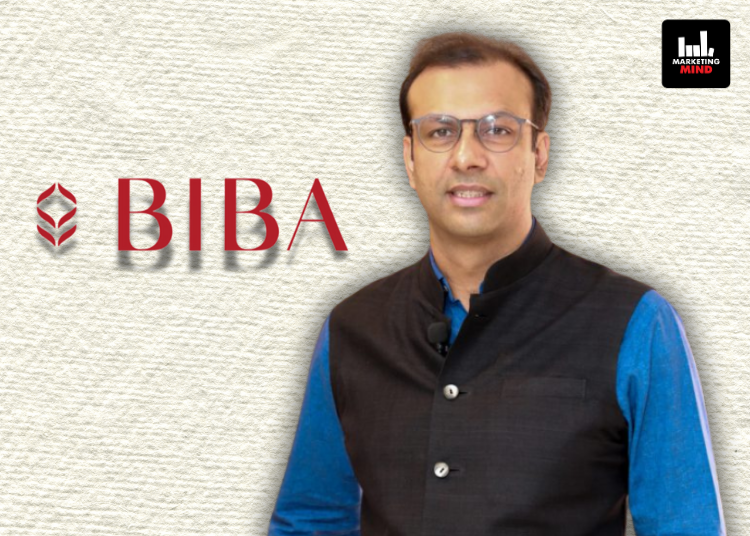
As the calendar prepares to fold itself into memory, 2025 stands not merely as a year gone by, but as a chapter, densely written, richly textured, and deeply instructive. For Indian fashion, it was a year of recalibration. For BIBA, one of the country’s most enduring ethnic wear brands, it was a year of intent, resilience, and reinvention. And for Siddharath Bindra, Managing Director at BIBA Apparels Private, it was a year that demanded both steadiness of hand and boldness of vision.
“I would characterise 2025 as a year of innovation and strategic consolidation,” Bindra said, setting the tone for a year that refused to be defined by either exuberance alone or restraint alone. “While BIBA has always been synonymous with festive wear, this year we significantly widened our offering. We didn’t just launch new silhouettes; we made a definitive entry into the wedding segment with our dedicated Bridal category.”
That entry was neither tentative nor symbolic. “Opening our first-ever standalone Bridal store in Chandni Chowk, the heart of India’s wedding market, was a major milestone,” he added, underscoring the cultural and commercial significance of planting the BIBA flag where Indian weddings have historically found their sartorial soul.
Yet, even as ambition found new expression, discipline remained the watchword. “Financially, it was a year of steady, disciplined growth. We remained focused on strengthening our premium positioning and sharpening our festive strategy,” Bindra noted. “In a challenging market environment, we managed to secure single-digit growth, driven by clarity of direction and consistent execution.”
If growth was measured, the year itself was anything but uneventful. “It has certainly been an eventful journey,” he reflected candidly. “On the challenging side, we faced unforeseen operational headwinds, including a warehouse fire earlier in the year. We also had to navigate a shifting tax environment with revised GST slabs.” Yet, adversity did not derail momentum. “Our resilience defined us,” he said simply.
What carried the brand forward were moments of reaffirmation. “The highs were driven by the strong affinity for the brand during the festive season,” Bindra said. “Our collections resonated well, leading to healthy seasonal demand.” More importantly, the year reinforced a core lesson. “The biggest learning has been the importance of agility; our ability to stay agile on pricing and product planning helped us protect our margins and retain consumer confidence despite the volatility.”
Festive India, after all, remains BIBA’s natural theatre. “The festive season is core to our business and demand across categories,” Bindra emphasised. “While the broader consumer sentiment in the market has been somewhat tepid, we saw a positive uptick in footfalls, reaffirming BIBA’s leadership in the category.”
It was the wedding range, however, that delivered both validation and promise. “The response to our newly launched wedding range has been particularly encouraging,” he said. “It validated that when you offer the right product at the right time, the consumer is willing to invest, validating the consumer’s love for the brand and the brand’s design sensibilities.”
The year also demanded sharp commercial recalibration, particularly with the revised GST structure. “The revision in the GST structure has been positive for many, but unfortunately for brands like us it has had an adverse effect,” Bindra explained. Still, the response was swift and strategic. “To leverage the tax reduction of 7%, we recalibrated our pricing architecture, realigning products that were previously in the Rs 2,999 to Rs 3,299 range closer to the Rs 2,500 band. This allowed us to offer the 5% tax benefit to our consumers during the festive season.”
That shift, he added, had a longer-term implication. “It has further pushed us to sharpen our value and mid-premium assortment, to be able to cater to this audience in a certain way.”
Marketing, too, evolved from broadcast to conversation. “Doubling down on our digital-first media planning and data-driven storytelling was the real game-changer this year,” Bindra said. “We moved further away from a one-size-fits-all approach.”
Technology played a catalytic role. “A key enabler has been the onboarding of Salesforce as our CRM platform,” he explained. “Its full adoption commenced this festive season, which allowed us to dive deep into customer data and understand purchasing behaviours like never before.” The promise, he believes, lies ahead. “I am hopeful that this foundation will drive significantly deeper connections with our consumers here onwards.”
Consumer insight, meanwhile, sharpened product direction. “We observed a clear shift toward ‘elevated-yet-comfortable’ ethnic wear,” Bindra said. “This demand for style with ease was met effectively by our range of two-piece and co-ord sets, which saw strong traction. The modern consumer wants tradition, but on her own terms.”
Pricing sensitivity, too, spoke loudly. “We noted distinct pricing pressure in the entry-level casual segment,” he said. “We listened and responded by recalibrating our value offering, introducing BIBA kurtas starting at Rs 1,299 and complete three-piece sets at Rs 2,499.”
Across channels, the brand pursued cohesion. “Our focus remains on ease of shopping through a seamless omnichannel approach,” Bindra noted. “By integrating digital discovery with offline retail and leaning into regional storytelling, we ensured that whether a customer is scrolling on her phone or walking into a mall, the experience is smooth and unified.”
Asked what truly set BIBA apart this year, Bindra returned to first principles. “Our biggest strength continues to be cultural relevance backed by scale,” he said. “We have the unique ability to speak to a wide demographic across India while maintaining a strong local understanding.”
That balance shaped communication. “Our campaigns successfully combined national reach with deep regional insights,” he added. “We aren’t just selling clothes; we are part of the cultural fabric of our customers’ celebrations.”
Looking ahead, Bindra sees an industry in transition. “As we move toward 2026, the industry is going to be defined by experience and relevance,” he said. “The consumer is becoming far more discerning, they aren’t just looking for products, they are looking for value and a seamless shopping journey.”
The lines between channels, he believes, are already dissolving. “Omnichannel isn’t a strategy anymore; it’s a hygiene factor,” he observed. And yet, tradition will continue to anchor growth. “While festive demand remains the anchor for the ethnic category, the brands that can adapt quickly to micro-trends without losing their core identity will sustain growth.” In that future, BIBA’s bridal ambitions loom large. “We are very excited about our Bridal category, which will be a major focus in 2026–27.”
As the brand prepares for the year ahead, ambition sharpens further. “Our vision for 2026 is focused on capturing new occasions,” Bindra said. “We are placing a strong emphasis on Summer collections and specifically targeting summer weddings.”
The roadmap is expansive. “We’ve curated ranges featuring BIBA classics reimagined, Indigo and Black & White themes, dresses and co-ord sets,” he shared. “We’re also renewing our focus on Tops and Tunics to add everyday versatility.”
Product reinvention continues at pace. “We’ve aggressively expanded our Bottom Wear category,” Bindra revealed. “We took a year to rebuild it and have relaunched it to offer a brand-new product experience.” Beyond women’s wear, the canvas widens. “We are strengthening BIBA Girls (ages 3–15), expanding from cotton ensembles to wedding wear, and highlighting our Fashion Jewellery to complete the look.”
Even global horizons beckon. “We are exploring opportunities for international expansion,” he said. “Operationally, we’ll continue to strengthen agility in pricing and assortment planning. The goal is straightforward: culturally aligned growth across all seasons and markets.”
As 2025 recedes into reflection, BIBA’s story reads not as a tale of excess, nor of retreat, but of measured confidence. A brand that knows where it comes from, understands whom it dresses, and remains unafraid to stitch tomorrow into tradition.