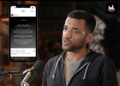






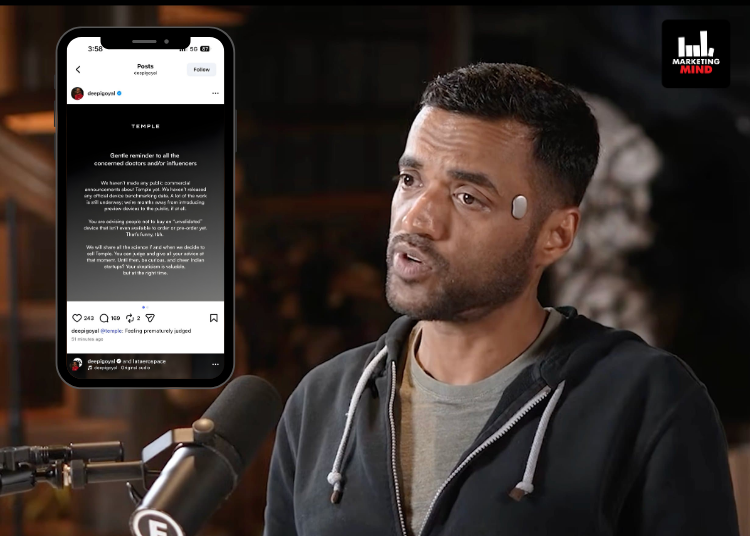
When Deepinder Goyal appeared on Raj Shamani’s podcast wearing a sleek, gold-toned device on the temple of his face, the internet did what it does best- speculate, diagnose, dismiss, and debate.
The device was a Temple.
Within hours, reactions poured in- some analytical, some dismissive, some more… imaginative.
Notable Criticism: “Ridiculous Experiment” and “Fancy Toy”
Among the medical professionals offering publicly sharable opinions was Dr Rahul Chawla, a neurologist trained at AIIMS New Delhi and founder of HealthPil.com, who didn’t hold back in his Instagram critique. He called the concept behind Temple a “ridiculous experiment” driven by “obsession with longevity,” and questioned the science directly: “These billionaires are willing to try everything except believe in qualified health professionals and researchers who have studied the human body for decades.”
“Based on what is publicly known, this device appears to pick up signals from the temple area, likely related to surface blood flow or pulse changes. But measuring actual blood flow inside the brain is far more complex,” he added.
View this post on Instagram
Another AIIMS-trained expert, Dr Datta, took to X (formerly Twitter) with a more blunt dismissal: “As a physician-scientist and one of the earliest researchers in India in Arterial Stiffness and Pulse Wave Velocity (2017) which predicts cardiovascular mortality, I can assure you that this device currently has 0 scientific standing as a useful device and do not waste your hard earned money to buy fancy toys billionaires can afford to waste money on. If you are one, then go ahead..”
And a different doctor reportedly noted that the device, as currently understood, is better described as experimental or a wellness gadget, not a medically validated tool: “For healthy individuals, there is no current medical need to monitor cerebral blood flow. Such wearables are better viewed as experimental or wellness gadgets, not medical devices.”- Dr Dipesh Pimpale (consultant neurologist)
Public discussion wasn’t limited to doctors. On LinkedIn, observers highlighted the marketing-by-presence effect: “This wasn’t a tech demo. This was marketing without marketing… One subtle device. Millions of impressions.”- Social media commentator posting about the viral moment.
Reddit threads ranged from mocking speculation, likening the gadget to chewing gum, to concerns about pseudo-science and misinformation around aging and brain health.
Goyal’s Response- A Gentle Reminder (of Timing)
Amid the swirl of commentary, Goyal posted on Instagram, pointing out that Temple isn’t even a product yet: “You are advising people not to buy an ‘unvalidated’ device that isn’t even available to order or pre-order yet. That’s funny, tbh.”
He clarified publicly that no commercial launch or benchmarking data has been released and that the project is still under development. He added: “We will share all the science if and when we decide to sell Temple. You can judge and give all your advice at that moment.”
View this post on Instagram
What Actually Exists
Temple is experimental and not a market product yet. There is no peer-reviewed clinical data or independent validation public so far. Experts note that monitoring cerebral blood flow non-invasively is technically complex and not currently standard practice outside clinical devices.
Meanwhile, on social platforms, the object sparked lighthearted and skeptical reactions alike: from “what’s on his forehead?” to comparisons with sci-fi props, and, of course, the inevitable chewing-gum jokes.
Why This Became a Story
A wearable that doesn’t exist commercially and has no published efficacy data generated an entire wave of medical caution, expert critique, and internet commentary, all from a brief podcast appearance. It’s a reminder that in today’s online discourse: Visibility often precedes validation. Speculation can outpace disclosure. And sometimes a tiny gadget turns into a big conversation.
For now, Temple remains an idea, a prototype, and a viral talking point. Whether it becomes a product with clinical backing, or simply fades from attention, is still uncertain.
The Startup Culture Subtext
The final slide widened the frame: “Until then, be curious, and cheer Indian startups. Your skepticism is valuable, but at the right time.”
Which touches a familiar nerve.
Indian startup culture often demands founders innovate in public, while simultaneously expecting finished answers at the idea stage. Products are encouraged to be experimental, provided they are already proven. Visibility is celebrated, but scrutiny arrives instantly.
The result is an ecosystem where judgment often precedes context, and conversation sometimes outruns information.
Whether Temple eventually launches, pivots, or fades quietly is still unknown. What is clear is how quickly a moment of visibility can turn into a verdict, long before a product has formally introduced itself.