



For a platform that has scaled into one of India’s most recognisable hyperlocal commerce players, magicpin has taken a deliberately unconventional route to growth. Instead of relying on heavy media spends or polished brand campaigns, it has focused on building daily-use behaviour, combining strong merchant offers with a product experience that keeps users coming back, earning relevance in real time.
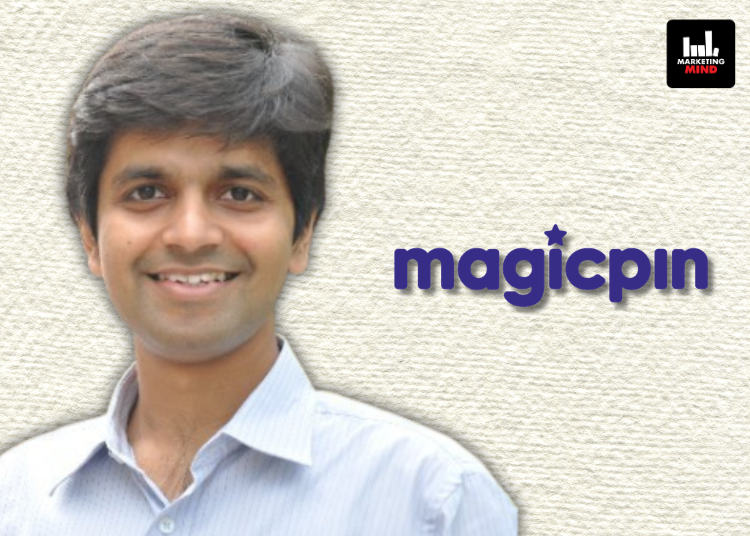
In an interaction with Marketing Mind, Anshoo Sharma, Co-founder and CEO of magicpin, explains that traditional marketing never quite worked for the platform.
By tapping into what people are talking about and inserting the brand into such conversations, magicpin has learnt to stay ahead in a highly dynamic and competitive landscape. With AI accelerating trend discovery, content creation, and hyper-targeted distribution, Sharma believes this approach will only get sharper, allowing brands to operate at the speed and scale of culture itself.
Why Traditional Marketing No Longer Cuts It
For a platform that has grown into one of India’s most recognised hyperlocal commerce players, magicpin’s marketing philosophy is surprisingly contrarian. Sharma is blunt about it. “The traditional method of marketing – craft your message, create the copy, push it through media buying – that has not worked for us. What has worked is asking: what is being talked about? What will stand out? Insert magicpin into that conversation, be different, be talked about. That ensures the brand has recall,” Sharma affirmed.
The formula that followed was deliberate: build a product people open every day, gamify it, and then put real value on the table so that when someone hears about magicpin, they actually want to use it. “The best offer from the best merchant, when done consistently, will work” he said.
It is a content-first, community-first approach, and Sharma is convinced that AI will only sharpen it further. “The ability to identify the next upcoming trend, create micro units of content around it, and distribute it through exactly the right channel, whether paid, influencer, or organic, those cycles will become much faster. The businesses that can operate across a massive number of micro-segments will be the ones that gain the most,” Sharma added.
The Gap That Built A Business
Talking about magicFleet, magicpin’s in-house delivery network, Sharma pushed back on the assumption that building it was optional.
Referring to the gig worker ecosystem, he explained, “Finding delivery partners is not at all easily accessible. It might look like it is, but it really isn’t. We could get about 90% of our needs fulfilled through existing networks. But that last 10% was where we were struggling. We realised we had to build our own fleet, because without it, we simply could not service the demand.”
That last 10% turned out to be the most instructive portion. Once magicpin built the capability internally, it expanded organically, first to handle more of their own orders, then to service other partners as well. The result was Velocity, magicpin’s hyperlocal logistics offering for third-party companies that need last-mile delivery. It is the kind of accidental expansion that only happens when a company is paying close enough attention to where it is actually failing.
Giving The Neighbourhood Store A Fighting Chance
If there is one theme that runs through everything magicpin is building right now, it is this: offline retail is underrepresented online, and that is a solvable problem. Sharma sees it as an opportunity. “Retailers want to be online. They just need a simple way to do it. They are busy people, and if given the right tools, they would love to come on board,” he explained.
The latest expression of that belief is Vera, an AI marketing assistant built specifically for offline retailers. The problem Vera is designed to solve is not just lead generation, it is everything that happens after. “Even if we pass a lead to a local furniture shop, their ability to put the right offer in front of that customer, to talk to the lead, close it, make the customer excited about the offer. That scope is limited. They do not have the resources. BBut now AI can do all of that,” Sharma said. “While most companies are building vertically integrated stacks, we want to focus on enabling the offline retail ecosystem and bringing it online in a way that has not really been done yet.”
Finding the Untapped Consumer
magicpin’s entry into food delivery was not a strategic masterstroke. Rather, it was a pivot during the pandemic. Sharma explained, “For the longest time, we kept saying we would not do food delivery. But COVID-19 forced us to reconsider. People were not going out, so we had to bring the product to them.”
magicpin found its niche by switching on smaller merchants who could offer price points that the larger platforms had effectively crowded out, like people seeking a pizza for Rs 35. “That market always existed, but those merchants were getting buried on bigger platforms. We were able to surface them, serve a segment that was not being served, and scale on the back of that,” Sharma claimed. The proof was in the results: magicpin ranked at the top of ONDC, India’s open commerce network, off the strength of exactly this bet.
The Consumers Who Want It All
If there is one thing Sharma is absolutely clear about, it is that the Indian consumer does not want to choose. “Consumers want to have everything. Online, offline, both of them. Always. The best experience, the lowest possible price. And our job is to feed them everything.” It sounds simple, but the implications are enormous, suggesting that magicpin cannot afford to be a food delivery app, or a deals platform, or a discovery engine in isolation. It has to be all of it, rather seamlessly.
Furthermore, he went on to say, “Consumers are always searching for what is the next high that they can get in any of the categories they are interested in. They want the discovery, saving, and the convenience of that, and we have to build it.” The consumer is not thinking in categories; they are thinking in cravings.
What the Next Decade of Commerce Looks Like
Sharma is measured, yet optimistic, about what lies ahead. The variables are familiar: AI, distribution, consumer behaviour, but the combination will be transformative.
“The cost of reaching out to offline retailers and bringing them online is crashing. Our ability to provide them tools like Vera, which lets them service online demand better, is going up. Both of these together will bring a lot more of this market online,” he mentioned.
For consumers, that means more choices, more discovery, and a local retail ecosystem that can finally compete with the vertically integrated giants. He pointed out, “QuickCommerce will still do well, but offline retailers will be in much better contention for the online customer than they have ever been.” The opportunity, as Sharma sees it, is not in replacing what already works. Rather, it is finally building for what has always been there but never been properly served.