






India’s streaming entertainment landscape is no longer a supporting act, it’s steadily taking center stage in the country’s digital economy. With its deepening reach, booming creator ecosystem, and rapidly evolving monetisation models, the sector stands at a transformative crossroad shaped by content globalisation and a young population coming into spending power.
The year 2024 is being marked as a defining year for premium video, setting the tone for where the industry is headed in 2025.
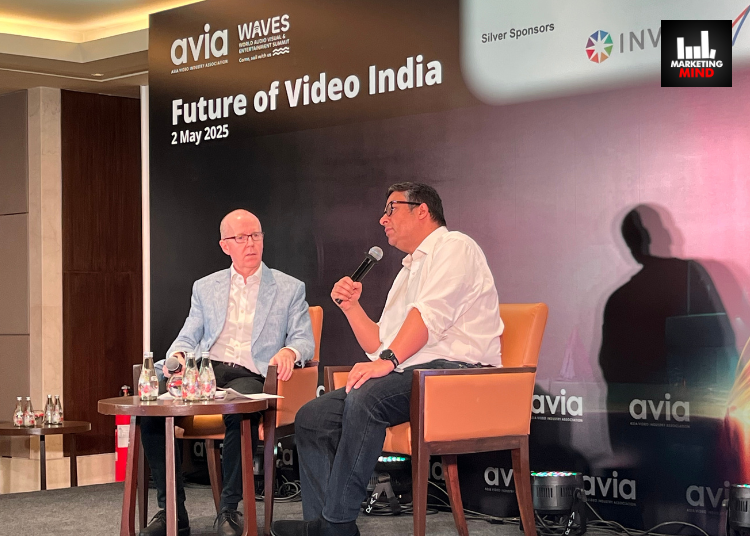
Speaking at the ‘Future of Video India’ event organised by AVIA and WAVES in Mumbai, Vivek Couto, Managing and Executive Director of Media Partners Asia (MPA), emphasised how India’s video economy has democratised not just content but capital and competition.
He highlighted that streaming entertainment in India is a remarkable industry and it’s clear just how transformative it’s been. This sector has democratised not only content but also capital and competition. Much of this progress can be credited to the government’s decision, several years ago, to open up foreign investment, which helped build the infrastructure we now see today.
“The growth has been significant. India now has perhaps the most dynamic young population gaining purchasing power anywhere in the world- a major driver for the next wave of investment, content creation, access, and development. When compared to other mature markets in Asia and beyond, this demographic shift is incredibly powerful,” he said.
Furthermore, he went on to say, “Economically, the streaming entertainment industry generated close to $12.8 billion in revenue last year. While TV remains a strong medium, it is facing secular headwinds, and its growth trajectory is expected to shift substantially. We’ve seen the entry of new corporate talent, increased industry consolidation, and a move toward more sustainable growth, especially from platforms like Amazon, Netflix, and YouTube. The rise of the creator economy is also a major force in this evolution.”
He mentioned that looking ahead, the industry is projected to grow to around $17.5 to $18 billion over the next five years. Notably, half of this, one in every two dollars, will come from the online video sector, including platforms like YouTube, which will play a pivotal role in shaping future strategies.
Despite these shifts, TV will continue to be a vital medium in India, especially across the vast addressable universe of 400 to 450 million households. While its growth may remain relatively flat, the future of TV will depend largely on how incumbents collaborate to expand and sustain the ecosystem.
Couto emphasised, “Consolidation is just one part of the story, the other, equally important part is how you execute post-consolidation and retain talent to grow the business profitably. There are also case studies where consolidation hasn’t worked out. That said, it’s not for me to comment on whether more consolidation is on the horizon. I believe there’s enough revenue in the Indian market to make the top five to seven players profitable and focused on growth.”
“The major consolidation we’ve already seen was driven by specific structural dynamics, particularly investment in sports rights and the entry of a disruptive platform. It has actually played out well, with the scaled competitor expanding the overall pie and the addressable market for everyone. That, I believe, will be a positive trend in the coming years. As for future consolidation, I don’t see any imminent deals. My focus is more on capital flowing into existing players- broadcasters, domestic streaming platforms, and content production houses, to support business growth,” he added.
Furthermore, he pointed out that YouTube has emerged as a powerful platform not just on mobile, but also on connected TV, where audiences are increasingly consuming premium moments. This shift is driven by its partnerships, particularly around sports and diverse forms of entertainment. Interestingly, the movement is two-way: creators on YouTube are now producing shows for other platforms as well, especially in the premium long-form content space.
YouTube is clearly becoming an integral part of the industry. As Neal Mohan pointed out, a significant amount of money is now flowing back to these creators. This ongoing bifurcation feels somewhat elitist and needs to be more seamlessly integrated into the fabric of our industry,” he said.
He also emphasised, “When we look at advertising markets in India, how they’re shaping up, where the growth lies, and how social media compares to premium platforms for advertisers and brands placing their dollars today, we’re seeing a mixed picture. As we noted in our research released earlier this year, the ad industry has had a tough run. Premium video, in particular, has somewhat decoupled from overall economic growth, largely due to uneven consumption patterns in India. This has led to a more turbulent phase for television.”
However, there are some clear signs of momentum. The IPL performed very well this year, and we’re seeing two or three major indicators of growth. First, the connected TV universe has become critical, expanding from 24 million last year to around 35 million now, and expected to hit 50 million by the end of the year.
“The advertising pool here is substantial, which we estimate to be around half a billion dollars this year,” Couto stated.
At the same time, advertising continues to grow significantly on mobile, still dominated by YouTube. To be fair, YouTube’s growth builds on a history of strong double-digit gains in ad revenue. It remains a global advertising phenomenon, including in India. But there’s now a noticeable shift in focus towards subscriptions on YouTube, especially as its ad growth begins to decelerate.
In conclusion, he said, “Overall, we anticipate strong growth in the premium VOD (video-on-demand) category in India going forward. Once you take theatrical out of the equation, most of the screen entertainment economy is sustained by advertising, be it television advertising or premium VOD advertising. There are high expectations around the growth of premium VOD, especially with players like Amazon, with MX Player’s acquisition.”
“JioHotstar also remains a significant force in premium VOD advertising and its measurement. We anticipate substantial growth in this area. That said, it’s important to view it as a combined screen economy, the power lies in the combined reach of television and premium VOD. India has a unique opportunity to become the only market globally where, by adding these two growth drivers, the sector doesn’t remain flat but grows at over 10%,” he added.