







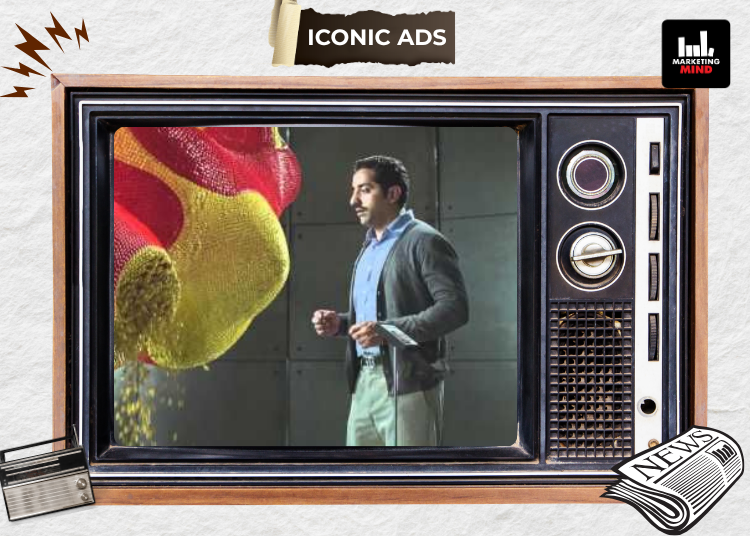
Not every great ad shouts to be remembered. Some simply observe human nature with enough honesty that people never forget them. The Cadbury Gems “Museum” commercial did exactly that.
The premise couldn’t be simpler. A man wanders through an art gallery, notices a sculpture built entirely from Gems, and zeroes in on a single blue one. He knows he shouldn’t touch it. He takes it anyway. The whole structure comes tumbling down. He pops the Gem in his mouth, a little sheepish, not quite sorry. The tagline lands: “No umar for favourite colour.”
That one line did a lot of heavy lifting. Because anyone who grew up eating Gems in India had a favourite colour, fiercely, irrationally, and unapologetically. The ad didn’t manufacture that feeling. It just named one that already existed. Setting the scene inside a museum was the masterstroke: few places carry more expectation of adult composure. Watching that composure dissolve over a candy-coated chocolate made the whole thing land with a kind of warm, laughing recognition.
Beyond the charm of the film itself, it marked a quiet shift in how Gems thought about its audience. The brand had always belonged to children. With the broader “Raho Umarless” platform, it began speaking to adults who hadn’t quite outgrown their childhood instincts — people who still pick favourites, still choose fun over dignity, and don’t particularly apologise for either. That reframe opened up an entirely different emotional territory for the brand.
What the ad never does is try too hard. No celebrity, no sentiment, no engineered moment designed to go viral. The comedy comes entirely from timing and expression — and from the quiet certainty that the viewer would have done exactly the same thing. That restraint is rare, and it’s a large part of why the film has lasted.
Years on, it still circulates across nostalgia threads and social media conversations. People aren’t just recalling a commercial. Rather, they’re recalling what it felt like to watch it. That’s a different kind of staying power entirely.