






Some ads sell products. Some quietly become part of pop culture. And then there are ads like Big Babool’s ‘Chidiya Rani Badi Shayani’, where commercials stop feeling like advertising altogether and start living in public memory like childhood folklore.
For most 90s kids, the recall is instant. Not because of a celebrity, slogan, or oversized branding moment, but because of a turtle trying to fly with a bubblegum bubble. Years later, audiences still remember the jingle line-by-line, scene-by-scene — the kind of recall most modern ads would struggle to engineer.
A Fairytale That Escalates Into Chaos
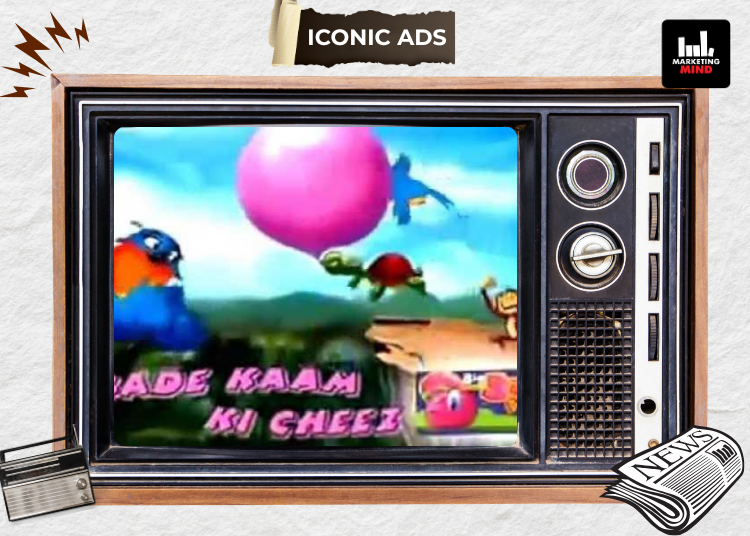
The film begins almost like a musical bedtime story. “Chidiya rani badi shayani” (the clever little bird queen) opens the narrative with rhythmic storytelling instead of conventional dialogue. A mother bird protects her eggs peacefully until another egg mysteriously rolls into the nest.
Then comes the first dramatic beat. “Anda aaya gol matol” (a round little egg appeared) becomes the setup for the ad’s absurd reveal: a turtle hatching among baby birds. And from there, the commercial leans fully into theatricality.
The birds react with exaggerated panic, the soundtrack swells dramatically, and the turtle waddles awkwardly while the birds flutter around him with chaotic energy. The humour is simple, but the staging makes it unforgettable. Every scene feels exaggerated in the best way possible, almost like a children’s theatre production unfolding through animation.
The Jingle Became Bigger Than The Ad Itself
A huge reason behind the commercial’s longevity is the jingle. Unlike modern ad music that often sits passively in the background, this one actively drives the story forward. Every lyric narrates the action unfolding onscreen, making viewers feel like they are listening to a sung fairytale rather than watching a sales pitch.
The rhyme scheme, repetition, and playful Hindi phrasing made it instantly memorable for children. Even decades later, people may forget the exact product packaging, but they still remember the lines.
The Animation Was Doing The Heavy Lifting
What makes the commercial remarkable even today is how confidently it trusted animation to carry the story. For an era where Indian television animation was still limited in scale, the ad displayed unusual expressive detail. The turtle’s slow body language immediately established him as an outsider, while the birds moved with exaggerated speed and elasticity. Even without dialogue-heavy writing, viewers instantly understood the emotional dynamics.
More importantly, the animation never felt rushed. Scenes were allowed to breathe. Reactions lasted longer. Musical pauses created anticipation. Instead of depending on rapid edits, the film built memorability through rhythm and visual pacing.
Even the bubble sequence was staged with theatrical grandeur: the swelling gum bubble, the dramatic lift-off, the triumphant music. The climax felt less like a product demo and more like an emotional payoff.
The Bubblegum Wasn’t A Prop, It Was The Hero
What made Big Babool stand out as a product during that era was its association with giant bubbles, exaggerated chewiness, and playful rebellion, everything children found instantly exciting.
The commercial cleverly builds the entire narrative around that product experience. The gum isn’t awkwardly inserted into the ending as a branding device. Instead, the Big Babool bubble becomes the solution to the turtle’s biggest problem: his inability to fly.
That creative decision elevated the product from a confectionery item to a storytelling device. The oversized bubble visually demonstrated exactly what made Big Babool distinctive while also delivering the ad’s emotional climax. It is branding without feeling like branding.
Why The Ad Still Survives Today
Big Babool’s film succeeded because it created emotional memory through rhythm, character, and absurdity instead of aggressive messaging. The ad never tried to look polished or ironic. It simply committed to its bizarre little universe with complete sincerity. A turtle flies using bubblegum because, in this world, that makes perfect sense.
And perhaps that is why the commercial endured. Even now, people revisit it as a fragment of childhood, remembered alongside cartoon theme songs, school tiffins, and after-school television rituals. In under a minute, Big Babool created something most advertising still struggles to manufacture despite bigger budgets and sharper targeting: genuine cultural memory.