



In 2014, selling insurance online wasn’t just difficult, it was counterintuitive. Consumers didn’t search for it, didn’t compare it, and rarely thought about it. Over the next 12 years, Policybazaar helped rewrite that behaviour, turning digital into a driver of habit, trust, and scale. As the ecosystem now transitions into an AI-first era, its journey reflects the larger story of digital marketing, one that has moved from performance to purpose, and now to credibility.
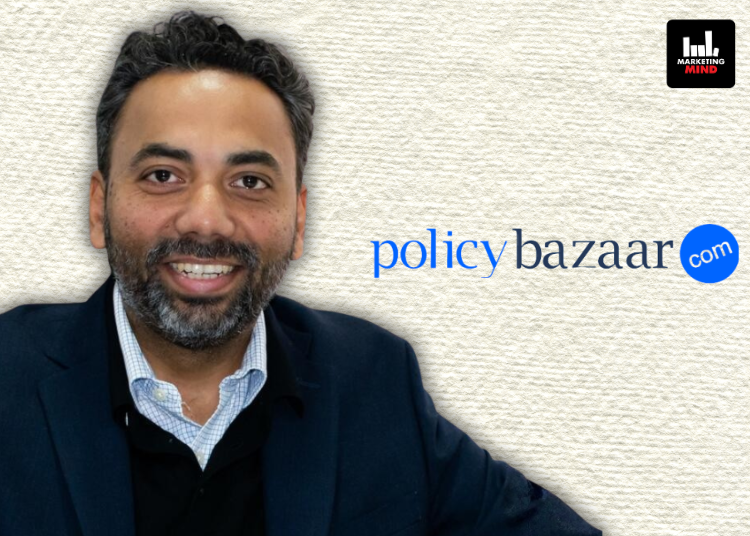
At the 16th Digital Leadership Summit 2026, Sai Narayan, Chief Marketing Officer (CMO) of PolicyBazaar.com, pulled back the curtain on twelve years of building one of India’s most recognised insurance brands.
From convincing consumers to compare insurance premiums to navigating the seismic shift from search engines to AI-powered discovery, Narayan laid out the marketing philosophy that took Policybazaar from a scrappy startup to a category-defining platform.
Selling A Question, Not A Product
When Narayan joined in 2014, the first order of business wasn’t marketing insurance. It was a marketing doubt. “In the initial years, we were not selling a product. We were actually marketing a question: are you paying more for your insurance? Have you compared before you bought? Is your agent making a fool of you?”
The analogy he reaches for to explain what came next is surprisingly contemporary. “What quick commerce does now is what we did earlier. Earlier, there was no habit of even thinking about insurance.”
Motor insurance became the entry point by design. It was mandatory, widely held, and ripe for a pricing conversation. “We told people that you are paying much more than what you should be,” he said.
“That’s how the entire marketing equation started.” Once users entered the ecosystem, usually drawn in by motor, Policybazaar could expose them to more complex, underserved categories. “It’s like going to a shopping mall. You want to buy something specific and you end up buying other things,” Narayan noted.
Building Category Before Building The Brand
As traffic grew, Narayan and his team discovered a more fundamental problem than competition: ignorance. Consumers simply didn’t understand term or health insurance, the two categories that mattered most financially.
The response was to stop waiting for demand and start creating it. “We had to build a category because no one else was talking about term insurance.” Using digital footprint data and on-ground agent interactions, Policybazaar identified knowledge gaps and went back to insurers to co-design better products and journeys.
Communication had to change too. Narayan explained, “Insurance had long lived in the shadow of fear: death, uncertainty, and LIC-era solemnity. Our team kept the urgency but changed the register entirely.” This analysis led to onboarding Kapil Sharma and Akshay Kumar for the now-famous Yamraj campaign.
“We still had fear. But we did it slightly differently. The real problem was to challenge people and tell them on the face that if you do not buy term insurance, your family is going to suffer. But we said it with humour,” he noted. The results were campaigns that landed emotionally without feeling like a funeral.
Making Brand Marketing Answerable To Business
In a VC-funded startup, soft metrics don’t survive budget season. Narayan knew this early, and built a measurement framework around brand marketing that could speak the language of the finance team. “Performance marketing will help you through the quarter, but brand marketing will help you through the decade,” he affirmed.
The north star metric he created was free traffic, wherein users arrived directly, organically, without paid acquisition. “For any D2C brand, if your free traffic is 70% plus, just imagine that you’re not spending money on those users. The return is 3-4x of what you spend on paid marketing.”
The team tracked campaign bursts against spikes in mobile traffic, reverse-engineered cost-per-lead from brand spend, and ran multiple creative copies simultaneously, pulling what didn’t work. “We were very data driven about it. If you’re paying Rs 100 for a performance marketing campaign, we were ready to pay Rs 300 for a brand campaign, because the conversion used to be higher.”
The Media Mix Flips
Pre-COVID, Policybazaar’s brand spend was 90% television. Today, that picture looks very different. “Before COVID, our marketing spends were largely brand 60% and performance 40%. After that, the coins have flipped.”
Speaking on Policybazaar’s current split on marketing budget, Narayan revealed, “Performance marketing now takes 60% of the budget, driven by the hunger for growth at lower marginal cost. Of the remaining brand spend, 60% has moved to digital – YouTube, OTT, and influencer channels, with TV holding the remaining 40%.”
The core challenge, though, hasn’t moved. “People still don’t think about insurance. That’s why we are one of the very few brands on air 12 months a year. Demand creation is still the single biggest task for us, for both term and health insurances,” he noted.
The AI Reckoning
The next disruption is already keeping Narayan up at night. And it isn’t a competitor. “One of the things giving me sleepless nights is the disappearance of organic traffic. It’s not replacing as we speak, but we could see that the change in behaviour is moving that way.” The LLMs and AI-powered interfaces, he argued, are running the same playbook that e-commerce ran, trying to fundamentally alter how people discover and decide. “We’ve lived through the cola wars. Now we’re looking at the AI wars.”
The strategic problem is visibility in a world where users don’t browse, they ask. “The internet doesn’t need more content, it needs citations and authority,” said Narayan, underscoring the shift from traditional SEO to AI-led discovery.
While Policybazaar continues to perform strongly on SEO, the focus is now on Generative Engine Optimisation (GEO), ensuring the brand is cited, answers consumer intent, and remains relevant in an LLM-driven ecosystem. On the execution front, Policybazaar is scaling AI across functions.
“We’re already using generative AI at scale, across multiple languages, to drive acquisition,” Narayan said, adding that AI-led personalisation now powers user journeys and CRM. While much of this is built in-house, he noted that agencies still play a role: “They bring fresh perspective when internal teams may be too close to the problem.”
Looking ahead, Narayan said the focus remains clear: “Demand creation is the single most important task for us.” While the insurance sector saw a boost last year, aided in part by GST reforms, he acknowledged that demand has since softened, making the road ahead more unpredictable. “It’s going to be a mixed bag, but irrespective of that, our priority is to create more demand and, in turn, drive revenue,” he said, underscoring that even after 12 years, the core challenge, and opportunity, remains the same.