







The year 2025 proved to be a turning point for real estate marketing in India’s urban markets, including Bengaluru, as homebuying decisions became less transactional and increasingly driven by lifestyle, design, sustainability and the promise of community living. Buyers entered the market better informed, more design-conscious and emotionally invested in long-term value rather than short-term pricing.
For Century Real Estate, the year underscored a clear shift in marketing priorities, moving from functional selling to insight-led brand building. With millennials and Gen Z entering the homebuying cycle earlier, expectations around transparency, digital fluency and cultural relevance intensified. The brand’s communication evolved to reflect Bengaluru’s aspirational yet grounded mindset, with a sharper focus on trust and emotional resonance.
In a category where surface-level differentiation no longer holds attention, Century’s campaigns in 2025 leaned into empathy, cultural nuance and deeper storytelling.
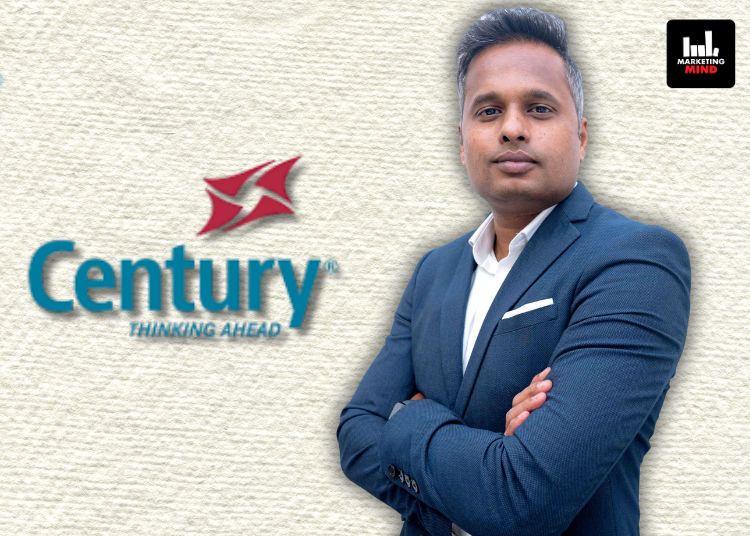
Against this backdrop, Vikas Nair, Vice President and Head of Marketing and Communications at Century Real Estate, led a year focused on experience-led communication, technology integration across the funnel and building a marketing organisation equipped to handle increasingly complex decision journeys.
Shifting Buyer Intent And The Rise Of Lifestyle-Led Decision Making
Reflecting on how buyer behaviour has evolved, Nair noted that the definition of homeownership itself has changed. “Over the past few years, homebuying motivations have undergone a fundamental shift, from a purely utilitarian pursuit rooted in price, layout, and location, to a highly emotional lifestyle choice. Today’s homebuyers perceive a home as a reflection of who they are and the life they aspire toward.”
He further explained that amenities, sustainability, design language, and community now influence decisions as much as traditional real estate metrics. “Amenities, design language, sustainability, and the promise of a thriving community all play an equally critical role in influencing purchase decisions.”
According to Nair, this shift is also closely linked to a younger buyer base entering the market. “We’re also seeing a noticeable reduction in the average age of homebuyers. Millennials and Gen Z expect brands to be transparent, digitally native, visually authentic, and culturally attuned.”
This change has directly shaped how Century positions its projects and engages with consumers. “This means understanding not only stated needs but also decoding the deeper, latent aspirations that guide their purchase journey.”
As competition intensified in 2025, Century Real Estate leaned into insight-led storytelling grounded in cultural relevance. Nair emphasised that effective marketing begins with empathy rather than execution. “Today’s buyers are more informed, research-driven, and design-conscious than ever before. They compare options rigorously and expect brands to remain transparent throughout the journey.”
He added that standing out requires a deep understanding of buyer psychology. “To meaningfully stand out, marketing must begin with empathy, understanding the buyer’s motivations, mindset, lifestyle needs, and the cultural cues they resonate with.”
Century Real Estate campaigns, he said, are deliberately crafted to reflect Bengaluru’s evolving ethos. “Our campaigns reflect the Bengaluru buyer, someone who seeks ambitious progress while valuing authenticity, warmth, and belonging.”
This approach, according to Nair, has helped the brand cut through category clutter. “This approach has helped us build emotional affinity and long-term brand value in a cluttered category where attention is scarce and trust is paramount.”
AI, Automation And A Unified MarTech Ecosystem
One of the most impactful decisions in 2025 was Century Real Estate’s accelerated adoption of a unified MarTech ecosystem. Nair described this as the brand’s most effective marketing intervention of the year. “Our biggest and most successful intervention this year has been the accelerated implementation of a unified MarTech ecosystem that strengthens customer experience and sales execution.”
He outlined how AI-driven workflows have transformed lead management and conversion efficiency. “By integrating AI-driven workflows, automated nurture journeys, intelligent chat and calling agents, and end-to-end data orchestration, we have been able to accelerate lead velocity, automate qualification, and increase conversion efficiency in a highly competitive market.”
Nair highlighted that AI plays a crucial role across the decision funnel. “Real estate is a category with multiple decision points, which creates several meaningful touchpoints with prospects.” “AI and automation enable us to deliver highly personalised and context-relevant information at scale throughout these stages, helping homebuyers move forward with clarity and confidence.”
With buyers demanding deeper validation before site visits, Century strengthened its digital-first communication strategy. Nair explained that buyers now expect substance, not surface-level marketing.“The modern homebuyer wants to explore, compare, and validate extensively online, often before considering a site visit.”
To address this, the brand invested in immersive and phygital experiences. “We’ve strategically invested in immersive and phygital formats including high-quality 3D Computer-Generated Imagery films, AR/VR walkthroughs, interactive scale models, digital experience centres, and on-ground phygital installations.” These tools, he said, transform communication into imagination.“They transform communication into imagination, helping customers envision how life unfolds in our spaces.”
Performance, Media Mix and Measurable Outcomes in 2025
Discussing performance outcomes, Vikas Nair explained that Century Real Estate shifted from a narrow high-intent lead strategy to a broader top-of-the-funnel approach. “To optimise efficiency in an increasingly high-cost performance environment, we moved from a narrow high-intent lead strategy to a broader top-of-the-funnel approach,” he said, highlighting how the change allowed the brand to reach relevant audiences earlier and nurture them over time.
Nair added that the new strategy has enhanced efficiency across key metrics. “This shift has helped us drive efficiencies across cost per lead (CPL) and cost per acquisition (CPA), strengthening conversion readiness through continuous engagement,” he noted. On the contribution of different channels, he pointed out, “Performance-led digital channels contribute nearly 50% of qualified leads and walk-ins and drive 20–25% of topline revenue,” underscoring how digital, when integrated with traditional media, forms the most efficient acquisition layer.
In a category defined by long delivery cycles, trust remains Century’s strongest lever.“In a category where buyers commit over 90% of the investment before the home is delivered, trust is the single biggest differentiator.”
Nair reiterated the importance of the brand’s legacy.“ Century Real Estate’s 50-year legacy is built on this foundation, credibility, quality, and consistency.” He also noted a deliberate shift in representation.“We have also ensured women occupy the centre of our narratives, reflecting the reality that they are among the most powerful forces shaping homebuying decisions today.”
Looking Ahead
As buyer journeys become longer and more evaluation-led, real estate marketing is moving towards sharper intelligence, relevance and experience-led discovery. For Century Real Estate, the focus going forward will be on anticipating intent and guiding decision-making more precisely across a high-involvement purchase cycle.
Against this backdrop, Nair said the brand’s priorities will centre on intelligence-led communication. “The future is about delivering the right story at the right moment,” he said, underlining the importance of relevance and timing in influencing consideration.
He added that discovery itself is evolving as buyers seek deeper validation before physical site visits. “Discovery will become more visual, multi-sensory, and hands-on,” Nair said.