






Indians are spending an average of 20 hours every month on social media, making the country one of the most engaged digital populations worldwide. According to Comscore’s State of Social India 2025 report, social platforms now reach 89.3% of India’s total digital population, a level comparable to the US at 92.9% and the UK at 90.4%.
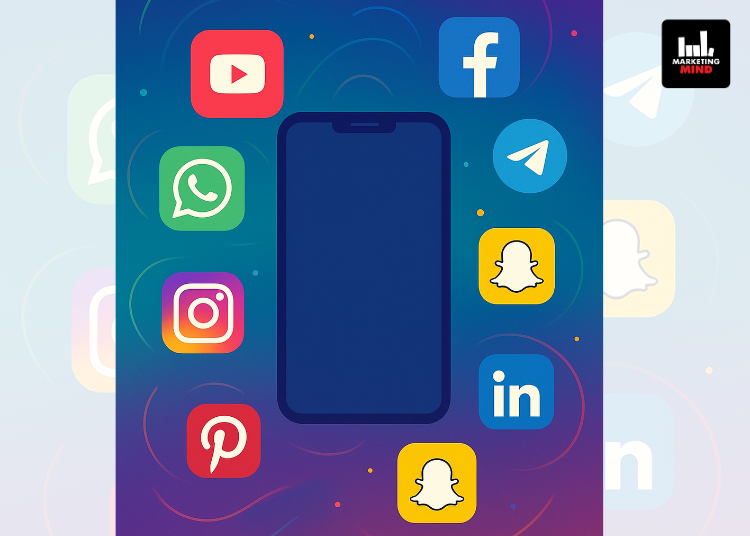
Within India’s crowded platform ecosystem, YouTube remains the clear leader with 456 million unique visitors in June 2025, followed closely by WhatsApp at 430 million and Instagram at 337 million. Facebook, with 332 million users, continues to hold ground, while Telegram at 250 million, Snapchat at 122 million, and X (formerly Twitter) at 88 million are vying for attention. LinkedIn, Pinterest, and Reddit remain niche but active players.
The dominance of YouTube is visible across every demographic. The platform reaches 91% of Indians aged 15–24, 87% of those between 25–34, and 84% of audiences above 35. Instagram, meanwhile, is firmly entrenched among the youth, touching 71% of the 15–24 segment, though its reach drops to 58% among older groups. Facebook continues to find relevance with older audiences, covering 76% of the 25–34 group and 58% among 35+ users.
Video-first consumption is the defining shift in India’s social landscape. On Instagram, Reels now account for 69% of all actions in 2025, compared with just 19% five years ago. Carousels, once the preferred format, now make up only 31% of activity. On Facebook, video content has become equally dominant, generating 66% of all likes, 68% of comments, and 55% of shares. The biggest surge, however, is seen on YouTube’s Connected TV (CTV). Between February 2022 and February 2025, the number of videos consumed on CTV jumped 407%, while total hours watched increased 219%, signalling a rapid migration from mobile-first habits to living-room viewing.
When it comes to content, entertainment continues to dominate. Comscore finds that 47% of all engagement in India comes from media and entertainment, followed by 21% from influencers and 20% from sports. Among individual celebrities, Shraddha Kapoor leads with 2.6 million actions per post on average, followed by Allu Arjun with 1.9 million and Anushka Sharma with 1.6 million. Media platforms such as InstantBollywood (75,000 actions per post), The Indian Idiot (71,000), and RVCJ Media (58,000) also feature prominently. In sports, Virat Kohli tops with 2.6 million actions per post, followed by Hardik Pandya with 1.9 million and Rohit Sharma with 1.6 million, while the IPL’s official handle records 540,000 interactions per post.
The news cycle also fuels social media peaks. Coverage of Operation Sindoor in Kashmir between April and May 2025 generated 944.6 million video views and 437.5 million engagements on YouTube alone. Publishers saw their traffic soar during this period: TV9 Network’s desktop audience rose 202%, India Today Group grew 115%, and NDTV recorded a 104% jump. On mobile, Network18 traffic surged 27%, while India Today’s grew by 22%, demonstrating how social platforms amplified breaking news.
Influencers remain a central force in India’s digital economy. Globally, they drove 36% of all social media actions in April 2025, and in India, their collaborations with brands have become an essential bridge between platforms and audiences. Comscore highlights how Shubman Gill’s fan base shows strong affinity for the automotive sector, especially Kia, illustrating how celebrity–brand alignments can translate into measurable audience resonance. The report also points to the rise of virtual influencers, including India’s Kyra, who specialise in lifestyle and fashion content. Unlike human creators, these AI-driven avatars are consistent, brand-safe, and capable of operating across multiple markets simultaneously.
Comscore warns that brands can no longer rely on static strategies. Meta’s 2025 algorithm shift now prioritises interest-based discovery rather than social-graph feeds, while YouTube has cut monetisation for repetitive or AI-generated videos. Instagram continues to tweak its feed formats, forcing creators to adapt quickly. The report concludes that in a fast-moving, video-led ecosystem, success for publishers and brands will depend on cross-platform strategies, creator collaborations, and a focus on real-time audience behaviour.