





The idea of “Brand India” has often been spoken about in numbers, GDP growth, digital adoption, exports, start-up valuations or market potential. But on the opening day of Goafest 2026, the conversation around India’s future has moved beyond statistics and economic milestones. It has become deeply personal. It has become a conversation about identity, confidence, creativity and the way Indians have started seeing themselves.
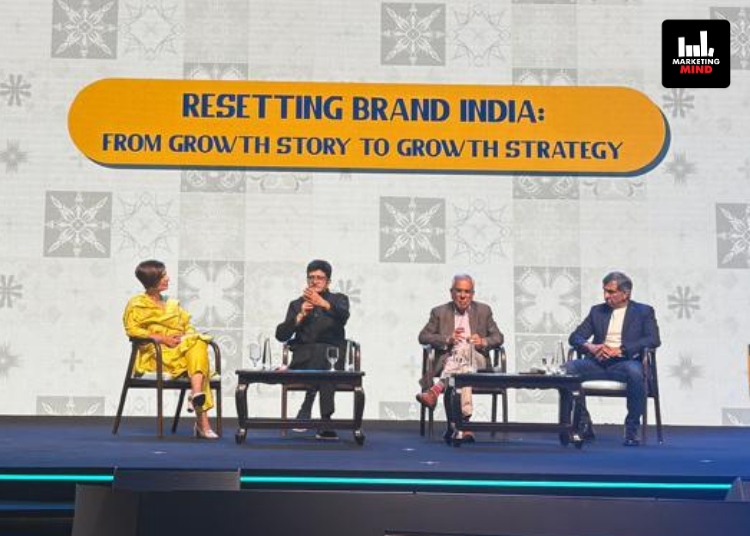
In a session titled Resetting Brand India: From Growth Story to Growth Strategy, moderated by Padmaja Joshi, Managing Editor, NDTV, Dr Rajiv Kumar, Chairman of Pahle India Foundation and Former Vice Chairman of NITI Aayog, Prasoon Joshi, Chairman, Omnicom Advertising India and Chairman, Prasar Bharti, and Nikhil Sharma, Managing Director, Perfetti Van Melle India, have collectively painted a picture of an India that has not only grown economically, but has also started reclaiming its cultural and intellectual confidence.
What has made the discussion particularly relatable is that it has not remained limited to policy, branding jargon or corporate ambition. Instead, it has reflected the subtle shifts visible in everyday Indian life, people proudly speaking in their native languages, consumers slowly trusting Indian products more deeply, creators telling stories rooted in authenticity rather than aspiration borrowed from the West, and a younger generation no longer constantly looking outward for approval.
Joshi has described Brand India as something far larger than a marketing construct. For him, it has represented the lived experience of a civilisation that has carried stories, traditions and ideas for centuries. While acknowledging visible signs of progress like infrastructure development, GST and UPI, he has emphasised that the more meaningful transformation has been invisible, the growing confidence Indians have started carrying within themselves.
That confidence, according to Joshi, has started influencing storytelling as well. Indian narratives have increasingly moved away from polished escapism towards stories that feel real, rooted and emotionally honest. He has stressed that India now needs to focus on building “Brands from India” instead of merely discussing “Brand India,” arguing that the country’s next leap will depend on its ability to create original ideas, invest in innovation and support incubation ecosystems that can compete globally.
The larger message running through his thoughts has been the need to reset the Indian mindset itself. Joshi has strongly argued that India can no longer afford to seek constant validation from Western markets and opinions. In his view, Atmanirbhar Bharat has not remained a slogan but has become an economic and cultural necessity, especially at a time when Gen Z consumers are showing far greater belief in Indian products, ideas and creators.
Kumar, meanwhile, has expanded the discussion from culture to competitiveness. Calling India a rare global example of optimism, democracy and sustained growth, he has suggested that the next phase of Brand India cannot be built through a centralised narrative alone. Instead, he has said India now needs stronger state and regional identities that contribute to the larger national story.
At the heart of Kumar’s perspective has been the belief that entrepreneurs, not governments, will ultimately shape India’s future growth trajectory. While recognising the importance of policy support, he has maintained that governments should act more as enablers than controllers. Manufacturing, exports and global competitiveness, according to him, will determine whether India can truly establish itself as a leading economic force rather than simply a large domestic market.
Kumar has also highlighted a long-standing challenge that continues to hold India back — the disconnect between industry and academia. For India to genuinely innovate at scale, he has stressed the need for deeper collaboration between educational institutions, businesses and policymakers. Alongside this, he has encouraged the country to rediscover the strength of its traditional knowledge systems, arguing that India’s future advantage may lie in combining heritage wisdom with modern innovation.
Sharma has brought the discussion closer to the realities of the Indian consumer market. While acknowledging the sheer scale of India’s FMCG opportunity, he has pointed out that affordability still dominates purchasing behaviour across the country. India, he has noted, has successfully created massive volume growth, but value growth remains limited.
That dependence on low-cost consumption, Sharma has suggested, often restricts innovation. Businesses that focus only on affordability can struggle to build premium-quality products capable of competing globally. Yet, he has also observed signs of change. Indian consumers, according to him, have slowly started becoming more confident in Made-in-India offerings, while Indian professionals, media capabilities and storytelling standards have earned growing trust and credibility worldwide.
Interestingly, despite approaching the topic from different lenses, culture, policy and business, all three speakers have repeatedly returned to the same central thought: India’s biggest transformation has not just been economic, it has been psychological.
For years, India’s growth story has largely been explained through external recognition, foreign investment, global praise or comparisons with developed economies. But the conversation at Goafest 2026 has suggested that the country may now be entering a different phase altogether, one where growth strategy is being shaped less by imitation and more by self-belief.