



In a world where consumer attention is splintered across platforms, algorithms rewrite the rules overnight, and younger generations demand fresh ways of engagement, navigating digital media has never been more complex. It is against this backdrop that the DS Group, in collaboration with WPP Media, unveiled DCODE in Delhi- a pioneering Digital Marketing Playbook designed to bring clarity and consistency to the chaos.
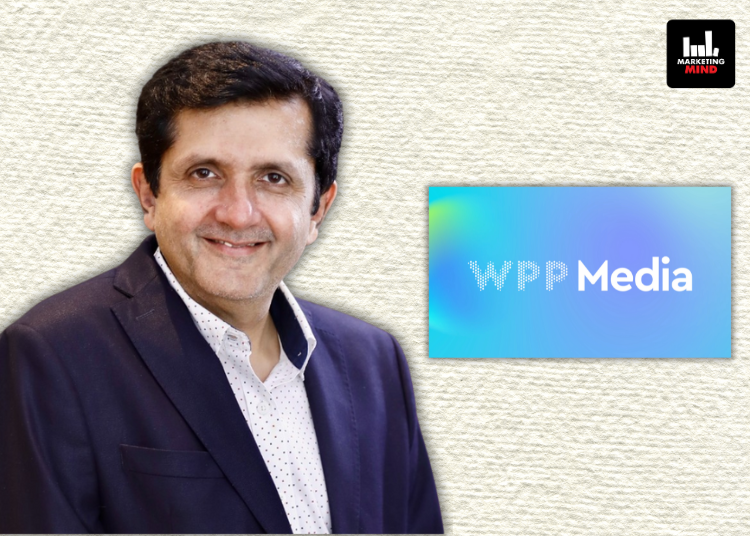
Speaking with Marketing Mind, on the sidelines with the DCODE launch, Amin Lakhani, President, Client Solutions, WPP Media South Asia, highlighted how DCODE goes beyond being just another report by offering a framework that equips marketers and planners with the fundamentals needed to build smarter, future-ready media strategies.
“DCODE is not a report, because it is not simply telling you what is happening in the media. Instead, it is a playbook that guides you on how to approach media planning. It helps you understand how to create a good quality media plan and lays down the fundamentals of media planning principles that can be applied while building a digital marketing program,” Lakhani said.
“The playbook also explains what a normal client brief looks like, since in our observation, the quality of a media plan is directly proportional to the quality of the brief. The better the brief, the better the outcome the media planner can deliver, as it allows them to judge effectively and bring in the right parameters to drive that outcome,” he added.
Furthermore, he went on to say that it is market and platform agnostic, enabling media planners to pick up this playbook and build a plan for any part of the country, whether urban or rural, while effectively engaging Gen Z, Gen Alpha, and young people.
When asked about the biggest gaps DCODE should address in a diverse market like India, Lakhani emphasised, “In a diverse market like India, challenges are inevitable, and this solution was designed not just for us but for the industry as a whole. For instance, India is not a single-source market; it is a multi-platform market where consumers engage with different platforms in very distinct ways.”
Each platform operates with its own algorithm and has a unique approach to engaging audiences- Snapchat, Instagram and YouTube have very different worldviews.
Furthermore, he went on to say that the real question then becomes: how can a media planner take all these varying dynamics and build a truly platform-agnostic media plan for clients? Whether the objective is upper funnel, mid funnel, or bottom funnel, the task lies in working backwards- identifying the right set of data, asking the right set of questions, and driving the right set of matrices to ensure that the plan is not just efficient but also highly effective.
He also addressed how DCODE will evolve as AI and generative capabilities reshape media planning and creative, explaining the ways in which it can remain future-proof and adaptable, saying that there is a huge opportunity in leveraging AI.
“At WPP Media, we are already at the forefront of this transformation through WPP Open, an enterprise operating system that enables us to establish an end-to-end process in communications planning, as well as communications and media planning,” Lakhani said.
“In this context, DCODE serves as a playbook. All we need to do is train the AI engines, brains, and agents to follow the processes outlined here- driving rigor, checking the fundamentals, and ensuring that the “brilliant basics” are always in place.
Once these foundations are strong, AI will be able to build on them to deliver powerful media plans and, consequently, impactful media outcomes in the future. The playbook will serve as the guiding framework for this journey,” he added.
When asked about the growing fragmentation of consumer attention across formats and devices, and the key shift media agencies must embrace over the next three years to remain truly consumer-first, Lakhani pointed out, “So the answer lies in your question. The reason I say that is because media planners need to observe consumers far more closely and look at the data-understanding what consumers are doing, how they are behaving, what gets them to stick to a platform, and what drives them away.”
He went on to say that they need to identify which cohorts are working better on a particular platform, which ones are not, which ad formats perform better, and what type of messaging resonates most.
“For instance, Snapchat may have a very different way of engaging, as I mentioned earlier, while Reels may demand a completely different approach. YouTube, with its long-form content, has yet another way of engaging audiences. This means media planners must keep their minds, ears, and hearts open to the consumer journey, consistently look at data, and ensure that campaign money flows where the eyeballs are flowing and sticking,” he said.
In conclusion he explained that it’s the most exciting time to be in the media today- there has never been a better moment than now.
“Look around: there’s gaming, influencer marketing, e-commerce, and quick commerce. Algorithms are constantly evolving, and with Google’s AI mode, the entire search conversation has been taken to another level altogether. There is so much excitement, with so much happening all around us. From the wealth of content we consume on our mobile phones and large screens to the experiences in cinema halls, it’s a truly dynamic time,” Lakhani said.
“Yes, the industry is fragmented, and media planners have to deal with disparate data sets. They face both an abundance of choices and the problem of choice itself. But I believe that’s a good problem to have because at the end of the day, it makes this space very exciting,” he added.