





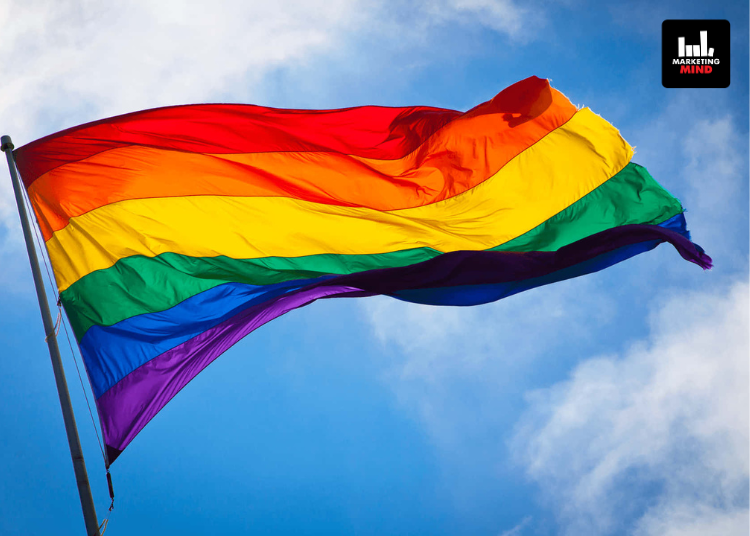
Each June, social media timelines are typically awash with rainbow-hued logos, heartfelt brand videos, and celebratory hashtags as corporate India embraces Pride Month. But this year, the shift is hard to ignore. With fewer overt campaigns, quieter tones, and almost no rainbow-wrapped packaging in sight, questions have begun to surface: Are brands consciously pulling back? Or are we witnessing a transition toward more thoughtful, less performative allyship?
Conversations with industry leaders reflect a mixed sentiment. Some note that brands seem hesitant and unsure how to show up authentically without appearing opportunistic. Others suggest the reduced noise may not signal retreat, but rather a move towards introspection and genuine inclusion beyond a once-a-year moment.
In a marketing landscape known for its agile moment marketing, the apparent absence of LGBTQIA+ advocacy this Pride has surprised many. While previous years saw vocal and vibrant campaigns from various brands, 2025 has been noticeably muted.
Some industry leaders point to a combination of factors behind this subdued tone- ranging from fear of backlash and tightening budgets to global shifts in diversity, equity, and inclusion (DEI) priorities. The reduced visibility is also being interpreted by some as a sign of brands avoiding tokenism and reconsidering what authentic support really looks like.
India’s social and legal landscape around LGBTQIA+ rights has seen landmark shifts in recent years. In 2018, the Supreme Court decriminalised same-sex relationships by striking down Section 377. In 2023, it further reinforced the right to union irrespective of sexual orientation, even though marriage equality was not granted.
Alongside this, Indian entertainment has gradually embraced queer narratives with greater nuance. Shows and films like Made in Heaven, Geeli Pucchi, Taali, Shubh Mangal Zyada Saavdhan, and Badhaai Do have offered mainstream visibility to LGBTQIA+ experiences.
Still, leaders observe that true collaboration with the queer community remains limited. Co-creation and participatory storytelling are yet to find widespread adoption in Indian advertising. The communication, when present, tends to be subtle, abstract, and often confined to safe platforms like Instagram reels or closed community conversations on podcasts and YouTube.

“Brands are shying away from Pride,” said Nisha Sampath, Managing Partner, Bright Angles Consulting. “Some feel they’ve done enough already. Others are unsure how to show up without being performative. Most are just avoiding it altogether.”
“There’s definitely a pullback in overt displays. We are seeing fewer rainbows and hashtags. Some brands are still doing the work but quietly. They’re not putting themselves out there because they’re afraid of getting it wrong,” she added.
Striking a similar tone, Harish Bijoor, Business and Brand-Strategy Specialist and

Founder, Harish Bijoor Consults, said, “All of a sudden, I do notice a whole set of companies, brands, shying away from the concept itself. I do believe this has happened due to the American issue of DEI going on to the backburner, fundamentally with the new government in place. And therefore, when it comes to DEI, most global companies which used to embrace it with open arms are today not doing as much.”
The result? A visible reduction in external-facing Pride efforts. While previous years saw brands like Zomato, Swiggy, Tata Tea, and Flipkart take vocal stands, 2025 has been muted.
“This time, there’s no external celebration. The LGBTQIA+ voice is invisible again. It’s back to business-as-usual creatives on social media. No product or packaging changes. And only a few brands have spoken up. The rainbow has faded,” Sampath observed.
She noted that the tone this year is “more mature and nuanced. And also less self-conscious. The tone is more subtle and the media use is narrower, sticking largely to Instagram reels, podcasts and YouTube videos.”

Meanwhile, Samit Sinha, Founder and Managing Partner at Alchemist Brand Consulting, believes the quieter tone may signal a shift toward sincerity.
“In my perception there seems to be less overt signalling by brands, which I hope also means that brands are not just paying lip-service to the community. I also hope that these are the early signs of maturity that are paving the path for a more authentic commitment to diversity and inclusivity, rather than simply jumping on the bandwagon,” he added.
Furthermore, Sinha stated that India is still far from embracing direct, participative storytelling.
“Yes, I think Indian brands still shy away from engaging directly with the LGBTQ+ community in storytelling. The communication themes tend to be subtle and abstract,” he added.
Sampath stated that most Indian brands still stop short of engagement. “There are many reasons for this fear of backlash, limited understanding, risk aversion, and budget cuts. Many brands now prefer the safer route of posting nothing.”
Some of the campaigns that did surface this year leaned into introspection and authenticity.
Senco Gold and Diamonds collaborated with drag artist Sushant Divgikar for Pehchaan, a personal musical anthem rooted in identity and self-acceptance. MTV launched #TuchchVichaar, a short film highlighting role-reversal bias, using the ‘🤏🏻’ emoji as a callout to casual homophobia. Meanwhile, Godrej Group chose to focus internally, highlighting LGBTQIA+ entrepreneurs across its ecosystem rather than driving a consumer-facing campaign.
Still, Sinha noted that collaborations this year remain minimal. “I don’t see any real involvement or collaboration, leave alone co-creation with the LGBTQ+ community,” he added.
Sampath sums up the shift in tone saying, “Less noise. Hopefully a sign of serious introspection and not withdrawal.”
Bijoor closed with a note of caution and a warning about inertia. “Brands need to watch out. If you stand for everything, you stand for nothing. This is a time for clarity, not confusion.”
“If I am to sum it all up, I think as far as the Indian brains are concerned, the idea is sit on the wall, look out, look in, look out, look in, and just keep doing that till next year. Round,” he added.
While some see this Pride as a pause for reflection, the road ahead will likely test which brands are truly committed to inclusivity- not just when it’s trending, but when it’s challenging.
Is the reduced buzz a sign of long-term change or just temporary caution? Are we heading toward a future where queer representation is embedded in brand values year-round rather than concentrated in June? Or will the rainbow only return when it feels safe again?
For now, the silence speaks volumes, and what follows may well define the next chapter in brand advocacy for LGBTQIA+ inclusion in India.