

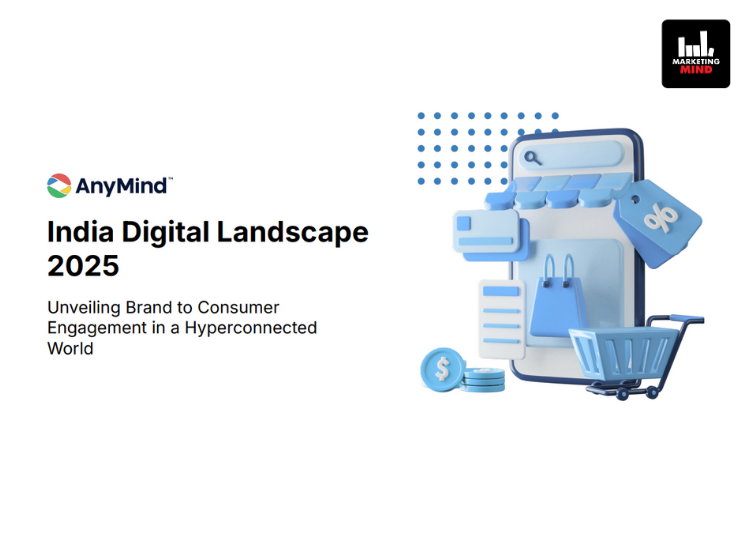
India’s digital landscape has undergone a major transformation, redefining the way brands engage with consumers in real time. The India Digital Landscape 2025 report by AnyMind Group has provided a comprehensive view of how marketing touchpoints, ad formats, and content strategies have evolved with the rise of platform-native consumers and a fragmented media environment.
According to the study, India’s mobile and internet penetration stand at approximately 29%, with rural areas expected to drive the next wave of growth. The digital economy is projected to contribute nearly one-fifth of the nation’s GDP by 2030. This shift has created a dynamic ecosystem where brand discovery begins with social media, curiosity is shaped by creators, and purchase decisions unfold across blended entertainment and commerce platforms.
The report has identified social media and in-game ads as the most effective channels for creating awareness, while YouTube, OTT platforms, and search ads have proven central to consideration and conversion. Word of mouth and D2C brand websites have continued to serve as the strongest levers for final purchase decisions.
Influencer-led content has emerged as the dominant awareness driver, with short, authentic videos outperforming static or shoppable formats. The timing of ad exposure has also been crucial—most consumers have responded best to campaigns appearing one to five days before making a purchase.
At the consideration stage, video ads, banners, and shoppable formats have performed strongest, aided by interactive storytelling and mobile-first engagement. Ads displayed during evening breaks and on news apps have shown higher click-through rates, emphasizing the role of contextual timing.
For conversions, video and shoppable ads have led performance, particularly when placed on search result and product detail pages. Most users have shown a tendency to respond to such ads within one to three days, underlining the importance of timely digital influence.
The report has also revealed that in-game advertising has gained significant traction, with 43% of users noticing such ads and many finding them engaging. Rich media and video interstitials have shown the highest click-through rates, particularly during lunch and post-work hours.
In influencer marketing, entertainment has dominated as the most popular content category in India, followed by lifestyle, fashion, and beauty. Emerging segments such as finance, real estate, and education have remained underexplored, signaling growth potential for future brand collaborations.
Through this analysis, AnyMind has highlighted how the modern Indian marketing funnel is no longer linear but dynamic—powered by creators, interactivity, and mobile-first experiences that turn every moment of attention into a potential opportunity for engagement and conversion.