





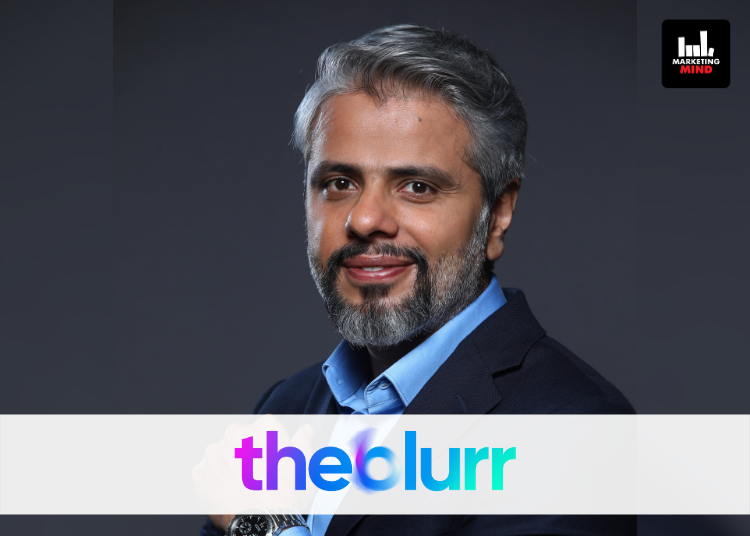
As marketers navigate an increasingly complex ecosystem of platforms, performance metrics, and ever-rising consumer expectations, the need for integrated, intelligent, and intuitive solutions has never been greater. In this shifting landscape, Shamsuddin Jasani believes the answer doesn’t lie in choosing between AI and creativity, media and storytelling, or speed and scale- but in embracing the blur between them.
In an exclusive conversation with Marketing Mind, the Co-founder and CEO of Theblurr explained how an AI-native mindset, not just AI-powered tools, is helping brands move from fragmentation to fluidity.
From building “media-aware” ideas that are platform-first from inception, to ensuring human intuition continues to shape creativity even in a data-driven world, Jasani offered a compelling vision of how marketing can be reimagined when intelligence and empathy work in tandem.
In a transformative move for the marketing industry, recently, seasoned leaders Jasani, Aatsi Desai Jasani, and Gopa Kumar Menon recently launched Theblurr – an AI-native, full-service marketing solutions company built to help brands win in a dynamic, data-driven world.
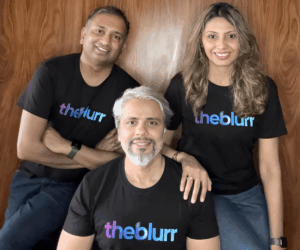
With a core philosophy that ‘AI is not an add-on-it’s in our DNA’, Theblurr brings together the power of creativity, media, data, and strategy to deliver measurable business outcomes. The company’s proprietary ‘HumAIne’ approach fuses machine intelligence with human intuition to unlock marketing that is faster, more adaptive, and genuinely effective.
Here are excerpts from the interview:
The name ‘TheBlurr’ is intriguing. What does it represent in the context of your vision for marketing’s future?
TheBlurr represents a fundamental shift in marketing- the blurring of boundaries that once kept everything in their lanes. Human and AI. Brand and agency. Media and creative. Digital and physical. Data and intuition. Global scale and local nuance. Those lines are dissolving.
We didn’t build TheBlurr to take sides. We built it for the space where all these things come together. Because that’s where real marketing happens now- fluid, fast, and deeply connected.
At TheBlurr, we help brands thrive in this space. We turn complexity into clarity, break down silos, and focus on what really matters: making meaningful connections with the people who matter most to your business.
You’ve described TheBlurr as “AI-native,” not just AI-powered. What does this distinction truly mean in practice and how is it shaping your identity from day one?
AI-powered means you’re using AI as a bolt-on- a tool that plugs into existing systems. AI-native is a complete mindset shift. It means AI is embedded into the architecture of how we operate. We’ve reimagined the entire marketing value chain through that lens.
From the way we take briefs, to how we build creative, plan media, run performance, and report impact- AI sits at the core. Not on the side. It helps us move faster, spot patterns earlier, personalise sharper, and scale smarter.
The difference shows up in how lean our teams are, how quickly we can respond to changing market signals, and how confidently we can promise not just brilliant output- but smarter outcomes.
What was the white space in the marketing landscape that compelled the three of you to come together and build TheBlurr?
Over the years, we kept seeing a consistent gap. Clients were being forced to choose—between speed and quality, between creative and media, between full-funnel thinking and real business outcomes. The traditional agency setups weren’t built to solve for this complexity. They were built for a different era.
The three of us had seen this problem from different vantage points- creative, media, business- and we knew there had to be a better way. That’s what led to TheBlurr: a model that doesn’t compromise. One team, built from scratch to be integrated, agile, and outcome-led.
And here’s the other thing- now is the moment for independent agencies to scale in ways that weren’t possible before. Thanks to AI and smart technology, you no longer need to be a global network to deliver at scale. You just need the right systems, the right talent, and the right mindset.
Tech and AI level the playing field. They allow a lean, focused setup like ours to deliver the kind of media and creative scale that used to require hundreds of people across multiple geographies. That’s a massive shift and we’re building TheBlurr to lead in that new reality.
The ‘HumAIne’ approach is core to TheBlurr’s offering. Could you unpack how this fusion of human intuition and machine intelligence plays out in real campaign executions?
HumAIne is our way of balancing what machines are great at- with what only humans can do.
Let’s say we’re building a campaign. The human side defines the cultural insight, the emotional hook, the story that needs telling. Then AI helps us pressure-test that story. Will it land with the right segments? Will it perform better on reels or carousels? What’s the best moment to deploy it?
In performance, AI continuously monitors and optimises- but humans still make the judgment calls when context matters. We believe this fusion- intuition plus intelligence- creates work that’s not just efficient, but also emotive, resonant, and relevant. That’s the HumAIne difference.
AI and automation often spark fears of losing the creative spark. How does your ‘HumAIne’ philosophy protect and elevate creativity in a world increasingly driven by data?
I understand the fear. But let’s be honest- creativity’s biggest enemy has never been data. It’s time. Revisions. Fragmentation. Endless resizing. AI helps us remove the friction that’s been eating into the creative process for years.
At TheBlurr, our creatives aren’t spending days resizing banners or formatting copy variants. AI handles that. What they’re doing instead is shaping ideas that are insight-rich, culturally sharp, and format-fluid.
HumAIne ensures creativity gets the time, context, and headspace it needs to thrive- while the machine works in the background to make it smarter, faster, and more adaptive.
Modern marketers are overwhelmed with fragmentation- between platforms, tools, and teams. How does TheBlurr simplify this chaos and offer a unified growth roadmap to brands?
This is one of the biggest pain points we heard from every client we spoke to before launching. Too many partners, too many dashboards, too many KPIs and no one really owning the outcome.
At TheBlurr, we’re structured to simplify. You get one partner across creative, media, data, and performance. One integrated team that speaks the same language and works off the same goals. Our internal systems ensure that media insights feed creative, and creative choices impact performance decisions.
And because we’re AI-native, we’re able to bring all your data and execution into one view- so you see what’s working, what’s not, and where to course-correct, fast.
Between the three of you, there’s over six decades of leadership experience. How have you consciously structured TheBlurr’s model to reflect this multifaceted strength without overlapping roles or vision?
That was one of our first conversations and probably the easiest one. We’ve known each other a long time, and we trust each other’s strengths deeply.
I lead business strategy, partnerships, and growth. Gopa leads delivery- media, ops, execution. Aatsi leads client experience, strategy, and brand-side thinking. We don’t step on each other’s toes- we complement one another. That lets us move quickly and stay aligned.
We’ve also made sure our teams mirror this. We hire people who understand the whole picture, not just one vertical. That’s how we stay integrated and outcome-focused without becoming bloated or bureaucratic.
You’ve emphasised a structure where creative ideas are media-aware from day one. Could you walk us through what that looks like on the ground?
In most agencies, media comes in at the end- to amplify an idea that’s already been approved. That’s backwards.
At TheBlurr, creative and media are part of the same brainstorm. If we’re developing an idea, we’re already thinking about where it’ll live, how it’ll behave in feed, how it might be remixed by creators, how performance signals might help evolve the narrative.
That’s what “media-aware” means. It ensures creative isn’t just beautiful and media isn’t just efficient. That alignment saves time, saves money, and drives better results.
Many agencies still operate in functional silos. How does TheBlurr’s internal architecture ensure true collaboration, and how do clients benefit from it in tangible ways?
We designed TheBlurr to be anti-silo from day one. Our teams are structured into brand squads- cross-functional pods with a shared mandate. No handing over between departments, no disconnects between insights, ideas, and execution.
We built shared KPIs, a unified tech stack, and transparent dashboards so that everyone’s working toward the same outcome.
Clients feel it immediately. Fewer emails. Faster turnarounds. Teams that already know the context. And most importantly- work that delivers across the board, not just on one metric.
Brands today want more than impressions- they want influence, conversion, and cultural relevance. How is TheBlurr building frameworks to measure what really matters to business leaders?
We start every engagement with one question: what business problem are we solving?
Then we build our measurement framework around that. If it’s sales, we track sales. If it’s a consideration, we build signals around search intent, social conversation, and influencer impact. If it’s relevant, we look at brand lift, community growth, sentiment shifts.
Because we’re AI-native, we adapt instead of just reporting. Our systems learn in real time and help us optimise for what’s moving the needle. You’re not just checking dashboards anymore but you’re finally seeing where things need to go.
What categories or sectors do you feel are most ready to embrace an AI-native agency model and which ones may need more handholding in this transition?
D2C brands, digital-first startups, fintech- they’re already there. They expect agility, data fluency, and outcomes from day one. But the opportunity is bigger with legacy brands in FMCG, BFSI, auto- these are sectors sitting on massive data and media investments, but not leveraging them fully.
What they need is a partner who can de-risk that journey. One who understands brand-building but also speaks data fluently. That’s what we bring to the table- strategy plus scale, intuition plus intelligence.
As you lay the foundation of TheBlurr, what does long-term success look like for you? Are there benchmarks beyond growth that you’re chasing?
For us, growth isn’t just about headcount or revenue- it’s about impact. We want to work with full-service clients where we can truly move the needle. That means being deeply involved across strategy, creative, media, and performance- not just executing tactics, but owning outcomes.
And we’re not limiting that ambition to one region. Our vision is global. The timing is right. With the rise of AI and automation , the traditional barriers to global scale- office count, network size, legacy infrastructure- don’t apply anymore. What matters now is the right mix of human insight and machine intelligence.
We’re building TheBlurr to be a new kind of agency- lean, fast, and built to scale. One that can match the craft of a boutique with the ambition of a network. And one that doesn’t just talk about integration, but lives it- every day, on every brief, across every market.