






Years, like journeys, are remembered not merely for the miles covered, but for the moments that altered direction. 2025 was such a year for Indian travel, a year when intent became more intimate, geography more granular, and culture not an embellishment but the very engine of growth. As India moved, between towns, temples, festivals and futures, marketing too had to learn to travel differently.
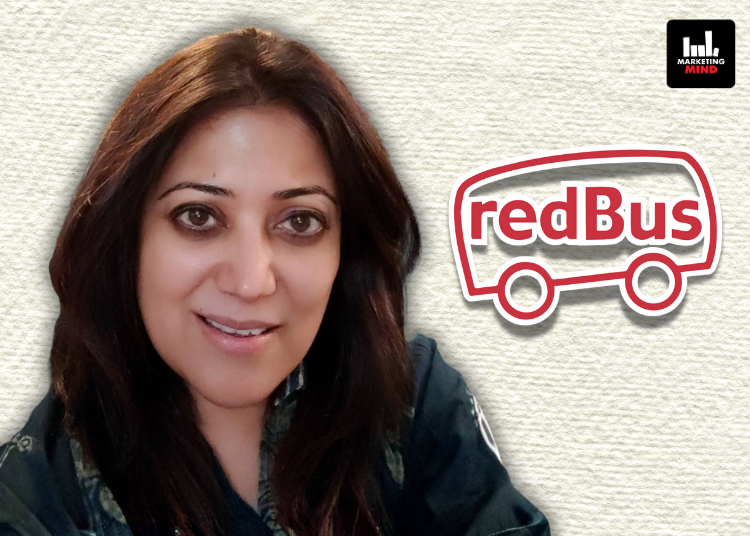
At the heart of this recalibration stood Pallavi Chopra, Chief Marketing Officer, redBus, stewarding a brand that quite literally sits at the intersection of movement and meaning. What follows is not just a review of a year gone by, but a meditation on how India travels now, and why relevance, today, must speak in many tongues, at many stops, across many lives.
“In 2025, we saw two clear shifts in how India is travelling, both of which significantly influenced our marketing priorities,” Chopra reflected. “The first was a marked rise in demand from Tier 3 towns and smaller cities; according to data from our redBus BusTrack report, around 60% of traffic comes from cities beyond metros and state capitals.”
This decentralisation of demand demanded a decentralisation of storytelling. “To cater to this segment, we strengthened our regionalisation strategy by building state-specific marketing campaigns. After our successful activation in Madhya Pradesh last year, we expanded this model to Maharashtra with a Marathi-first campaign and regional language experience across the funnel.”
Yet geography was only half the story. Faith, festivals and collective rituals emerged as equally powerful travel triggers.
“The second shift was a noticeable increase in pilgrimage and festival-driven travel compared to 2024. Kumbh 2025 was one such case in point.” To meet this moment, redBus moved beyond conventional promotions. “To cater to the demand during this pilgrimage, we ran Kumbh-specific campaigns on Facebook and Google as well as on redBus’ own channels, launched GyaanKumbh, a WhatsApp bot to answer all user queries related to the Kumbh Mela, and also offered discounts.” The insight was unmistakable, she shared. “Many travellers choose bus travel not only for major pilgrimages but even smaller festivals like Kanda Sashti.”
Together, Chopra noted, “These shifts demonstrated that India’s intercity travel growth is increasingly localised, culturally influenced and aligned to important life moments and festivals.”
Where Growth Accelerated, and Why Messaging Mattered
Growth, in 2025, had a clear compass. “We saw particularly strong growth across the northern region, and our marketing investments were closely aligned to this pattern.”
The creative response was as linguistic as it was strategic. “We focused on driving top-of-mind awareness across Hindi-speaking markets through our contextual campaign, ‘Bass Kar, redBus Kar.’ The creative was built around familiar Hindi expressions and a pun of ‘bas’ and ‘bus’, rooted in everyday travel moments.”
The results spoke decisively. “We saw a 39% increase in new users in Delhi and 61% growth in Uttar Pradesh between April and October 2025, compared to the same period last year.” The lesson was simple, yet profound: concentration, when guided by insight, compounds impact.
Media, Mobility and Meeting Intent Where It Lives
“Our media mix was led by digital platforms this year, supported by strategic television placements and high-impact outdoor presence,” Chopra explained. Television, often prematurely eulogised, still held sway. “TV played an important role in building top-of-mind awareness in high-growth markets, especially in northern states.”
Outdoor, meanwhile, became a study in precision. “Within OOH, our focus is auto branding, which gives us visibility exactly where travel intent is the highest, on the move, near boarding points and high-mobility neighbourhoods.”
Localisation, once again, proved decisive. “In Maharashtra, we took a hyperlocal approach, drawing from Warli art and Marathi lingo to reinforce brand familiarity close to the point of decision.”
Creators, AI and the New Marketing Muscle
Influencer marketing matured from endorsement to ecosystem. “Our redTribe program has driven exceptional results- 3,600+ creator videos and a 78% increase in monthly app installs in Indonesia.”
AI, meanwhile, quietly rewired workflows. “AI turned our workflows from static, cohort-based processes into adaptive systems.”
“AI decides the next best action; humans define the guardrails.” From bidding to creative production, its impact was transformative. “We’ve significantly reduced creative turnaround times and unlocked new possibilities, from short-form videos to SEA market content.”
Data That Listened Before It Spoke
Data, for redBus, was never about volume, it was about intent. “One of our key focus areas was strengthening the top of the funnel by identifying users actively showing affinity towards travel.”
These users, Chopra explained, “respond well to brand-led messaging that reinforces convenience and reliability.” The shift was philosophical as much as tactical. “We moved from optimising for new transactions to optimising for new searches. This approach helps us drive more product trials.”
First-party data became the moral and strategic backbone. “In a privacy-first world, first-party data allows redBus to replace tracking with understanding, and targeting with guidance.”
“In bus travel, decisions are high-intent, time-bound and contextual. Our data is behavioural, contextual and purpose-limited, used to improve experience, not surveillance.”
Creativity, Culture and Campaigns That Stuck
The standout campaign of the year 2025? “Our top-of-mind awareness campaign, ‘Bass Kar, redBus Kar,’ delivered the strongest impact.”
“The campaign increased top-of-mind awareness by 8 percentage points nationally and 13 points in Delhi.” Why did it work? “It was built around a familiar Hindi phrase and everyday life scenarios. The repetitive line, ‘Bus yaani redBus,’ reinforced category association.”
Similarly, campaigns like ‘Time Pass Skip Karo’ leaned into lived realities. “It showcased slice-of-life instances from Tier 2 and 3 markets. We adapted language and cultural nuance by region.”
The shift away from celebrity dependence was deliberate. “Moving from celeb-led campaigns to flexible formats gives us the freedom to address localised issues in local lingo.”
Looking Ahead: The Road to 2026
“As we plan for 2026, our focus is clearly on emerging cohorts.” Women travellers stand out. “They now make up around 33% of our passengers. We’ve launched women-specific features, support and deals.”
Spiritual travel continues to anchor demand. “Travel to spiritual destinations is now a consistent contributor.” And regionalisation remains the cornerstone. “When messaging reflects local language, local art and local humour, we build trust faster, especially with first-time digital bookers.”
If 2025 taught redBus anything, it is this: India does not travel in a straight line. It curves through belief, pauses at memory, accelerates through necessity and arrives, often, where culture feels most familiar.
In listening closely to these rhythms, Chopra and her team did more than market journeys. They mapped intent, honoured context, and proved that in a country this vast, relevance is the only real route to scale. And as 2026 beckons, one thing is clear, the road ahead may be long, but redBus knows exactly how to read the signs.