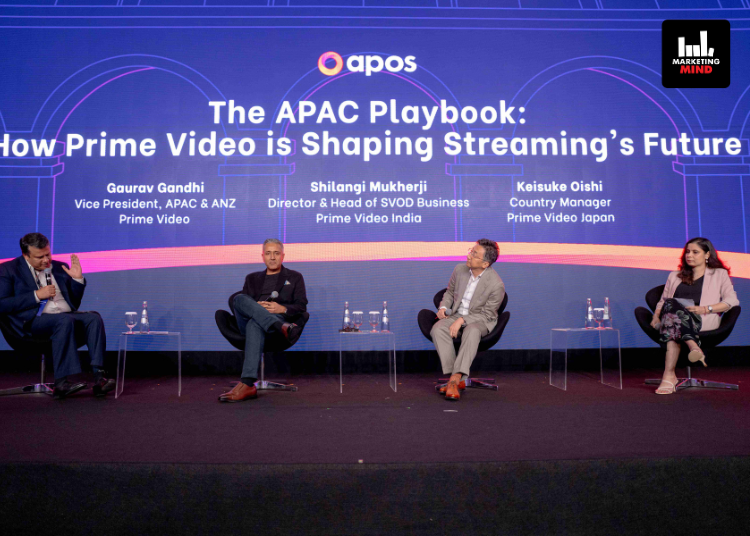






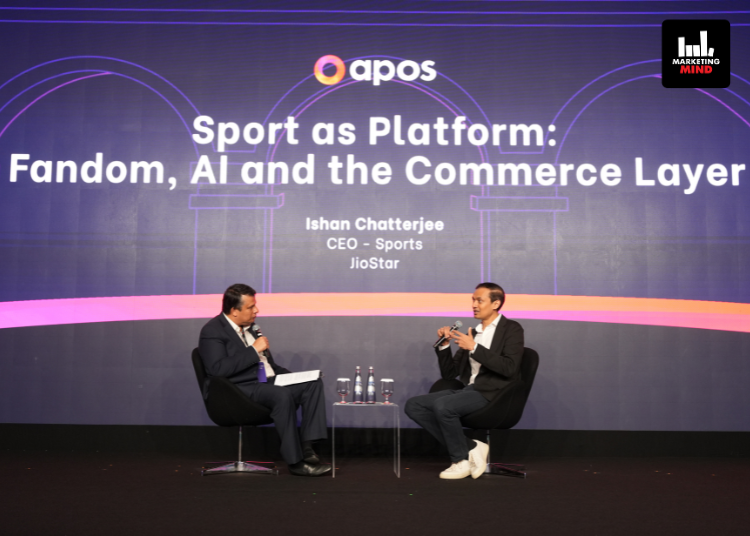
Speaking at APOS 2026, Asia’s premier summit for the entertainment and technology industry, Ishan Chatterjee, CEO, JioStar, Sports, outlined how India has become the most demanding and most rewarding live sports market in the world.
With the IPL 2026 having crossed 1.2 billion viewers and JioHotstar holding the global digital concurrency record of 72.5 million set during the ICC Men’s T20 World Cup 2026 Final, he opened by reframing what scale means for a platform.
Chatterjee emphasised, “We are now operating at an incredible scale within India. Just for some numbers, we are now regularly delivering over 1 billion viewers every IPL season. This season we got 1.2 billion. In the recently concluded ICC World Cup (ICC Men’s T20 World Cup 2026 Final), we set the record for the highest concurrency globally for any single event at 72.5 million,”
“But what I take away from that is that live sports, and specifically cricket, are unique. Today, we operate in a world where content supply across both traditional media and social media is infinite, and there are very few properties that can aggregate audiences at the scale that live sports can. If there’s an India-Pakistan game going on, if there’s an IPL final, you can be rest assured that hundreds of millions of people are going to tune in to watch that particular game, and it’s a core part of our strategy,” he added.
He explained that serving a billion viewers demands understanding the complexity that sits within that number.
“That one billion-plus viewership includes somebody sitting in South Mumbai watching on a connected TV, but it also includes somebody on a mobile phone in a village in India. A one-size-fits-all proposition doesn’t work for both,” Chatterjee said.
On the role of personalised language in making scale relevant, he shared a striking data point about how cricket is watched in India.
He said, “On IPL, we had over 12 different languages fans could consume the property in, and we are now at a stage where English consumption of IPL is less than 10% of our watch time. 90% comes from Indian languages, and if you remove Hindi, the other regional languages grew twice as fast as the rest of the field. It gives you an idea of the personalisation that you need in order to succeed with the scale.”
Speaking about the growth of sports consumption beyond cricket, he pointed to the scale at which international properties are now achieving in India.
“IPL is critical to our overall strategy, but it’s not the only acquisition engine that we have. We are at the stage on the platform where we have over 350 days of live sports across many different sports. The Premier League alone in India now has over 100 million viewers in the last season. Last year, Wimbledon saw 80% growth in digital reach. The US Open that followed straight after saw 75% growth in our overall reach. This is just an example of consumption in India across live sports really taking off,” Chatterjee highlighted.
He also spoke about JioStar’s decade-long investment in building new sports categories from the ground up, like Kabaddi.
“For non-cricket sports, there is a huge upside in India, which is massively untapped. One of the things that we have as a platform is the cricket funnel that comes into experience the sport. We can help direct that toward other sports to drive sampling and, eventually, fandom there,” Chatterjee said.
Furthermore, he went on to say, “A good example of that is Kabaddi. Last season, we drew well over 300 million viewers, and that property was built entirely by us over the last 10 years. It is now a completely unique in-stadium as well as broadcast experience. It proved that you could take this top-of-funnel audience that is coming to watch marquee sports, direct them to others, and see growth. Kabaddi has been very successful, and I think that proves there is a huge roadmap for many other sports as well.”
On the content commerce opportunity, he described the thinking behind JioStar’s integration with Swiggy.
“In this world of so much content and so many competing priorities for your time, consumer attention spans are dropping dramatically. The more we can provide all-encompassing user experiences, the more you can drive engagement and stickiness on the platform. What we think we need to get right is the connection between the commerce category and the content that is playing,” Chatterjee said.
“An IPL game typically runs between 7:00 p.m. and 10:00 p.m. or 10:30 p.m. – that is dinner time. We know there is a very natural user behaviour that when somebody is watching a game, they probably want to order some food and not spend time in the kitchen. The integration with Swiggy was a native integration into the app, which allowed a user to watch the game, buy and transact, complete their food delivery and track the delivery order all within the app, never leaving the screen altogether. We provide a top-of-funnel experience for Swiggy that is unmatched, and for us it opens up new monetisation streams,” he added.
On the OpenAI partnership and where AI is taking the fan experience, he described a vision that goes well beyond search.
Chatterjee explained, “With OpenAI, it was the same insight that we were working through. We tried to figure out that there were two trends that we were noticing on the platform, and across the industry: first, hyper-localisation going much deeper into regional languages, and the second, voice preferred to typing, as an example. The OpenAI integration again is a deep product integration with our platform, which allows you not just to discover content using voice search, but more importantly, to go much deeper into the fan experience itself.”
He also mentioned, “So now you can watch IPL, and while you’re seeing Rajasthan Royals bat, you can say what was Vaibhav Suryavanshi’s strike rate in the last IPL to date, and then ChatGPT will deliver that answer to you to really bring you a much more in-depth consumer experience that we think is very differentiated from anyone else in the market and really goes to the core of what drives fandom.”
“I think we are literally just scratching the surface because what we’ve basically done so far is improve the search and the content discovery experience. But as you look ahead, you can imagine this moving into an agentic kind of experience where you’re basically talking to your phone and getting back information, information retrieval becomes much more seamless, and that adds to the overall consumer experience that you’re seeing on the screen,” he added.
Closing out the discussion on the evolution of advertising and new revenue streams, he spoke about how the platform is building beyond traditional top-of-funnel branding.
“We do a very good job today of delivering top-of-funnel, big branding campaigns, where you need national scale. But consumer attention spans have dropped dramatically over the last few years because of social media and so many competing priorities on people’s time that providing more engagement opportunities and personalising them to each viewer is the way to go,” Chatterjee stated.