




Marketing has been in a hurry. It has scrolled faster, spoken shorter, measured harder and moved on quicker than ever before. Somewhere between five-second attention spans, performance dashboards and moment marketing, it has learned how to optimise almost everything, except patience.
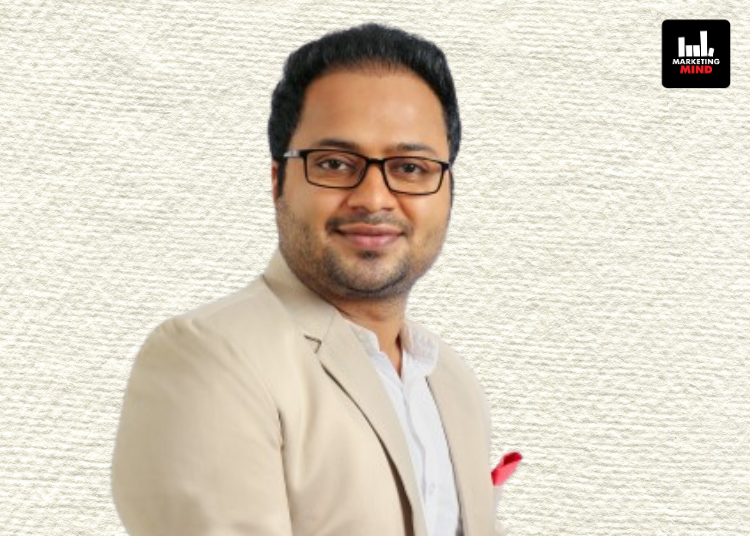
In the middle of this hyper-speed ecosystem, ex-Senior General Manager & Head of Marketing, India, Asia and North America at Magickhomes, Jayesh Sali has paused to ask a quieter, more uncomfortable question: What are we actually building? Campaigns, or brands?
Across close to two decades in marketing, spanning telecom, fashion, retail and home improvement, and markets as diverse as India, New Zealand and the US, Sali has watched marketing become sharper, faster and more data-led. But he has also watched it lose something less measurable: time for ideas.
“Marketing has evolved faster than ever before,” Sali said, reflecting on how the discipline has changed over the years. “But somewhere along the way, we have started building businesses faster than we are building brands.”
He has believed that marketing today has become increasingly short-term. “We have become extremely metrics-focused,” he said, adding that dashboards, performance numbers and immediate gains have begun to dominate decision-making. “The problem is not metrics. The problem is when metrics become the idea.”
According to him, brands have often started reacting instead of leading. “We are chasing trends, moments and formats,” he said. “But we are not spending enough time defining what the brand truly stands for.”
He added that creativity hasn’t disappeared, it has simply been buried. “The ideas are still there,” he said. “They are just getting lost under pressure, speed and optimisation.”
Attention Has Shrunk to 5 Seconds, But Stories Have Stayed
Sali has pointed out that attention spans have continued to shrink. “The latest data suggests attention spans are now down to five or six seconds,” he said. “That changes how quickly brands need to communicate.”
But he has been clear that this doesn’t mean storytelling has lost relevance. “Short-form content works, no doubt,” he added. “But at the same time, long-form storytelling has made a comeback.”
He has observed that audiences have stayed with stories that are emotionally strong. “If you have something interesting to say, people will watch,” he said. “They don’t mind whether it’s two minutes or seven.”
According to him, the problem hasn’t been attention, it has been intent. “We are designing everything for speed,” he said. “But we are forgetting memorability.”
Sustainability Has Become Story, Not Just Strategy
In the middle of this marketing shift, sustainability has taken on a larger role. “A few years ago, sustainability was a good-to-have,” Sali said. “Today, it has become part of our lives.”
He explained that sustainability has emerged as a key differentiator for brands. “From packaging to materials to manufacturing practices, sustainability has become part of brand communication,” he added.
But he stressed that it works only when it is authentic. “Sustainability cannot be a campaign,” he said. “It has to be part of the story you genuinely believe in.”
According to him, when done right, it has allowed brands to connect beyond products. “It gives brands an opportunity to be a force for good,” he added. “And that creates far deeper engagement than any claim ever can.”
If Marketing Started Over, Creativity Would Have Led Again
Asked what marketing would look like if rebuilt from scratch, Sali did not look ahead, he looked back. “I would take marketing 10 or 20 years back,” he said. “To a time when we relied more on human talent than technology.”
He recalled an era when ideas were given time. “I have spent almost a year cracking a single campaign,” he said. “And those are the ideas people still remember today.”
According to him, today’s marketing has prioritised frequency over longevity. “We see 10x more ads now,” he said. “But very few of them stay with us.”
He also warned against inconsistency. “If you are not consistent, you are not a brand,” he said. “You are just reacting to whatever is trending that day.”
Sali believes that if marketing were to start over today, it would slow down. “It would focus on clarity, creativity and long-term thinking,” he added. “Because strong brands are not built for five seconds. They are built for decades.”
Sali has not argued for less technology or fewer tools. He has argued for better priorities. “Technology enables things,” he said. “But it is the human connection that differentiates brands.”
In a world where marketing has been built for speed, he has reminded the industry of something older, and harder, to measure. Those brands have been remembered not because they were seen often, but because they were felt deeply.
As attention has continued to shrink and formats have continued to evolve, Sali believed that the fundamentals have not changed. Ideas have still mattered. Consistency has still mattered. And creativity, given the time and respect it deserves, has continued to do what no dashboard ever can, make brands last.