





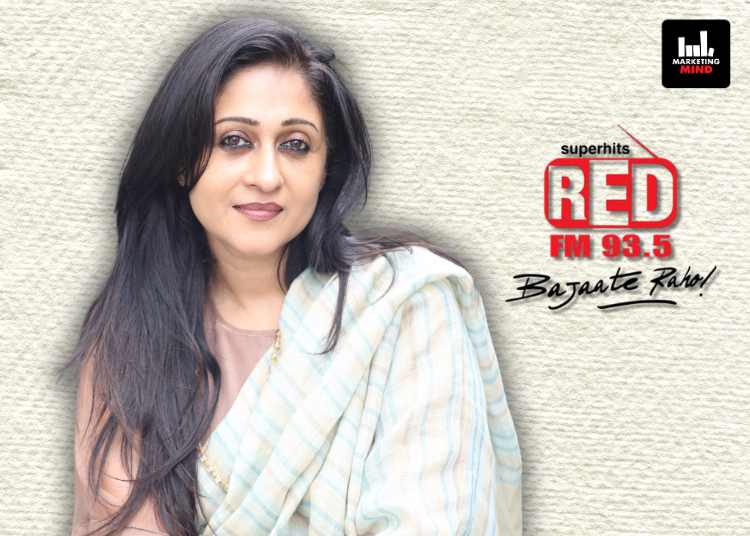
“2026 will be the year where radio no longer stands alone, but stands at the centre of a living, breathing ecosystem of digital audio, live experiences, and hyper-local storytelling,” said Nisha Narayanan, Director and COO, Red FM- a line that, even now, feels less like an industry forecast and more like a carefully tuned prophecy.
In a media world increasingly hypnotised by screens, algorithms, and fleeting clicks, Narayanan was already listening to something older and more enduring: the rhythm of human connection. To her, radio was never a fading medium, it was a cultural force waiting to be reawakened, capable of slipping effortlessly from the intimacy of the ear to the energy of the street, from the comfort of a voice to the spectacle of a live experience.
As 2026 unfolds, marked by immersive festivals, digital-first audio, and hyper-local storytelling, Red FM’s transformation feels almost inevitable. What once lived only between two frequencies has expanded into a multi-platform universe where culture, community, and commerce now meet. The dial, in effect, has been turned outward, to cities, to subcultures, to stories that refuse to be flattened by technology.
In Narayanan’s vision, there was no nostalgia for what radio once was, only conviction about what it could become. Not a medium competing with the future, but one shaping it- quietly, persistently, and with unmistakable cultural authority.
And so, long before 2026 found its voice, Red FM had already begun to broadcast its future.
When 2025 Became the Blueprint
“2025 has been a defining year for Red FM as we continue to strengthen our identity as a culture-first, nat-local, and multi-platform entertainment brand,” Narayanan said.
“Our on-ground IPs evolved into immersive, region-led cultural experiences that travelled across geographies,” she added. “From South Side Story to the Dugga Dugga Festival, we brought together music, food, art, and community-led storytelling, tapping into a growing appetite for authentic cultural expression.”
Radio, in her telling, was no longer confined to a frequency. It was spilling into streets, stages, and city squares.
“Alongside this, properties like the Riders Music Festival and our digital-first initiatives helped extend reach, build stronger communities, and deepen engagement across platforms,” she said.
Even the business numbers echoed this momentum. “From a business standpoint, advertiser confidence remained strong through the year,” Narayanan noted. “FMCG continued to be among the top advertising categories on radio, and we saw sustained engagement from large, diversified brands.”
Behind the scenes, she added, Red FM was preparing for what lay ahead. “We invested in future-proofing the organisation in anticipation of regulatory and policy changes that will shape the next phase of radio, audio, and experiential entertainment in India.”
Regulation, Reform and the Road Ahead
Narayanan’s optimism about radio’s future was matched by her clarity on policy.
“We welcome TRAI’s intent to strengthen the broadcasting and audio ecosystem through balanced regulation and innovation,” she said. “Red FM is not opposed to the introduction of digital radio, however, we have consistently highlighted the need for a phased and sustainable roadmap.”
Speed, she warned, could come at a cost. “We have recommended a five-year implementation period with simulcast of analogue frequencies to allow the ecosystem to adapt responsibly,” she said. “Our concern remains around the current approach to reserve pricing and migration policies, which could place undue pressure on an industry that has already faced prolonged financial challenges.”
Then came what she called the real unlocks. “It is time to re-examine key policy levers, such as allowing news and current affairs on private FM channels, and enabling radio on mobile devices,” Narayanan said. “These are not just asks — they are enablers.”
On expansion, she was refreshingly candid. “Expansion in terms of new cities and frequencies is largely policy-driven,” she said. “What remains firmly within our control is content.”
And content, she insisted, is where Red FM is doubling down. “We continue to innovate across formats, programming styles, and IP-led offerings, guided closely by evolving audience preferences and consumption behaviour.”
The Brands That Kept Radio Thriving
“In 2025, categories such as FMCG, automobiles, consumer electronics, grooming and lifestyle, financial services, and retail continued to be strong radio advertisers,” Narayanan said. The client list read like a mirror of modern India. “Key advertisers included Hero, Muthoot, Boomer, Wildstone, Samsung, Mankind, and Royal Enfield,” she added.
Despite rumours of shrinking budgets, she pushed back. “Despite periodic speculation around brands pulling back spends, our experience has been quite the opposite,” Narayanan said. “FMCG, in particular, has consistently leveraged radio.”
Looking ahead, she added, “We expect increased participation from emerging D2C brands, regional businesses, and experience-led marketers.”
Government, Trust and the Power of the Airwaves
“Government advertising continues to play an important role for the radio industry,” she said. “There is a strong case for encouraging more government departments to actively use radio, given its reach, trust, and effectiveness in public communication.” She added that some markets need special attention.
“Cities in the North East, smaller towns, and remote regions depend on radio as a community connector, even when commercial viability is challenging.”
“Investment in stronger measurement frameworks will be essential,” Narayanan said.
“As radio becomes part of an integrated media solution, attribution must evolve to capture its multiplier impact across digital, social, and on-ground touchpoints.”
Culture as the New Currency
“2025 marked a strong shift toward authenticity and cultural rootedness,” she said. “Gen Z and young millennials actively sought content that celebrates regional identity, heritage, and community.”
Brands, she noted, followed that instinct. “They increasingly favoured integrated solutions that blend radio, digital, social, and live experiences.”
AI, But Still Human
“AI has emerged as a supportive layer rather than a replacement for creativity,” Narayanan said. “It helps with research, data mapping, and content structuring,” she added, “but radio remains a deeply human medium.”
“Emotional nuance, originality, and cultural sensitivity come from people.”
And That Is How 2026 Took Shape
“The coming year will see deeper convergence between radio, digital audio, live events, and experiential storytelling,” she said. “Hyper-local and culturally rooted narratives will gain greater prominence, especially in tier-2 and tier-3 markets.”
And finally, a line that feels like a manifesto for the medium itself: “Media brands will increasingly transform into holistic content and experience companies, building deeper and more culturally resonant connections with audiences.”
In the end, 2026 did not suddenly arrive. It was first imagined, then spoken, on the air, by Narayanan and Red FM.