






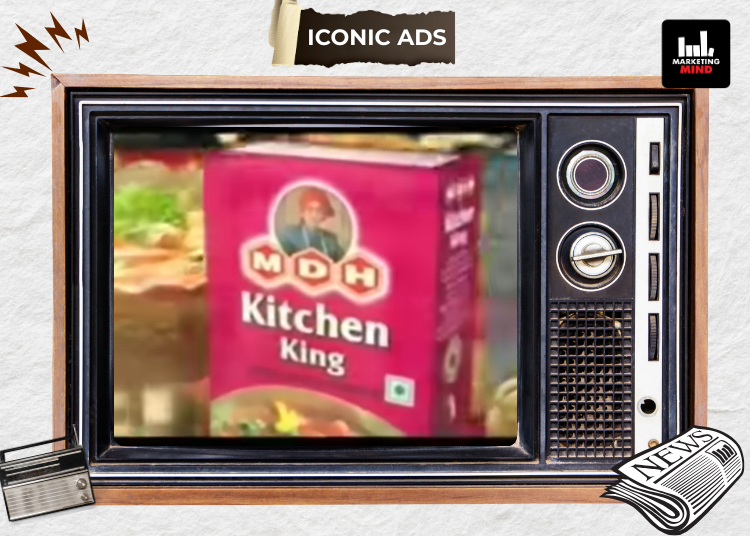
What is the first thing your brain cooks up when you hear Asli Masale Sach Sach?
A cloud of haldi dust floating dramatically in the air?
Your mother shouting from the kitchen asking who finished the garam masala again?
Or, like every desi who has ever opened a spice drawer, do you instantly picture a cheerful old man in a red turban appearing out of nowhere like a flavour-loving genie?
If you picked the last one, congratulations. You have officially been raised by MDH.
There was a time when Indian advertising had swagger, sparkle and a whole lot of shouting. Yet MDH walked in with the confidence of a grandfather who knows his recipes never fail. No special effects, no dramatic voiceovers. Just warmth, food, family and Mahashay Dharampal Gulati smiling directly at you, as if he had personally checked the salt in your dal before allowing the camera to roll.
These ads were not commercials. They were mini home videos. The type where someone’s uncle suddenly appears, blesses the biryani and steals the show without even trying.
And honestly, we adored it.
Every single time.
One masala dabba at a time.
In House Magic That Became a National Legacy
While most brands went hunting for external creative agencies, MDH simply looked within its own walls. The entire advertising process was handled in house concept, scripting, production, music and direction and the best part was that Dharampal Gulati himself appeared in almost every ad. This made the ads feel personal, authentic and consistent over decades. There were no layers of committees or outside experts trying to “modernise” the story. Just a team who knew the brand and a founder who believed the product spoke for itself.
It was this simplicity and authenticity that made the commercials feel so real. They were never trying to be clever. They were trying to be comforting. And in a country where food is practically a love language, MDH understood the assignment before the assignment existed.
The 1984 Breakthrough: The First TV Ad That Started It All
The MDH story on television began in 1984 with a commercial featuring well known actors Shafi Inamdar and Neena Gupta. But even with popular faces in the frame, the one who stole the spotlight was Gulati himself. He was not a trained actor. He was simply the man who built the spice empire from scratch, standing in front of the camera with the sincerity of someone who genuinely believed in what he was selling.
That honesty hit differently. Viewers felt they knew him. Not as a corporate figure, but as the friendly uncle who would drop by with laddoos on Diwali. From that point onwards, his appearance in MDH ads became a tradition.
The Jingle That Became India’s Alarm Clock
Then came the jingle.
The one that marched into living rooms every morning and stayed there for decades.
Asli masale sach sach, MDH MDH.
It was simple. It was catchy. It was India’s unofficial kitchen anthem. These ads painted scenes of everyday cooking. Mothers stirring pots. Children sneaking bites. Families gathering at the table. And in between it all, a cut to Gulati smiling proudly, as if he could smell your dish through the screen.
Generations of children grew up humming the tune without even realising they were remembering an advertisement. That is not brand recall. That is cultural imprinting.
Deggi Mirch, Kitchen Chaos and The Masala Multiverse
As MDH expanded, the ads expanded with it. Each masala has its own personality. One of the most popular was the Deggi Mirch campaign with its high energy line:
Deggi mirch ka tadka, ang ang bhadka.
Suddenly sword fighters, dancers and energetic cooks exploded into frame, celebrating the fiery magic of the spice. It was a joyful chaos that felt straight out of a festival.
Other campaigns celebrated pav bhaji masala, chole masala, rajma masala and more. The pattern remained the same. Real kitchens. Real food. Real people. And Gulati appeared at the perfect moment with his iconic pose.
The brand created its own masala multiverse, and Gulati was the superhero holding it together.
The Anniversary Films That Hit Straight In The Heart
As MDH approached big milestones, the ads shifted into a more emotional tone. These anniversary films looked back at the brand’s journey, its humble beginnings and the man behind it, who continued working into his late nineties.
No overdone nostalgia. Just dignity, pride and a reminder of how much one person can shape the taste of a nation.
The Passing Of An Icon And The Continuation Of A Legacy
When Gulati passed away in 2020 at the age of 98, India mourned him like a family member. Social media turned into a digital condolence book. People shared stories of watching him on TV with their parents. Some even recreated the jingle in tribute.
The baton then passed to Rajeev Gulati, his son, who continues the brand’s presence in newer campaigns. The ads may evolve, but the heart remains unchanged. That sense of warmth, honesty and family is still the seasoning in every film.
Why MDH Ads Still Stick To Our Memory Like Haldi On A White Shirt
Because they were not trying to impress.
They were trying to connect.
In a world full of polished advertising and clever gimmicks, MDH chose to stay grounded. Familiar homes. Happy meals. A founder who showed up on screen not because he needed attention, but because his presence made the brand feel human.
If someone says MDH today, you do not imagine a logo.
You imagine a smiling Dadaji in a red turban.
You hear the jingle.
You smell the spices.
You remember a time when ads felt like family.
Advertising gold. Nostalgia platinum.
And a legacy that still tastes just right.