






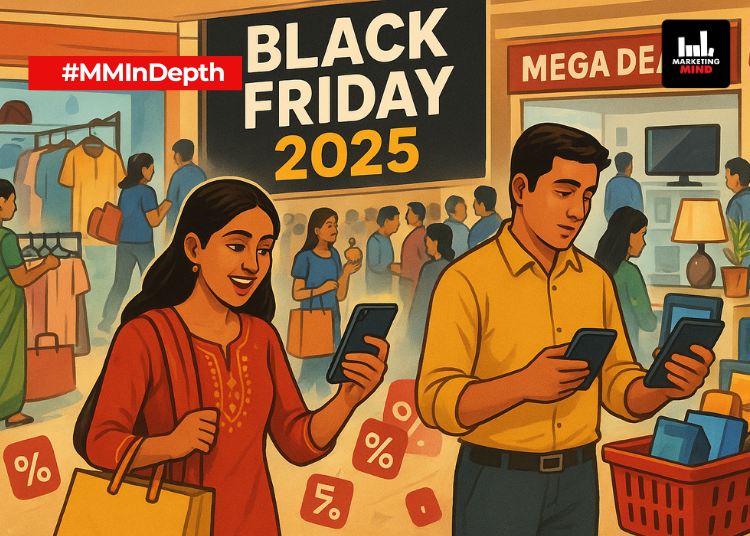
If your inbox looks like it’s been hit by a digital tsunami screaming “BLACK FRIDAY SALE!!!”, trust us-you’re not alone. At some point between Diwali hangovers and year-end chaos, India quietly adopted a festival we never actually signed up for.
One moment, Black Friday was that very-American post-Thanksgiving thing you only saw in Hollywood movies; the next moment, every Indian brand- from skincare startups to electronics giants- is behaving like it’s the Super Bowl of discounts.
It’s almost amusing: for years, Indian shoppers barely blinked at Black Friday. Now? Brands are firing off sale alerts like confetti, influencers are doing “BF haul” videos, and marketers are treating this week like the new-season finale of commerce. What was once an imported curiosity has suddenly become a full-blown retail ritual- wedged comfortably between Diwali sales and Christmas shopping, complete with wishlists, coupon codes, and “OMG last day!” urgency.
But behind the noise is a very real shift: Indian brands aren’t just borrowing the Black Friday label-they’re reshaping it, remixing it, and using it strategically to clear stock, boost discovery, reel in new customers, and squeeze extra revenue from the extended festive queue. And consumers? They’ve gone from “Black what?” to “Black Friday matlab electronics, skincare, winter fits, and that one thing I definitely don’t need but the discount is too good.”
Online Sales, Order Volumes and Expanding Reach
The sale is no longer confined to metropolitan centres. Reports indicate that Tier-III cities witnessed the highest growth in online orders, while Tier-I cities grew moderately and Tier-II cities also contributed significantly. This shows that Black Friday has gained traction across a wider spectrum of Indian consumers.
Mobile phones continue to dominate electronics purchases. Croma’s latest Black Friday deals include price drops for iPhone 16 and 17, alongside offers on iPhone 17, MacBook Air M4, and other high-ticket devices. These were complemented by bank discounts, exchange schemes, and EMI options, which attracted substantial online and offline traffic, contributing to higher average order values and confirming Black Friday’s importance in the electronics segment.
Beauty and Lifestyle Brands Drive Growth
Beauty and lifestyle brands have made Black Friday a key retail moment in India. Platforms like Nykaa rebranded the sale as Pink Friday, offering discounts on over 2,100 beauty and personal-care brands. App-based early access, curated bundles, slashed-price indicators, and social media campaigns amplified the sale, with media reports highlighting significant increases in traffic and conversions for participating brands.
View this post on Instagram
Emerging platforms such as Tira Beauty, backed by Reliance Retail, are also joining the Black Friday wave. Tira operates both online and physical stores across Indian cities and offers a blend of mass-market and premium international brands, alongside its own private-label beauty and skincare products.
During Black Friday, Tira reportedly leveraged influencer-led campaigns, social media amplification, and app-based deals to capture consumer interest. The move underscores the growing momentum of omnichannel beauty retail alongside traditional e-commerce players.
View this post on Instagram
Etude, part of Amorepacific India, used Black Friday to promote K-beauty products. According to Mini Sood Banerjee, Deputy Director and Head of Marketing, last year the sale drove nearly 24% year-on-year growth in GMV and a notable rise in order volumes across beauty, fashion, electronics, and home goods. Brands focused on curated launches, cross-category visibility, and bundles to boost average order values. Consumers in both metro and emerging cities responded positively to innovative and gentle formulations that have transitioned from trends into everyday essentials.
Several other D2C brands across skincare, wellness, and home décor also reported sharp upticks in website traffic during Black Friday, suggesting that Indian consumers are exploring new categories and products during this period. Industry reports highlight that beauty and personal care remain among the top-performing segments in India’s Black Friday sales, with overall order volumes rising by around 17–18% year-on-year across e-commerce platforms.
Apparel Brands Cash In on Black Friday’s Growing Style Rush
Apparel brands in India are treating Black Friday as a key end-of-November sale period, offering bigger discounts and curated offers across online and offline platforms.
H&M is running its Black Friday sale from 15 to 28 November, providing up to 70% off on selected apparel, footwear, and accessories via its official India website and app. Meanwhile, Zara has opened its sale on 28 November through its app and will open it on 29 November in stores, offering up to 40% off on select womenswear, menswear, and footwear. On the other hand, Mango participated during the same period, offering up to 50% off on apparel and accessories.
Sportswear and athleisure brands are majorly focusing on online platforms. Puma and Adidas have come up with offers such as up to 60% off on selected footwear, activewear, and casualwear on their official websites and apps. Meanwhile, Levi’s rolled out up to 50% off on denim and seasonal apparel across online channels and select offline stores.
Marketplaces are playing a central role in amplifying Black Friday shopping. Flipkart has hosted its sale from 23 to 30 November, providing deep discounts on select fashion items. Myntra is running its Black Friday sale from 27 November to 1 December, including app-exclusive early-access offers and curated brand collections to enhance shopper engagement.
These coordinated offers and discounts have positioned Black Friday 2025 as a multi-day, multi-brand retail event in India. Fashion retailers used this period to clear seasonal inventory, boost online traffic, and attract new customers while driving year-end sales momentum.
F&B and Quick Service Restaurants Join the Festivities
Beyond beauty and fashion, Black Friday has extended into food and quick service restaurant chains. McDonald’s India has launched the Black Friday Hacks from 27 to 30 November 2025, offering Rs 49 combos including McAloo Tikki, Chicken Surprise, Pizza McPuff, or Fries paired with Coke, Fanta, Sprite or Coke Float.
Meanwhile, Chinese Wok is running a Black Friday Wok Feast from November 28 to November 30, 2025, pricing the entire menu at Rs 149 for dine-in and takeaway. Offerings included Chinese Bowls, Momos, Hunan Paneer Dry, Fried Rice, Hakka Noodles and Chilli Chicken Dry.
These initiatives show that Black Friday now spans multiple sectors, blending traditional e-commerce with F&B and experiential retail.
Offline retail has also integrated Black Friday into the calendar. Bhartiya Mall, Bengaluru is hosting a four-day sale which started from November 28 and will run until November 30, 2025, offering discounts of up to 70% across fashion, beauty, accessories, footwear and entertainment. The mall positioned itself as a destination for millennials and Gen Z shoppers, offering exclusive deals, new-season collections, and curated shopping experiences.
This illustrates the convergence of online and offline retail strategies, reinforcing Black Friday’s presence across India.
How Brands Are Localising Black Friday
Indian brands have adapted Black Friday to local consumer behaviour. Extended sale windows give shoppers more browsing time. Tiered discounts and bundles increase average order values. Loyalty programmes offer early access to app users or members. Social media campaigns, influencer collaborations, and festive storytelling create awareness and urgency.
Beauty and lifestyle platforms have introduced Pink Friday campaigns, while electronics retailers emphasise bank offers, exchange schemes, and EMI options to make purchases more accessible. These strategies are designed to drive short-term sales while building long-term consumer engagement and brand loyalty.
The timing of Black Friday, following domestic festivals such as Diwali and Onam, extends India’s festive shopping season into winter and year-end. Consumers increasingly use this sale window to purchase gifts, winter apparel, electronics, and lifestyle items, spreading festive expenditure over a longer period.
Indian consumers are more value-conscious and plan purchases around sale windows rather than buying impulsively. Black Friday offers predictability, allowing shoppers to time large-ticket purchases for maximum savings.
Tier-2 and Tier-3 cities are increasingly contributing to overall sales, demonstrating that Black Friday has expanded beyond metropolitan adoption.
Despite its success, Black Friday carries risks. Oversaturation and frequent deep discounts may cause discount fatigue, leading consumers to question the authenticity of promotions. Cyber scams are also a concern, so buyers are advised to verify websites before making purchases.
Logistics and supply chain pressures can result in stockouts, delivery delays, and higher return rates. Brands must balance aggressive discounting with the need to protect their premium value and maintain consumer trust.
Black Friday’s Growing Grip on India’s Year-End Consumption Trends
Black Friday has now become a permanent fixture in Indian brands’ calendar alongside Diwali, Dussehra, and New Year sales. For consumers, it provides a second major window for deals. For brands, it offers a predictable, high-impact opportunity to clear inventory, increase sales, acquire new customers, and test pricing and marketing strategies.
Cross-category participation from electronics to fashion, beauty, lifestyle, F&B, and offline malls signals that Black Friday has evolved into a holistic retail phenomenon. Transparent pricing, secure transactions, reliable logistics, and curated offerings will ensure its continued growth while strengthening consumer trust.
Black Friday in India has evolved from a Western import to a multi-sector, pan-Indian retail phenomenon. Verified offers from Croma, Lotus Electronics, Nykaa, Etude, McDonald’s India, Chinese Wok, Bhartiya Mall, H&M, Zara, Mango, Puma, Adidas and Levi’s demonstrate the scale and diversity of participation.
Steep discounts, curated bundles, app-based early access, social media campaigns, cross-category promotions, and online-offline integration have made Black Friday a major retail season that rivals traditional Indian festivals. High-demand electronics deals illustrate the growing consumer reliance on this sale window for high-value purchases.
As brands and consumers continue to adapt, Black Friday is set to remain a high-impact, strategic fixture in India’s retail calendar.