






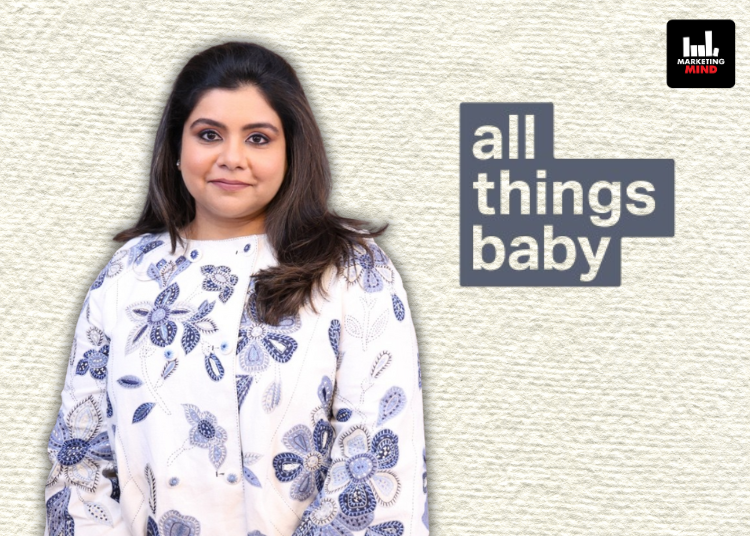
Every new parent in India knows the drill, you will skip that fancy dinner or put off buying new shoes, but when it comes to your baby’s stroller, crib, or even diapers, compromise is not an option. That sentiment has pushed India’s baby and kids retail market to $4.4 billion, growing at 9% CAGR, and spotting this shift early, Tejal Bajla co-founded All Things Baby (ATB). She said the brand has “grown 50% year-on-year” and is now “aiming at around 60% growth in the next three years.”
For Bajla, the biggest driver of growth is premiumisation. “Parents in India may compromise on themselves, but they want the best for their babies, even aspirational products,” she said. While “about 70% of the baby category is still apparel,” she noted that gear is catching up quickly.
“Car seats, strollers, carriers, these are growing rapidly as more Indian families travel, not just affluent ones but also upper middle-class households. Nursery furniture is another expanding space. Personal care and feeding categories may be smaller, but they have high repeat purchase value.” Every parent buys lotions, wipes, and feeding bottles multiple times, which makes these smaller categories crucial growth drivers.
This surge in demand is powered largely by millennial and Gen Z parents, who by 2030 will make up 70% of India’s population. “This generation is aspirational, social-media savvy, and values sustainability,” Bajla said. “India is one of the most photographed nations, and that visibility drives aspirational buying. Parents today are aware of the best products globally and want them for their babies. They’re also more conscious about sustainability and quality, and cannot be sold a bad product just because of price. Trust and community matter a lot.” With nuclear families replacing joint ones and mothers returning to work sooner, convenience and safety have become priorities. “Parents are looking for multifunctional products that adapt to their lifestyle. A stroller is not just for a walk in the park, it’s for travel, for shopping, for everyday mobility,” she noted.
ATB has carved out a niche not just as a retailer, but as a parenting partner. “For us, it’s not about just making a sale, we want to be a parenting partner,” Bajla explained. That’s why the brand created the Baby Crew, guiding parents through everything from pregnancy checklists to travel-friendly gear. “For a frequent traveler, it might mean a travel stroller; for a city parent, a sturdier one. This level of personalization builds trust and sets us apart.”
Community plays a big role too. “Through ‘The Mommy Network’, we’ve built a platform where experts and real parents come together to exchange advice, recommendations, and experiences,” she said. “It’s not marketing in the traditional sense, it’s community-driven education that reassures parents they’re not alone in their choices. That credibility has been a huge differentiator for us.”
Currently, 80% of ATB’s sales come from the top 10 cities, including Tier 2 hubs like Ahmedabad and Pune, but Bajla expects the next few years to bring a bigger shift. “Tier 3 is still behind, mainly because of our premium positioning. But with equal access to information today, parents everywhere are aware of choices. Over the next 2–3 years, we expect Tier 2 cities to play a much bigger role, followed by Tier 3.”
Technology is also reshaping parenting. “With nuclear families and moms returning to work sooner, security and convenience are key. Baby monitors and connected sleep solutions are already gaining traction,” Bajla said. “Parents live globally connected lives, and they want the same products available worldwide, even demanding launches at the same time as Singapore or UAE.”
Grey market imports, long a challenge in India, are another area ATB has addressed. “We’ve already reduced it significantly. ATB now manages 35+ global baby brands exclusively in India. Parents prefer authentic products with after-sales support, which the grey market cannot provide. Like Nykaa did for beauty, we believe the dependency on grey imports will shrink drastically in the next five years.” At the same time, ATB supports Indian D2C brands by giving parents access to curated, high-quality options while building trust and community. “We’ve given Indian parents access to the best global products in strollers, car seats, and more. Parents rely on us to educate and guide them, not just sell. And through initiatives like The Mommy Network, we bring experts and parents together to share advice and build credibility.”
Sustainability has also become a consideration, though Bajla keeps it realistic. “Parents are asking for organic cotton in apparel and eco-friendly diapers that don’t end up in landfills. Sustainability is a growing demand across categories. That said, I wouldn’t call ATB a sustainability-first brand. Instead, we are conscious curators, ensuring cleaner ingredients, better manufacturing practices, and more sustainable disposal. There isn’t a fixed percentage yet, since nothing is fully sustainable, but the trend is strong.”
Looking ahead, Bajla is betting on experience-driven retail. “The future is omnichannel. Parents want to touch, feel, and experience products before buying. We’re launching flagship experiential stores, with the first opening in Mumbai this November. Parents will be able to test strollers on ramps, try car seat installations, and build their baby registry in person. It will be fun, interactive, and highly engaging.”
Despite India’s digital ad spends expected to cross $21 billion by 2028, ATB is not chasing scale over substance. “We follow a 360° approach. Yes, we invest in Instagram, Facebook, and Google, but we also focus heavily on influencer collaborations, only with real ATB customers for authentic storytelling, plus community events and long-term brand-building,” Bajla said. “Around 50% of our sales come from organic funnels, thanks to authenticity and word-of-mouth. That balance allows us to grow without over-relying on paid spends.”
Celebrity tie-ins are rare, but their collaboration with Athiya Shetty has resonated. “With Athiya, three things stand out: authenticity, she’s a real, relatable, vulnerable parent; relevance, even if she were not our ambassador, she would still shop with us; and shared values, trust, design-forward choices, and premium quality. Her association will amplify awareness, build trust, and bring more parents to discover and connect with ATB.”
For Bajla, the mission remains simple. “Parents want the best for their babies,” she said. “Our role is to help them find it, one stroller, one onesie, one community connection at a time.”