






What makes someone trade stability for sleepless nights, comfort for chaos, and certainty for risk? Call it madness, call it vision, but founders call it necessity. Entrepreneurship is the itch that won’t go away, the fire in the belly that refuses to die down until an idea comes alive.
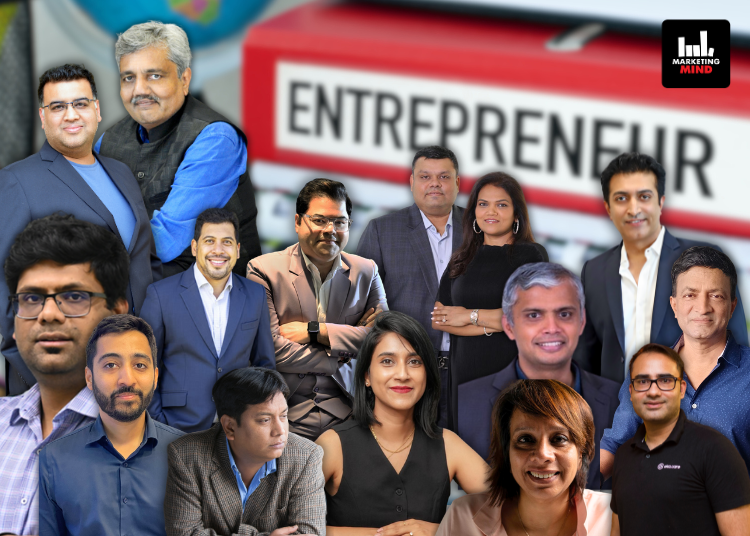
This International Entrepreneurship Day, we spoke to founders across industries about their beginnings, their toughest battles, their relationship with risk, the advice they would pass on, and what this wild ride ultimately means to them. Their answers were not glossy slogans but raw, honest reflections, sometimes funny, sometimes sobering, but always deeply human.
Why They Started: Gaps, Gut Calls, and Big Dreams
For Pallavi Mohadikar, Co-founder of Palmonas, the beginning was born from frustration. “It wasn’t just about starting a brand, it was about solving a problem I felt personally. Indian jewellery was either “too heavy and traditional” or “too cheap and fleeting.” I wanted an aspirational yet accessible option for everyday wear. Palmonas was born to make demi-fine jewellery a category in India and redefine how young women experience it,” she explains. Tarun Joshi, Founder and CEO of IGP, felt a similar void: “Despite 500 crore special moments celebrated each year, there was no trusted platform offering personalisation, quality, and timely delivery.”
Anant Goel, Co-founder and CEO of Handpickd, talks about the simplest of triggers, “People handpick their produce in shops, but online orders often fall short. That gap inspired Handpickd.” And Nitin Rana, Co-founder of Burger Singh, admits it was not a grand revelation at all, “It was not a sudden eureka moment. Kabir’s idea of an Indianised burger chain clicked immediately. Nobody was building a QSR that could marry global formats with truly desi flavours.”
Others describe being pulled in by instinct. Deepak Sahni, Founder of Healthians, recalls, “I grew up breaking gadgets and building my own. By 19, I was repairing computers with little more than leaflets and hustle.” For Binoy and Tejal Dharia, Founders of The Bar Collective, it was a mix of background and timing: “Entrepreneurship was always in our DNA. During the pandemic, evenings spent experimenting with cocktails turned into a business idea.”
“I’ve always wanted to solve problems and create meaningful impact. Reading about great leaders like Mr. Tata and Bill Gates made it clear to me that to create large-scale change, I had to pursue entrepreneurship. With the support of my wife, I began my journey, first solving hotel booking challenges, and today, working on healthcare,” said Deepak Tuli, Co-founder and COO of Eka Care.
The ambition to prove something larger drove some journeys. Dr. Bijal Sanghvi, Founder of Axis Solutions, says, “I started Axis back in 1999 with the conviction that India could lead in automation, even when people laughed at the idea.” Dr. Vivek Tandon, Founder of revalyu Group, frames his ‘why’ simply: “I wanted to build businesses aligned with sustainability, it was not trendy then, but it felt necessary.”
Others call it restlessness. “I started out of a restless need to create something that makes an impact. I wanted to build a consumer-focused ecosystem driven by insights and conversations, not just campaigns. I took the leap not because everything was perfect, but because I knew if I didn’t try then, I never would.” says Neena Dasgupta, Founder and CEO of The Salt Inc.
Sree Balaji, CEO of iLink Digital, admits, “I’ve always been fascinated by how technology can transform lives. I wanted to build meaningful solutions that make an impact and open new possibilities. This passion for innovation drives me forward and gives me purpose every day.” For Manas Gond, Co-founder of Prosperr.io, it was about “leveling the field for retail investors.”
“My entrepreneurial spark was deeply personal, I’ve always believed everyone deserves access to financial knowledge and resources. Seeing the limitations caused by its absence inspired Prosperr.io, a platform designed to empower people, especially young professionals and underprivileged groups, to take control of their financial futures. I launched it to offer a more tailored, tech-driven, and inclusive solution, and that mission continues to drive me every day,” Gond added.
Abhijeet Rajpurohit, Co-founder of CloudTV, added, “It was never just limited to building businesses but rather creating something meaningful that could address a market gap, while owning my journey.” And Venkat Mallik, Co-founder of Tidal7, confessed, “Even before XLRI, I knew I wanted to be an entrepreneur. When an opportunity in advertising arose, I partnered with my friend Chax to create Tidal7, with support from Pops.”
The Roadblocks: From Rejections to Resets
If starting up comes from gut instinct, surviving is about learning to take hits and keep moving. Mohadikar recalls, “Convincing Indians that jewellery could be fashionable and not just investment was harder than I thought. People did not see jewellery as style, only as safety.”
Sanghvi remembered the sting of doors closing: “Every rejection, every ‘no,’ eventually became a stepping stone.” Tandon echoed that lesson, “The biggest challenge was raising capital for ahead-of-its-time ideas and shifting consumer behavior. Early struggles with uncertainty and setbacks taught me to embrace it, shaping me into a resilient, resourceful, and adaptable leader. I now see uncertainty as where creativity and growth truly thrive.”
Joshi laughed at his early struggles: “The challenge was scaling in an unorganized market with weak supply chains and rising customer expectations. Building our own tech and processes taught me resilience, patience, and long-term, customer-focused thinking.” Rana recalled, “Early on, our biggest challenge was finding the right model. Premium pricing and delivery-first thinking didn’t work as customers trusted Swiggy and Zomato more. We adapted, focused on affordability, simplified our menu, and let platforms handle logistics. It taught us to stay flexible, watch consumer behavior, and pivot when needed.”
The Dharias describe their own steep curve: “When we started, everything was new, and we constantly wondered if it would work. We began with research, cold calls, and building connections, learning imports and e-commerce on the go. It taught us resilience and showed that India’s market for design-led barware was untapped, exactly the gap we set out to fill with The Bar Collective.”
Gond admitted fundraising was brutal. “One of the biggest challenges was building trust while disrupting a sensitive industry like finance. We had to prove we weren’t just another fintech app, by being transparent, listening to users, and building robust systems. It taught me patience, resilience, and that trust is a continuous effort, a mindset that guides everything we do at Prosperr.io,” he added.
Rajpurohit faced skepticism. “The toughest part is definitely learning to take that leap of faith when everything isn’t certain… Those are the moments that truly teach resilience and hone the inner instinct that can serve as one of the guiding points towards what you choose to build.” he added.
Some roadblocks cut deeper. Sahni shared, “I watched my family’s business collapse overnight. Suddenly, there was nothing to fall back on. That experience taught me resilience in ways no book ever could.” Mallik said that the pandemic was his reset button. “Entrepreneurial journeys are rarely smooth, outsiders only see the highs. Our biggest challenge was COVID, which forced us to adapt by diversifying our client portfolio beyond retail,” he added.
“The biggest challenge has been convincing people that change is possible. It taught me patience and clear communication,” said Tuli.
People, too, proved to be challenges.“The biggest challenge is people. Building a start-up team takes time, tough decisions, and iterations. It taught me patience, persistence, and the power of clarity. Aligning each person’s role with the larger vision is what drives momentum,” reflected Dasgupta. Balaji nodded in agreement, “The toughest challenge was navigating iLink’s early uncertainty, investing my savings, finding clients, and building credibility with no safety net. It taught me resilience and perseverance.”
Every story sounds different: jewellery, burgers, technology, TV, gifting, but the lesson is the same: entrepreneurship is not about avoiding failure. It’s about outlasting it.
Living With Risk: Strategies, Dance Moves, and Denial
Mohadikar put it bluntly: “You never fully balance risk and uncertainty; you learn to dance with it. Stay data-driven, trust your gut, and see risk as the currency of growth.” Joshi insisted, “Risk isn’t to fear but to manage wisely. At Join Ventures, we pair bold ideas with strong fundamentals, investing in tech and operations while staying agile. Data, disciplined execution, and long-term vision help turn uncertainty into opportunity.”
Gond believed clarity made risk bearable. He said, “Balancing risk and uncertainty is part of building in fintech, where trust, regulation, and behavior constantly evolve. At Prosperr.io, we manage risk thoughtfully, guided by clarity of purpose, testing ideas in small ways, using data, and building buffers. Staying calm, agile, and willing to course-correct helps us navigate uncertainty without compromising ambition.”
For Balaji, people are the hedge: “Balancing risk means trusting data, instincts, and people. You can’t avoid risk, but a strong team, client focus, and long-term vision help navigate uncertainty without losing momentum.” Sahni stripped it down: “Risk isn’t the enemy, denial is. I balance it by trusting intuition, validating with data, and committing fully. Clear purpose and relentless execution make risk manageable.” Mallik called action his antidote: “In service businesses, the real investment is time, not money. With strong domain knowledge, you must leap without fearing risk. Action kills anxiety, inaction is the real problem.”
Sanghvi added, “Entrepreneurship is balancing opportunities and risks. At Axis, we take measured risks with agility, long-term vision, and strong systems, turning uncertainty into opportunity rather than fear.”
While Tandon said, “Balancing risk means managing it thoughtfully, testing ideas, building adaptable systems, and using uncertainty to stay creative and resilient.”
The Dharias admitted,“We entered a niche market at the right time, but competition is emerging. We manage uncertainty by staying true to our ethos, putting the customer first and delivering quality experiences to build long-term loyalty.” Rana added, “In the early days, we grew Burger Singh one store and one product at a time, testing unit economics and customer satisfaction. Once validated, we scaled confidently, building a strong team to maintain quality and execute systems efficiently.”Dasgupta grounded it in patience: “You never fully balance risk, you learn to live with it. I focus on what I can control, break big risks into smaller steps, and trust that setbacks are lessons, not failures.”
“I take risks step by step, staying close to customer feedback. If today is better than yesterday, the future will be better,” Tuli said.
Advice They Would Pass On: Start Now, Stay Obsessed, Learn Fast
Advice, unsurprisingly, starts with one universal truth: start.
“Don’t wait for the perfect plan, it doesn’t exist. Know your ‘why,’ listen to customers, adapt quickly, and focus on building a brand, not just a business,” said Mohadikar. The Dharias echoed: “Just start. Don’t overthink, don’t wait for the perfect moment. If you don’t put yourself out there, you’ll never know.”
Gond warned against perfection paralysis: “Start with why and stay close to it, solve a problem you care about. Don’t chase perfection; launch, test, and learn fast. Surround yourself with people who challenge and support you, and be patient, meaningful success comes from persistence.”
Sahni reminded, “Don’t wait for perfect conditions, start with what you have. Act, learn, adapt quickly, and don’t fear rejection; a ‘no’ today can push you to something bigger tomorrow.” Sanghvi advised, “Have bold dreams, and pair them with consistency and focus. Treat obstacles as lessons, build credibility through perseverance, and trust the journey; each step brings you closer to your vision.”
Tandon called it a marathon: “Focus relentlessly and surround yourself with passionate, smart people. Take consistent small steps, stay curious and resilient, and stay true to your ‘why’, entrepreneurship is a marathon, not a sprint.” Mallik suggested, “Becoming an entrepreneur requires genuine drive and a compelling vision, not just frustration with your job, which is often easier than entrepreneurship.”
Consumers, many say, are the North Star. Joshi insisted, “Stay obsessed with your consumer. Focus on retention, strong USPs, and execution, more than the idea itself. Be patient; persistence and resilience matter most in this marathon of entrepreneurship.” Goel added, “Don’t chase trends. Solve a real problem you actually care about, execution and customers matter more than competition.” Rana said, “Have a clear vision, take calculated risks, and keep innovating. Don’t fear failure, it’s just feedback to learn from and move forward with clarity.”
Values round it out.“Trust takes time. Be patient, consistent, and disciplined. Celebrate small wins and stay committed every day, entrepreneurship is a marathon,” said Dasgupta. Balaji encouraged, “Be clear about your purpose and avoid shortcuts. Surround yourself with inspiring people, build with integrity and curiosity, and focus on values. Lasting success comes from consistency, not quick wins.” Rajpurohit concluded, “Focus on solving a real problem, stay committed, and be open to meaningful pivots. Solve what customers truly need, and growth will follow.”
“If you can solve a problem for people you don’t know, go for it. Building a meaningful company takes 7–10 years,” Tuli advised.
Woven together, their voices form a survival guide: start before you feel ready, obsess over customers, stay rooted in purpose, and don’t mistake speed for shortcuts.
What It Means: More Than Just Business
Ask what entrepreneurship means, and the answers turn reflective. “Freedom and responsibility rolled into one,” said Mohadikar. Sanghvi added, “Entrepreneurship is about legacy, creating value and turning vision into inspiration for others.” Tandon frames it as aligning “profit with sustainability.”
The Dharias called it community. Goel described it as “a way of life.” Sahni said it’s about building yourself as much as companies. Joshi called it impact. Gond describes ownership. Balaji called it “a mirror that teaches resilience in failure, humility in success, and gratitude in people.”
Dasgupta called it courage, Rajpurohit called it trust, Mallik beamed about job creation, and Rana kept it grounded: “You don’t get to pass the buck. If something breaks, you fix it.”
“Entrepreneurship is entirely about building the company. It demands focus and commitment,” said Tuli.
The Final Word: Courage Over Certainty
Strip away the glossy headlines, and what’s left is this: entrepreneurship is not glamorous. It’s long hours, unpredictable turns, and more uncertainty than most people can handle. But it’s also intoxicating, because at its heart, it’s not about certainty at all. It’s about courage.
And as these founders prove, courage has a way of building not just companies, but communities, legacies, and impact far beyond balance sheets.