







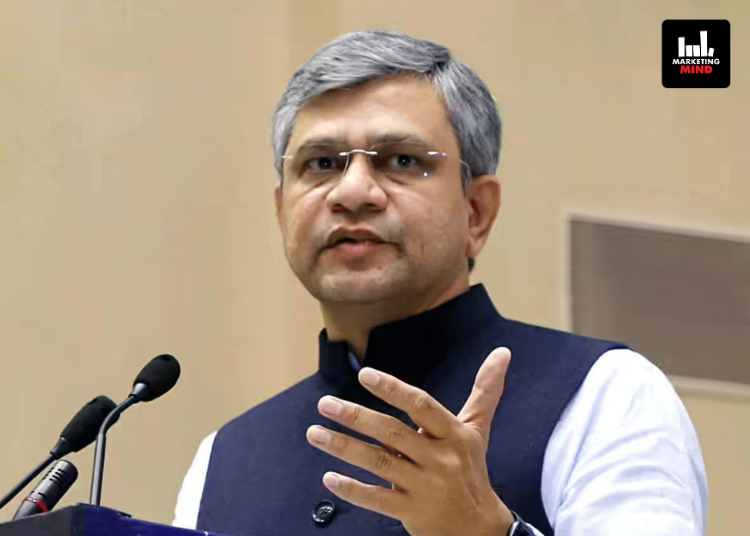
Union Minister Ashwini Vaishnaw has said that India may require a new legal framework to address the challenges posed by Artificial Intelligence (AI), noting that the current Information Technology Act was enacted in 2000, long before the rapid rise of AI technologies.
Speaking on the government’s approach towards AI regulation, Vaishnaw has said that while certain AI-related issues have already been addressed within the existing IT Act framework, the nature of AI has made the regulatory challenge significantly more complex, as per media reports. Policymakers across the world have been grappling with concerns around deepfakes, misinformation and online harms.
Highlighting the need for a fresh legal approach, Vaishnaw has said that the AI ecosystem differs substantially from the technological landscape that existed when the IT Act was introduced over two decades ago. He has indicated that this shift may necessitate a dedicated law tailored to AI-related developments.
The minister has also said that the government has been consulting industry stakeholders on the matter. According to him, the objective has been to ensure that innovation continues while appropriate safeguards remain in place to protect citizens. He has emphasised that the government intends to strike a balance between enabling technological advancement and maintaining regulatory oversight.
India has already moved to strengthen its regulatory framework around AI-generated content. In February this year, the government introduced stricter obligations for online platforms in handling AI-generated and synthetic content, including deepfakes. Under the revised rules, platforms such as X and Instagram have been required to remove such content within three hours when flagged by a competent authority or court.
The government has also notified amendments to the Information Technology (Intermediary Guidelines and Digital Media Ethics Code) Rules, 2021, formally defining AI-generated and synthetic content.
The amendments have defined “audio, visual or audio-visual information” and “synthetically-generated information”, covering AI-created or altered content that appears real or authentic. Routine editing, accessibility improvements and good-faith educational or design work have been excluded from the definition.
Additionally, the Centre has proposed stricter disclosure requirements for AI-generated content. The proposed changes have called for clear and continuous labels identifying synthetically generated information to remain visible throughout the entire duration of a visual display.