






We are living in an era where brands can scale at unbelievable speed. Customer acquisition is faster than ever. Reach is cheaper, tools are sharper and dashboards update in real time. On paper, this should have been the golden age of brand building.
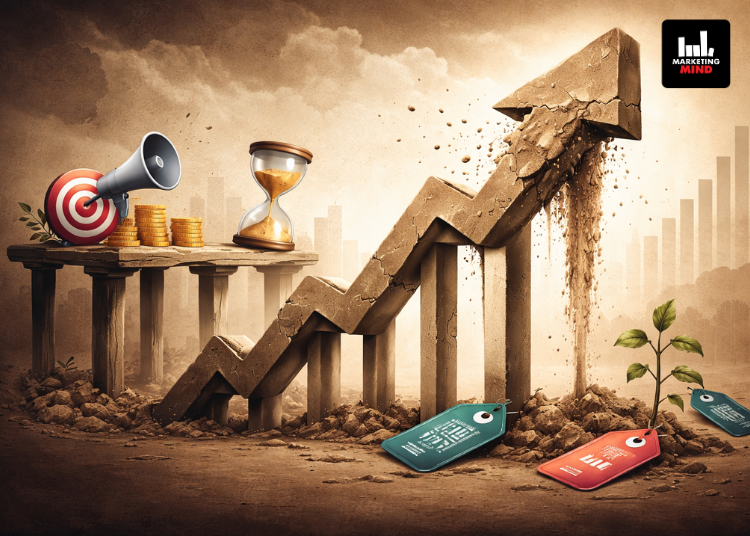
Yet, paradoxically, many brands today feel hollow. They grow quickly but struggle to endure. They scale wide but not deep. The uncomfortable truth is this: brands are being built on adrenaline, not resilience.
Marketing today looks like a 100-metre sprint. Performance tools, AI optimisation, automation and targeting engines push sales instantly. Money goes in, numbers come out. When sales rise, everyone relaxes. When they dip, budgets increase and pressure follows. In this model, sales are mistaken for brand strength.
But sales are only one part of a business. A brand is not built on transactions alone.
What we are seeing is a generation of businesses that invest heavily in selling, but very little in becoming. They don’t build memory, trust or habit. They build spikes. And spikes don’t last.
The biggest mistake fast-scaling brands make is confusing early traction with real demand. Most products initially attract a small group of early adopters. These are people who like trying new things, hunting deals or simply being first. This group is forgiving and they experiment easily. However they are not the market.
The real market begins later, with the cautious majority. These consumers don’t buy because something is trending. They buy because it feels reliable, familiar and worth sticking with. Reaching them requires consistency, patience and belief-building: things performance marketing alone cannot deliver.
Many brands never reach this stage. They assume the product “doesn’t work” because growth slows down. In reality, the product has never been tested at scale. It has only been validated within a small, friendly circle. Until a brand crosses into mass adoption, it hasn’t truly begun.
This is why so many businesses grow rapidly and then collapse just as quickly. When external conditions change like capital tightens, demand softens or competition rises, there is no buffer. No loyalty. No emotional equity. No fallback. Strong brands survive because they were built for bad days, not just good dashboards.
Another visible weakness in fast-scaling brands is over-dependence on discounts. When a business trains customers to buy only during offers, it is not creating value. It is borrowing demand from tomorrow. The moment discounts stop; the brand disappears. What remains is a product with no reason to be chosen at full price.
Brand strength is revealed when customers return without being chased. When they pay the actual price or when they forgive mistakes. When the brand becomes part of daily life, not just a transaction.
This is where many new-age businesses falter. They obsess over acquisition but neglect retention. Customer service, onboarding, supply chain stability, pricing discipline and post-purchase experience are treated as secondary problems. In reality, these aspects build the brand.
Older, established businesses understood this instinctively. Not because they were smarter, but because time forced them to learn. Their systems were stress-tested. Their flaws surfaced early and their identities evolved slowly. They didn’t grow overnight, but they stayed.
Many modern brands skip this phase entirely. They scale before they stabilise. They expand before they understand. They shout before they stand. And when problems eventually surface brands scramble to fix fundamentals they never built. External advisors are brought in and leadership changes happen. Structures are reworked and what should have been built patiently now needs emergency repair. And that repair is expensive.
Technology itself is not the villain. AI, automation and performance marketing are powerful tools. But tools amplify intent. If the intent is short-term growth, they accelerate fragility. If the intent is long-term value, they accelerate strength.
The brands that will endure are not the ones growing the fastest today. They are the ones quietly building trust alongside traction. They understand that awareness without belief is noise, and scale without loyalty is temporary.
The real question brands must ask is not, “How fast can we grow?”
It is, “What remains when growth slows?”
Because eventually, it always does.
And only brands built as marathons, not sprints, are still standing when the adrenaline wears off.