




Your face is worth money. Your voice is worth money. Your mannerisms are worth money. And in the AI age, they can be copied in seconds without your consent. Welcome to the battlefield of personality rights, where celebrities are fighting to reclaim their likeness from the code.
Across India, your right to control your image, voice, name, and mannerisms are moving fast from legal theory into headline news. Celebrities are waking up to the fact that in the digital age, their identity is not just fame, it’s in fact a currency. And they want protection, and maybe a cut.
Stars Are Fighting In Court To Protect Their Likeness
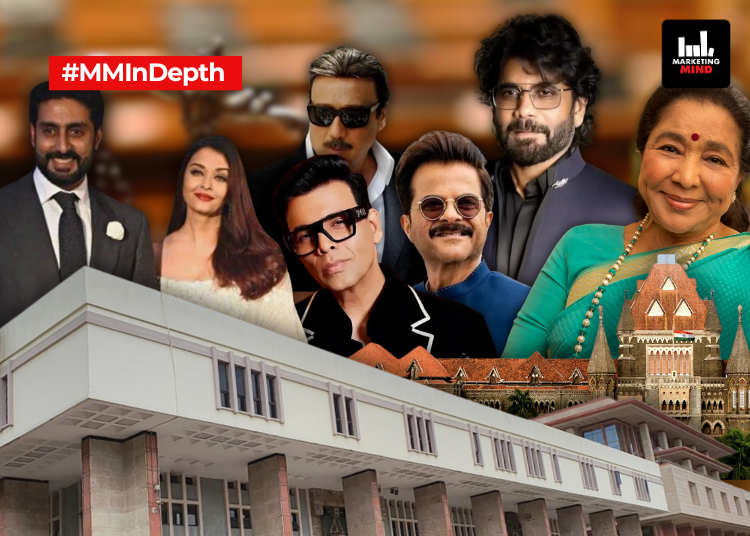
Courts in India have started backing stars in their fight. For example, the Bombay High Court just barred a tech firm and e-commerce sites from using singer Asha Bhosle’s voice or image without her consent. Likewise, filmmakers Aishwarya Rai Bachchan and Abhishek Bachchan sued Google and YouTube to remove dozens of AI-deepfake videos of them, even seeking to stop those clips from training other AI models on the platform. As per reports, the Bachchans’ case is “the most high-profile to date” of Bollywood personalities fighting for their rights.
Other stars have fared similarly. Justice Manmeet Arora of Delhi HC recently granted relief to filmmaker Karan Johar– ordering the takedown of obscene AI-generated memes and social-media posts caricaturing him.
In 2024, Justice R.I. Chagla of Bombay HC warned that cloning singer Arijit Singh’s voice via AI “shocks the conscience,” and granted an injunction against the copycats. The Delhi court has also shielded actors Jackie Shroff and Anil Kapoor: it barred e-commerce sites and unlicensed chatbots from selling Jackie’s image or even using his “Jaggu Dada” catchphrase, and in 2023 gave Kapoor “wide protection” against 16 parties using his name, voice or trademark “jhaakaas” without permission.
As one judge put it, such unauthorised use “dilutes the brand equity painstakingly built by the plaintiff”.
Even veterans like Johar and Nagarjuna have been granted relief. These cases span everything from faked autographs on posters to AI-generated pornographic clips – underscoring how far unauthorised exploitation can go.
Abroad, similar battles rage. The estate of martial arts legend Bruce Lee has pursued legal action to block anyone from CGI-ing him into films or ads without a license.
Decades after her death, Audrey Hepburn’s heirs have enforced her image rights in Europe – winning a 2019 case where an Italian court ordered damages for unauthorised T-shirts bearing her face. Even Hollywood’s Robin Williams took out a deed forbidding digital “ressurection” of himself.
And in 2025, global star Cristiano Ronaldo sued (and settled with) a Spain-based NFT platform that was minting his face without permission. The message is global: your digital likeness is not free, even if it’s made of ones and zeros.
Brands, Influencers and The Tricky Rules Of AI Ads
The celebrity courts aren’t the only battleground. Brands and influencers have muddied the waters too. By law, famous endorsers in India cannot bluff. The Consumer Protection Act (2019) and new rules make celebrities legally responsible for any false or misleading claims. In practice, that means Bollywood stars can be pulled into court if a car ad they endorsed is full of lies. Now add AI into the mix.
Some companies are experimenting with computer-generated ads that feature lookalikes of stars, sometimes without telling audiences. This raises a host of ethical questions: is it fair to have a “virtual Amir Khan” selling insurance, or a deepfake Dil Chahta Hai avatar promoting snacks?
To curb the chaos, the industry self-regulates. India’s Advertising Standards Council (ASCI) had made the rules clear. Any paid post must be disclosed at the top (think #Ad or #Sponsored on Instagram). ASCI also warned against sneaky celebrity endorsements – even virtual ones. In fact, a 2023 ASCI study found that 69% of India’s top influencers were breaking disclosure norms, exposing over 110 million followers to hidden ads. ASCI’s updated influencer code even requires “virtual influencers” (completely AI-created personalities) to clearly label themselves as computer-generated.
While ASCI’s guidelines aren’t law, they carry weight, violations can attract the Consumer Authority’s ire or at least public shaming. Brands and agencies know they need to tread carefully, especially as viewers grow savvier about AI fakery.
Deepfakes Are Growing Fast, And So Are The Risks For Celebrities
Our view: AI tools today can make incredibly convincing deepfake videos and voice clones. They’re getting harder to detect, and their spread is rapid, the numbers are staggering – deepfakes went from roughly 0.5 million files in 2023 to a projected 8 million by 2025, as per reports. While you drink your morning coffee, somewhere online, another celebrity clone is being born.
The impact on stars can be devastating. Fake endorsements and bootleg merch already wipe out crores of licensing fees. But deepfakes can wreck reputations. As per reports, pornographic deepfakes or morphed content inflict irreparable harm and can slash future endorsement fees by 20-30%.
Top Bollywood actors reportedly earn Rs 5-10 crore per ad, so losing even a few endorsements hits hard. Imagine discovering an explicit AI video of a beloved star circulating online. That can end official brand deals overnight.
Courts are reacting. Media reports say the Bachchans secured a Delhi HC order to take down over 500 harmful AI-generated links. But there’s no clear Indian law yet, the fight remains reactive rather than pre-emptive.
New Clauses to Protect Stars’ Likeness in the AI Age
With law enforcement lagging, savvy stars are updating their contracts. These days, any big endorsement deal will explicitly carve out “AI rights” and “image rights.” In other words, the contract will say: “You can use my face/voice in this ad – but nothing beyond that, especially no AI replicas.” Experts note these clauses are becoming standard.
Without clear laws tight contracts and licensing controls are the only shields against borderless AI misuse. Celebrities now often require that brands can’t hire third parties to generate avatars or clones without the celebrity’s OK. Some even stipulate what happens to these rights after the contract ends, to prevent old deals from being twisted by new tech. It’s a legal arms race in the fine print, underscoring how seriously the industry is taking digital identity.
The Unresolved Question of Personality Rights After Life
The conversation gets weirder after a star dies. Who owns the digital you when you’re gone? In many US states, the “right of publicity” survives death (in California, heirs can enforce it for 70 years). Italy and other European countries also protect post-mortem image rights, as the Hepburn heirs famously proved. But in India, there’s no clear answer. Our courts have only tangentially addressed it under privacy and passing-off law.
This ambiguity worries experts. If a beloved actor’s family wants to block a hologram concert featuring a digital twin, they’re in murky waters. Right now, Indian celebs rely on whatever common law they can invoke. For example, longtime personality rights jurist Jwalika Balaji notes that even now courts ground these rights in Article 21 (dignity/privacy) and IP laws, but she and others argue it’s time for legislation to catch up. Abroad, some celebrities have even pre-sold their future image rights. India has not seen that yet. The unresolved debate about a star’s “digital soul” may only intensify as holograms and virtual idols become more common.
Free Speech vs Fame: Where’s the Line?
Of course, personality rights don’t trump all expressions. Both Indian and international courts recognise that satire, parody and news commentary are protected speech. In India, the standard case is Galactus Funware v. Digital Collectibles (2023): the Delhi HC held that lampooning celebrities is a valid exercise of free speech. And judges have repeatedly warned that overzealous enforcement of publicity rights could “chill free speech” and deprive the public of satire.
This tension showed up in Karan Johar’s case. Instagram and Google argued that many of the contested memes were mere caricature or parody, which should be allowed. The court agreed on principle that humor is allowed, but it drew the line at obscene or defamatory use.
Justice Arora ultimately ordered the takedown of hundreds of memes, emphasising that “unauthorised use of a celebrity’s persona for obscene memes tarnishes their goodwill.”
In short, satire is safe, as long as it is not slanderous or purely commercial. This balance between Article 19(1)(a) free speech and section 27 of the Trade Marks Act (or passing off principles) is still evolving.
ASCI & Industry Self-Policing
In lieu of legislation, India’s advertising industry is trying to self-regulate. ASCI’s role has expanded with the new tech. In August 2023, ASCI even published a White Paper on Generative AI in Ads called “Leveraging Generative AI: Opportunities, Risks, and Best Practices”. It flags the exact risks we’re discussing: copyright infringement, unlawful content (like fake medical claims or obscene material), and data-privacy issues when AI uses people’s images. Its tone is clear, advertisers must do due diligence on data sources and be especially cautious about AI training sets. ASCI’s recommendations include everything from watermarking AI images to strict influencer disclosures.
All this shows the industry is aware of the problem. But ASCI’s codes are voluntary: they rely on goodwill (and the prospect of social/media blowback) for enforcement.
Going forward, ASCI is likely to lean harder on tech platforms and brands to police AI ads. Already, YouTube and Instagram often remove content when celebs complain – especially after court orders. But as both stars and tech giants note, the volume of fake content is so high that self-policing will struggle to keep pace.
The Bigger Picture
Celebrity identity has become a hot-button issue. On one side are stars and their brands, who argue that their face, voice and persona are precious property. On the other are meme-makers, satirists and advertisers testing new boundaries, sometimes for fun, sometimes for profit.
The law is trying to catch up. Indian courts are now issuing a string of protective orders as film figures have pressed the Delhi High Court to acknowledge and enforce personality rights. But without a dedicated statute, these rights are cobbled together from privacy, defamation and passing-off law.
This fight is ultimately about autonomy and dignity, the right of a person to control the public use of their own body and voice. In a digital world where an influencer can be made in a lab and a star’s avatar can wander across platforms at the speed of code, that battle will only grow.
For now, celebrities are crafting ironclad contracts, ASCI is tightening the rules, and courts are writing the rulebook by hand. The age of you-own-your-own-face is here, and everyone’s watching (and screenshotting).