







OpenAI has announced a new set of measures aimed at improving transparency around AI-generated content, introducing a multi-layered provenance framework built around Content Credentials, Google DeepMind’s SynthID watermarking system, and a public verification tool.
The initiative is designed to help users better understand where AI-generated media comes from, how it was created or edited, and whether the content is authentic. OpenAI described provenance signals as increasingly important as AI-generated images, audio and video become more widely used across digital platforms.
As part of the rollout, OpenAI has become a C2PA Conforming Generator Product under the Coalition for Content Provenance and Authenticity standards. The move allows platforms to more reliably preserve and transfer metadata attached to AI-generated content, including details about how media was created or modified.
OpenAI is also integrating Google DeepMind’s SynthID watermarking technology into images generated through ChatGPT, Codex and the OpenAI API. Unlike metadata-based systems that can sometimes be stripped during uploads or edits, SynthID embeds invisible watermarks directly into content to make provenance signals more durable across transformations such as screenshots or resizing.
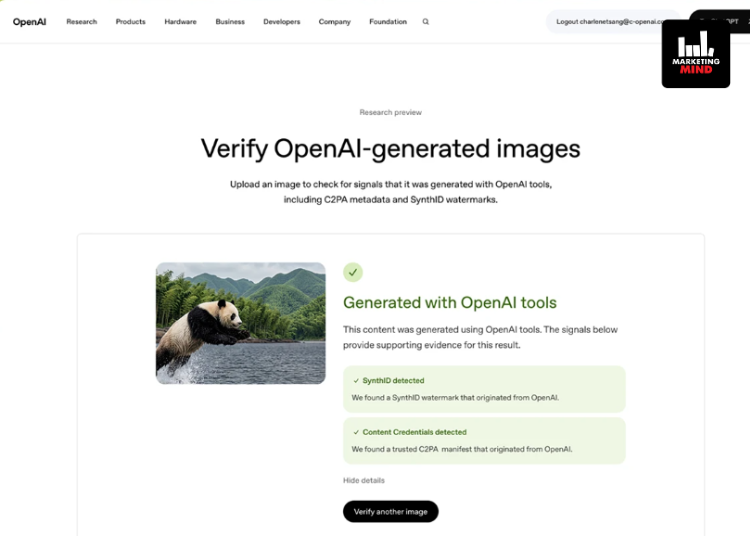
The company additionally previewed a public verification tool that will allow users to upload images and check whether they contain provenance signals linked to OpenAI systems, including Content Credentials and SynthID markers. Initially, the tool will only support OpenAI-generated content, though the company said it plans to expand support to broader industry verification systems and additional content formats over time.
OpenAI said the new framework builds on its earlier efforts around visible watermarking in Sora and audio watermarking in Voice Engine, while reinforcing its broader push toward interoperable industry standards for AI transparency and digital trust.