






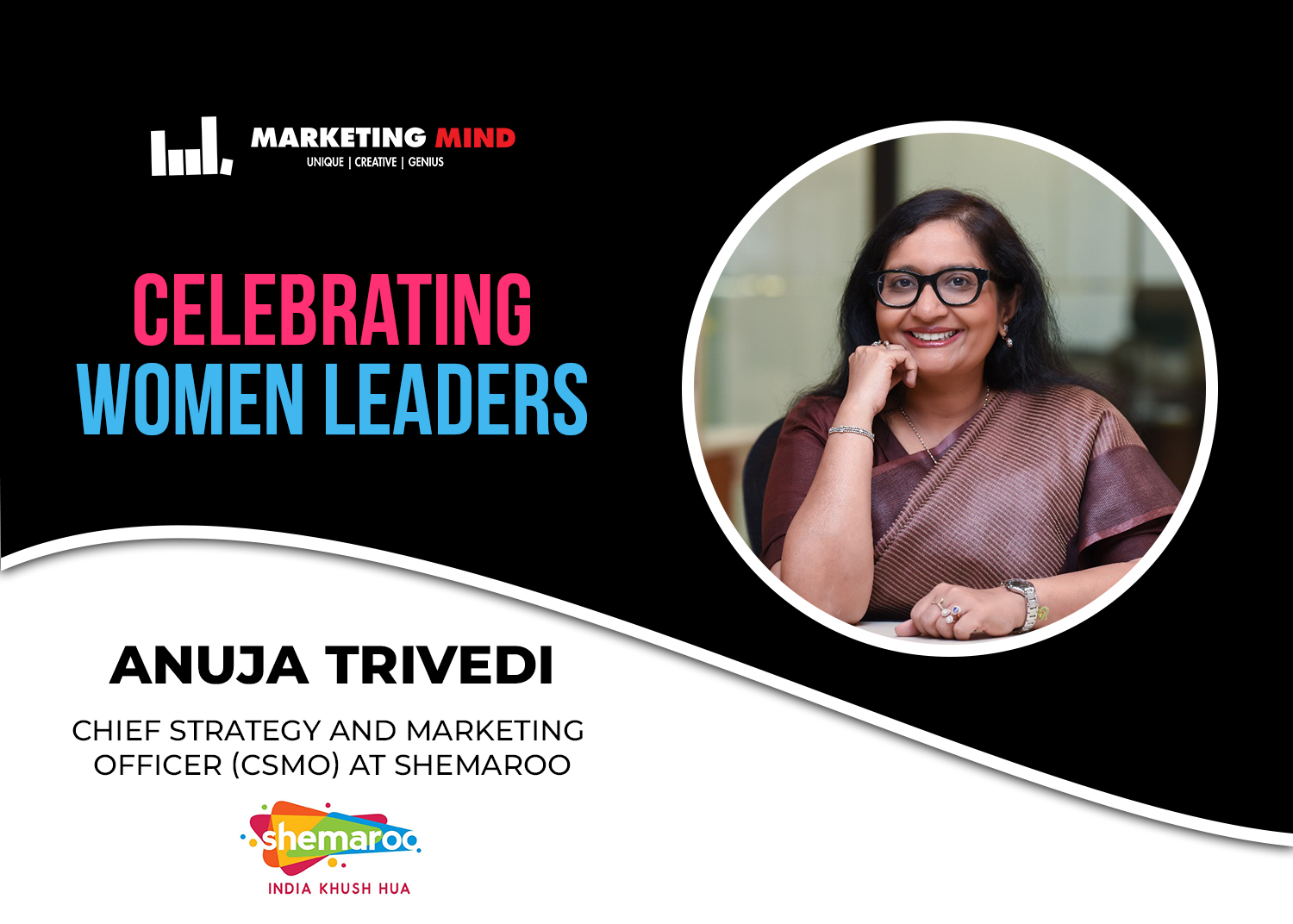
Some stories didn’t begin in boardrooms or investor decks, they began in places where curiosity met grit. For Anuja Trivedi, it started after B-school when she joined McKinsey. Long before she was leading marketing for one of India’s biggest entertainment houses, she was a young consultant learning the ropes.
“After B-school, I started my career with McKinsey and spent four and a half years there,” she recalled. “What I learned has stayed with me even today, problem solving, quickly coming up to speed with different sectors, being comfortable asking questions even in rooms full of seniors, and being razor-sharp about delivering on business goals.”
Her next big leap was not a consulting project but the chaos of sales. When she joined Star (now JioStar), she moved from strategy decks to revenue targets. “In consulting, you give the big idea and step away. At Star, there was no Plan B. You and your team had to deliver the number,” she said. “Sales is a really tough world, but it shaped me. I learned to think through different perspectives until we achieved the goal.”
What made her journey compelling was not just the business milestones, it was how she did it, while challenging the labels that often weigh women down. “There is baggage that comes with being a woman,” she said candidly. “People assume you will order lunch for the meeting or be the ‘sensitive’ one. The same behavior gets labeled differently, passionate versus too emotional, pushy versus aggressive. Early on, I decided to ignore the labels and stay true to myself. If you think I am emotional, too bad, I can handle a tough conversation better than many male colleagues. If you think I am aggressive, too bad, I am delivering my numbers as well as anyone else.”
Alongside professional challenges came personal ones. Trivedi is also a mother to a 12-year-old, navigating the familiar push and pull between home and work. Think strategy meetings by day, PTA guilt by night, and somewhere in between trying to be fully present. “You want to do a good piece of work and also be fully available to your child. It never works. You try your best every day, but there is always a push and pull that never ends,” she admitted. “Sometimes I have had to say no to team bonding to get home, other times I have missed a PTA because of a deadline.”
Even in supportive organisations, she noticed, flexibility for women could sometimes be misconstrued. “Male colleagues might think you are cutting corners, which may not be true. As a leader now, I consciously try to maintain that balance while making life easier for women.”
The media and entertainment industry, she believed, offered more opportunities for women than many sectors. “Being based out of large cities helps, and the work-life balance is decent,” she said. “Some of the biggest names on the content side are women. They have built amazing businesses and are role models for all of us. On the business side, representation is getting better, but not as fast as it should.”
At Shemaroo Entertainment, she worked to make those opportunities real. The company began with basic hygiene factors, safe travel, flexible hours, generous leave, but Anuja pushed further. “True empowerment goes beyond that,” she explained. “Our DEI initiative focuses on women, right now, we are above 26% representation and want to take it much higher.”
She proudly spoke about Sisters in Shemaroo (SIS), an internal community that helps women feel seen and supported. “We get public speakers, have women share their journeys, and create mentor-mentee relationships so nobody feels alone,” she said. “For each role, I ask: have we seen enough CVs of women? Have we interviewed enough women? In some cases, I push teams to improve representation. Across levels, the idea is to give women a voice.”
Looking back, she wished she had paced herself differently. “I would have told my younger self to chill,” she laughed. “You’re not running a sprint; it’s a marathon. I came back from maternity leave in four and a half months, I should have taken six and spent more time with my child. And I would have focused on my health. In your late 20s and early 30s, you let it slide, but by your 40s, you realize how important holistic well-being is.”
Her leadership philosophy was shaped by women she admired. “On one side, there are entrepreneurs like Ekta, Gul and Rashmi, who showed that women can rise to the top,” she said. “And then there’s Rebecca Campbell, Disney’s international head during my time there. Even though we mostly worked on Zoom during COVID, she had a huge impact on me. Her mantra was ‘grit with grace.’ She talked about work-life balance, women not being able to have it all, and focusing on health. Everything she stood for resonated with me.”
Before we wrapped up, she shared one of her most personal mantras, especially for young mothers: “Make everyone your champion. Be okay asking for help. Build that village, your parents, spouse, in-laws, nannies, team, peers, bosses. Everyone has a stake in your success. Even my daughter knows she has a stake, sometimes she has to behave when I’m on a call,” she said with a smile. “Don’t give up. Make everyone invest in your success.”
For Anuja Trivedi, success was never just about titles or revenue. “It’s about being 100% present wherever you are, at work or at home,” she said. Her journey, rooted in authenticity and resilience, proved that true leadership really was, as Campbell taught her, all about grit with grace.