






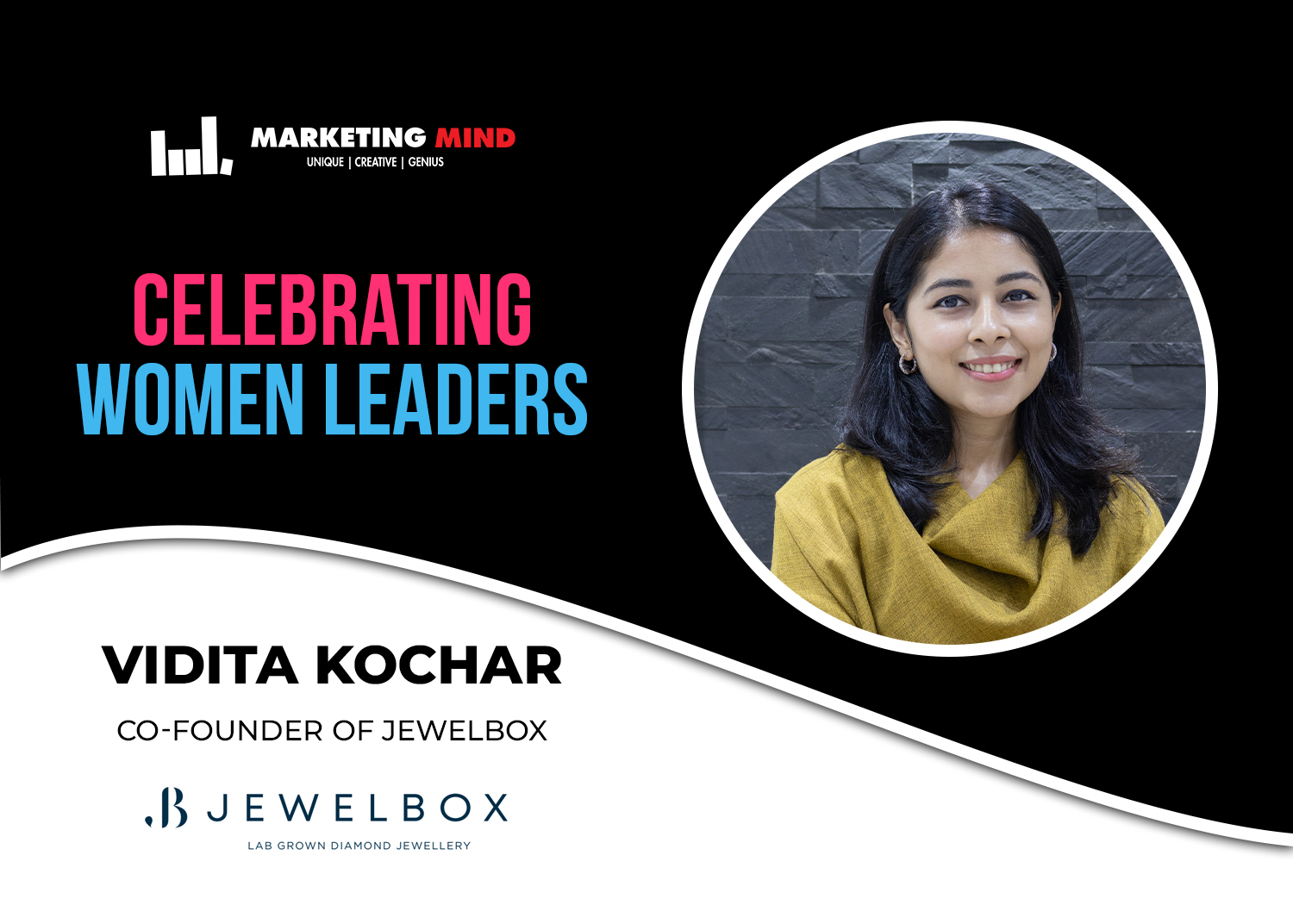
Diamonds are made under pressure, and so was Vidita Kochar. Can you imagine leaving behind a secure corporate career, shifting cities, getting married, and at the same time starting a business in an industry your family has never touched? Sounds overwhelming. For Kochar, that has been reality. She often wondered if sticking with Swiggy would have been better, but she also felt that late 20s or early 30s is the best time to take big risks, since you can always restart. That leap has become Jewelbox.
At 20, most of us have been still fumbling with exams and internships. Kochar has already been running her first company. “I actually started my first venture in 2013 in the adtech space with my brother, Nipun Kochar,” she recalled. “We thought we could disrupt outdoor advertising like Ola disrupted cabs or Swiggy disrupted food delivery.”
That “little hustle” has grown into a profitable agency working with 80+ corporations, from Tata Steel to Zomato. But success has not been enough. “I realised that I needed to hone my theoretical knowledge. MBA felt like the bridge, and after that I wanted corporate exposure to learn best practices and develop my own leadership style,” she explained.
That hunger for growth has led to Jewelbox in 2022, an idea she and her brother researched for months before launching. But it has not been a safe bet. “We come from a family of CAs. Our grandfather is a tax professional, our father has a CA firm, and both of us are CAs ourselves. We have had no jewellery background whatsoever,” she said with a laugh.
And yet, she has taken the plunge. At the time, she was shifting cities, getting married, and leaving a promising career at Swiggy. “Honestly, it did not seem like the best time to start a business,” she admitted. “I kept thinking, maybe sticking to Swiggy would have been a better option. But I also told myself that late 20s or early 30s is the best time to take big risks, you can always restart.”
The early days have tested her. Customers have been sceptical of lab-grown diamonds. “Even if we told them lab-grown diamonds are physically, chemically, and optically the same as mined ones, people would look at us like we were scamming them,” she recalled. For months, footfalls have been painfully low. But a Diwali campaign in Kolkata has turned things around. “That campaign was beautifully curated, and after that, people started identifying the store. Within a year, we recovered our profits and launched our second store.”
Through it all, her partnership with her brother has been her strength. “Growing up, we have been typical siblings, always at loggerheads. But at work, we have realised how complementary our skills are. He is the planner, and I am the executor. The mutual trust and respect we share makes this bond so special,” she said.
But starting Jewelbox has also meant confronting vulnerability head-on. “Whatever I had earned post-MBA, I had already put into the business. My brother used his earnings from our adtech venture, and my father even invested his own capital. There were days when no customers walked in, and I wondered, what if this never works? That feeling has been terrifying,” she admitted.
Instead of breaking her, those moments have made her more compassionate. “One of my superpowers is compassion. Vulnerability has made me even more empathetic. When a team member shares a personal struggle, I understand it more deeply now. Corporate life has always been black and white. Entrepreneurship has taught me to see the grey.”
Her upbringing has also shaped her resilience. “I grew up in a house with eight children, four boys and four girls, and I never saw any discrimination or gender bias. That freedom and confidence has allowed me to become the best version of myself,” she said. Even after marriage, she felt supported. “In the early days of a business, when outcomes are intangible, it’s not easy for families to understand. But I have been blessed with support on both sides.”
Of course, stereotypes still exist. “People often assume my brother is the bad cop and I’m the good cop. But I don’t let these biases define me. I try to take a very pragmatic approach to every decision,” she said firmly.
To stay grounded, Kochar has turned to both perspective and passion. “What keeps me going is knowing I’m working towards impact. Whether it’s helping team members grow, building a brand trusted by consumers, or just becoming more confident as a person, that impact matters. And whenever work overwhelms me, I take a break, even two days are enough to reset.”
Her personal interests have been equally important. “Art and reading feel like meditation. A jog clears my head. Staying fit helps both my physical and mental health,” she has said. “These things keep me balanced.”
When asked about mentors, she smiled. “My first lessons in management came from my mother. The way she has managed home, work, and her hobbies, it’s been inspiring. My mother-in-law too has been a strong influence. And in business, I admire leaders like Radhika Gupta and Vineeta Singh. They’ve shown what’s possible.”
Kochar also embraced sharing her journey with younger entrepreneurs. “I don’t think of myself as a mentor, but I love sharing my learnings, what worked, what didn’t. Your decisions are always your own, but having a sounding board makes it easier.”
Looking back, if she could speak to her 20-year-old self, she would keep it simple: “It’s all going to be okay.” “In your 20s, you think every decision is life-defining. But there are always second, third, and fourth chances,” she has reflected.
And when she thinks about legacy, it isn’t about titles or balance sheets. “At some point, success and money stop mattering. What really matters is how you give back and how people remember you. Fifty years from now, I would want to be remembered as a good human being.”