







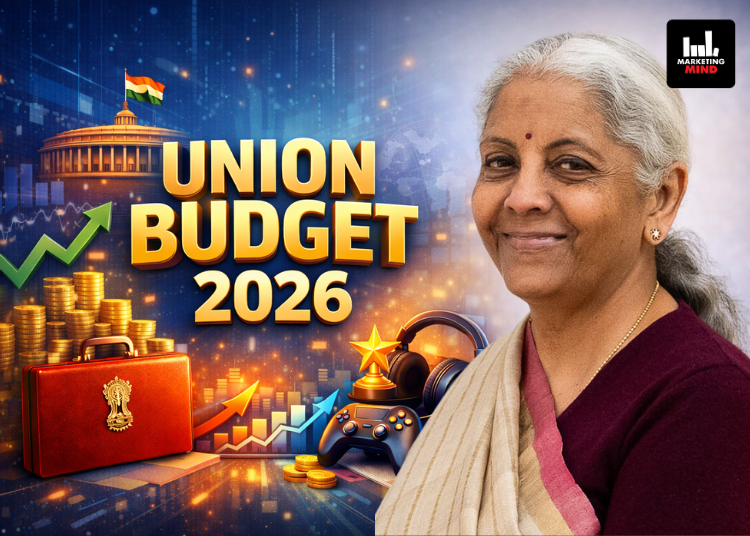
As the countdown to February 1 begins, all eyes are on the Finance Ministry as Nirmala Sitharaman prepares to present her ninth Union Budget. Like every year, the budget has become more than a financial statement- it is a signal of intent. Industries across the spectrum are reading between the lines, looking for cues on how policy priorities may evolve in the coming fiscal year, especially in sectors riding the wave of India’s digital transformation.
Among those watching closely is India’s gaming and esports industry-an ecosystem that has quietly but decisively moved from the fringes of digital entertainment to the centre of conversations around jobs, innovation and cultural exports.
What was once seen largely as a pastime for younger audiences has matured into a multi-layered industry spanning game development, esports tournaments, content creation, streaming, technology services and global publishing ambitions.
This evolution has unfolded alongside the government’s broader digital push. Initiatives such as Digital India, Make in India and the AVGC framework have laid early groundwork, while regulatory milestones over the past year have brought greater definition to the sector. The passage of the Promotion and Regulation of Online Gaming Bill in 2025, which put an end to real-money gaming, marked a turning point-bringing clarity to policy but also nudging the industry to recalibrate its focus toward free-to-play models, skill-based competition and much more in the esports sector.
With that reset now underway, Budget 2026 is being seen as a moment of consolidation rather than experimentation.
Industry leaders are no longer asking for validation of gaming as a legitimate sector; instead, the focus has shifted to execution- how policy, taxation and incentives can help India move up the value chain from being a consumption-heavy market to a creator of globally relevant gaming intellectual property.
The timing is critical. India already boasts one of the world’s largest gaming user bases, and global revenues in the sector continue to scale steadily. For stakeholders, the question is no longer about potential, but about preparedness. As expectations build ahead of the budget, the gaming and esports industry is hoping for clear fiscal signals that can support long-term sustainability, ease operational bottlenecks and position India as a serious contender in the global gaming economy.
Here’s what the industry is expecting:
Akshat Rathee, Co-founder and MD of NODWIN Gaming said, “I’m hopeful that this year’s Union Budget acknowledges gaming and esports as emerging pillars of India’s digital and creative economy. Over the last few years, the sector has moved from the fringes to the mainstream, and what it now needs is execution-focused policy support.”
This includes fair and differentiated taxation for esports on par with traditional sports, easier access to banking and financial services for gaming businesses, and targeted funding under the AVGC framework to support Indian game development and original IP creation.
Furthermore, he highlighted that with the right incentives for exports, infrastructure, and state-level esports events, India has a real opportunity to strengthen its global soft power through gaming. The focus doesn’t need to be on large announcements, but on practical enablers that help the ecosystem scale sustainably.
Meanwhile, Animesh Agarwal, Co-founder and CEO, S8UL Esports emphasised that with the Promotion and Regulation of Online Gaming Act now in place, the conversation around gaming and esports has shifted from legitimacy to capacity building.
“This Budget presents a timely opportunity for policymakers to commit fiscal support towards training, infrastructure, grassroots competition development, and strengthening India’s global position in esports. Beyond gaming-specific measures, sectors such as sports, education and skill development, digital infrastructure, startups, and the creator economy will play an important role in shaping the ecosystem,” he said.
“Investments in training infrastructure, incubation programs, and R&D hubs can strengthen game development and creative production, while support for creator-focused upskilling, production facilities, and IP development can help build sustainable careers. Greater clarity and budget allocation at the central level, along with a dedicated funding focus for gaming within the AVGC framework, can further enable the creation of globally scalable Indian IPs,” he added.
Striking a similar tone, Sagar Nair, Head of Incubation, LVL Zero Incubator mentioned that as India’s gaming and esports ecosystem matures, this Budget presents an opportunity to shift the conversation from consumption to creation.
“The industry today needs regulatory and taxation clarity across mobile, PC, and console gaming to unlock long-term capital, enable predictable business planning, and attract global publishing partnerships. Clear budgetary commitment toward the AVGC-XR mission, with a focus on original IP creation, advanced skilling, and studio incubation, can meaningfully accelerate India’s position as a global game development hub,” he said.
Furthermore, he went on to say, “Incentives that support local game development, improve access to gaming hardware, and encourage export-led growth will help Indian studios move up the value chain and build globally competitive products. Esports, too, stands to benefit from formal policy recognition and ecosystem-level investment that strengthens domestic talent pathways and international participation. Taken together, these measures can help India move beyond scale alone and build a sustainable, creator-led gaming economy with global relevance.”
Vishal Parekh, Chief Operating Officer, CyberPowerPC India highlighted that Indian gaming and esports are at a defining moment. PROGA 2025 marked the start of a more structured and legitimised chapter for the industry, recognising its growing cultural and economic relevance. As the ecosystem scales, targeted budget support and clear policies will be key to sustaining this momentum.
“Treating esports prize money taxation in line with traditional sports, strengthening esports’ role within Khelo India, and encouraging participation across schools, colleges, and states can significantly boost grassroots development. We are hopeful the upcoming budget will support these priorities and help India build a globally competitive gaming and esports ecosystem,” he added.
Taken together, the industry’s expectations from Budget 2026 point to a clear shift in priorities. The ask is no longer about recognition or headline-grabbing announcements, but about building the right foundations- be it fair taxation, access to capital, skilling pipelines or export-led incentives- that allow gaming and esports to scale with certainty.
As India’s gaming ecosystem moves into a more structured and regulation-backed phase, the Union Budget is being seen as a chance to align policy ambition with on-ground execution. For stakeholders, what matters most now is whether the budget can help convert India’s massive gamer base into a globally competitive, creator-led gaming and esports economy.