







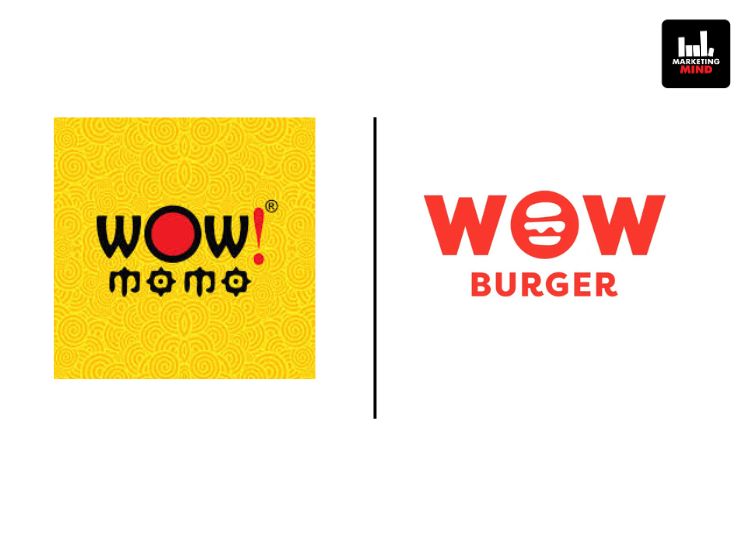
The Delhi High Court recently refused to grant an interim injunction to Wow Momo Foods, a Kolkata-based quick service restaurant chain, in its trademark infringement case against Wow Burger, a Hong Kong-based food brand.
Justice Manmeet Pritam Singh Arora observed that the plaintiff was trying to monopolise the dictionary word “WOW,” which the Court said cannot be permitted because of its generic and complimentary usage.
“Placing reliance on the settled law and the common meaning of the word ‘WOW’, it is concluded that ‘WOW’ is a laudatory exclamation in the food/hospitality business, universally used to convey delight over ‘quality’ of the food,” the Court said, adding that the plaintiff cannot convert that everyday exclamation into its private preserve/property.
As per media reports, In its application, Wow Momo sought both permanent and interim injunctions to prevent Wow Burger from using “WOW,” “WOW BURGER,” or any deceptively similar mark, accusing it of trademark infringement and passing off.
Wow Momo, incorporated in 2008 and headquartered in Kolkata, argued that it had built a pan-India presence with more than 600 outlets in over 30 cities, and that its “WOW! MOMO” brand was widely recognised. It further claimed that it had launched other brands such as “WOW! BURGER” since 2009 and had developed significant goodwill and reputation, making “WOW!” uniquely associated with its business.
In December 2024, the plaintiff stated that it discovered the proposed entry of Defendant No. 1 into the Indian market under the mark “WOW BURGER,” in collaboration with Defendant No. 2, through a LinkedIn post.
Senior Advocate Chander M. Lall, representing the plaintiff, argued that the defendants had slavishly copied the dominant feature “WOW!”, which he described as the essential part of Wow Momo’s trademarks. He submitted that this copying alone was sufficient reason to grant an injunction, relying on the Delhi High Court’s judgment in M/s Amar Singh Chawal Wala v. M/s Shree Vardhman Rice and General Mills. The plaintiff also argued that the mark had acquired secondary meaning because of its continuous use since 2008.
The Court rejected these claims, stating that “WOW” had not acquired distinctiveness or secondary meaning. Justice Arora observed that dictionary definitions show that when the word “WOW” is used as an adjective, it merely indicates the quality of the product or service.
Citing Section 9(1)(b) of the Trade Marks Act, 1999, the Court emphasised that words which merely praise or describe the quality or characteristics of goods or services are not entitled to trademark protection. The judge added, “Moreover, Section 30(2)(a) of the Act of 1999 specifically provides that even if such a word is registered, third parties are entitled to use it honestly and descriptively to indicate the nature, quality, or other characteristics of their goods or services.”
“Therefore, in the opinion of this Court, the Plaintiff cannot assert exclusive rights over the expression ‘WOW’, as it falls squarely within statutory exceptions to trademark protection and hence, it cannot be treated as the distinctive or dominant mark of the Plaintiff,” the Court said.
Finding no prima facie case, Justice Arora ruled that the plaintiff had failed to satisfy the requirements for interim relief. “Therefore, in the overall conspectus, the Plaintiff has not been able to make out a prima facie case in its favour for grant of injunction. There is no balance of convenience in its favour and therefore, there is no question of injury. Accordingly, the captioned application stands dismissed,” the Court held.
The matter has been scheduled for the next hearing on January 15, 2026.