




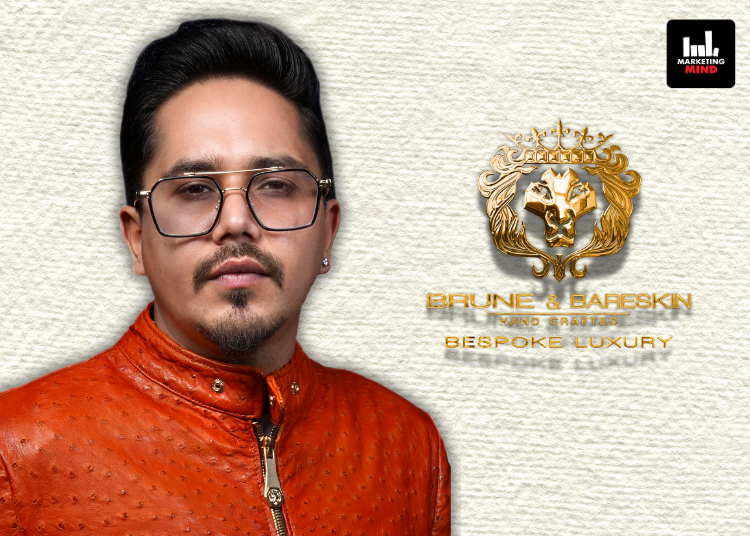
Brune & Bareskin’s story began not in a boardroom, but on a bike. What started with Tabby Bhatia designing his own leather jackets to match his Harley eventually evolved into one of India’s most distinctive luxury brands. Ten years later, Brune & Bareskin is known for its handcrafted leather shoes, jackets, and accessories, all proudly Made in India, and is now eyeing a bold Rs 500 crore milestone by 2030.
In conversation with Marketing Mind, Bhatia shares how the brand grew 50% year-on-year without external funding, why tier-2 India and micro-influencers are driving the next phase, and how digital customisation will shape the future of Indian luxury.
Brune & Bareskin has been growing 50% year-on-year. What role has marketing played in reaching this scale, and what are you targeting for the next three years?
Marketing has been the backbone of our growth. Since we sell only through our own stores and website, every bit of traffic and every sale comes directly from marketing. We’ve never had a single day without performance ads or collaborations.
What’s interesting is that we haven’t increased our marketing budget in almost five years, yet our numbers have continued to grow. That’s because nearly 75% of our customers are repeat buyers, they first come for a shoe or jacket and then return for belts, bags, or accessories. The consistency in product quality has built deep trust, and that’s been our biggest marketing win.
You’re targeting Rs 500 crore revenue by 2030. What will be the key marketing and branding steps in achieving that?
It’s a mix of expansion, visibility, and experience. We’re opening 125 stores in the next five years, and each will be launched by a known regional face. We’re also building an omnichannel experience where customers can buy or exchange products seamlessly, whether online or offline.
We’ve also learned a lot from our influencer strategy. For example, instead of spending lakhs on a single high-budget campaign, we collaborated with 30 micro-influencers across cities and used their content for ads. The results were far better and helped us understand which formats and audiences work. This is exactly the learning we’ll apply with larger faces once the funding comes in.
You mentioned a funding round in progress. How are you planning to deploy that capital?
This raise is largely marketing-focused. Around 50% of the funds will go purely into marketing, and the other half into inventory. Over the last ten years, we’ve done a lot of homework, experimenting with influencers, celebrity stylings, and region-specific content. Now, with capital, we’ll scale that intelligently.
We don’t want one national brand ambassador; we want city-wise and state-wise celebrity faces. For instance, if we’re opening a store in Hyderabad, we’d rather have a Telugu actor launch it; if it’s Punjab, a Punjabi artist works best. We know which face drives traffic from which geography, and now we’re ready to use that insight at scale.
You already have over two lakh customers. What’s your strategy to reach the next milestone- say, one million customers worldwide?
Our first focus is deepening presence within India while simultaneously targeting international customers digitally. Right now, our customer acquisition is heavily driven by Instagram and Meta platforms, but once we scale budgets, we’ll expand to performance-led international campaigns.
We’ve seen strong organic traction abroad already, from NRIs and friends-of-customers who discover us overseas. Once we start paid outreach globally, I expect a sharp rise in conversions, especially because our pricing positions us as affordable luxury in markets like the U.S. and U.K.
You’ve also stayed away from discount-heavy marketplaces like Myntra or Amazon. Why?
Because I wanted to build a long-term legacy brand, not a discounted one. Early on, platforms suggested we inflate our MRP and show big discounts to improve visibility. I refused. You can make quick money today, but not a timeless brand that way.
So we exited all third-party platforms and focused on our own website. That’s when our customer acquisition cost dropped from Rs 3,000 to Rs 650, proving that quality and trust drive repeat business better than discounts.
Tier-2 and Tier-3 cities are becoming strong markets for many luxury brands. What’s your experience there?
Massive. I expect 60% of our total sales come from tier-2 and tier-3 cities in the coming years. What’s surprising is that our most expensive shoes, priced Rs 60,000 and above, sell the best in smaller towns.
These customers are no longer dressing for their local circles, they’re dressing for Instagram. They want to look global and aspirational. We’ve seen customers from cities like Patna, Ranchi, and Ludhiana ordering repeatedly, and many of them become loyal buyers. Tier-2 India is where the real luxury growth is happening now.
You have over 2,500 products across categories. Which categories will dominate by 2030?
Footwear will remain our biggest category, contributing around 60–65% of total sales, followed by travel bags, accessories, and then apparel. But apparel will also expand to include polos, jeans, and caps, items that carry our signature leather-inspired aesthetic.
Interestingly, even before launch, we received 10,000 pre-orders for caps and 20,000 for t-shirts from our existing customers. So the appetite for lifestyle products beyond leather is already visible.
Brune & Bareskin’s Patina and made-to-order services are a signature. How big is this vertical today?
Customisation contributes 20–25% of our monthly sales, but its true impact is in conversion. Around 80% of first-time customisation buyers later purchase off-the-shelf. It helps us win trust.
The next step is to digitise the entire process, allowing customers to customise products live on our website by changing colours, soles, or textures in real time. We’ve already begun trials for that technology, and once implemented, it’ll help us scale globally without relying on in-store staff.
With plans for 125 stores by 2030, how will your marketing mix evolve between offline and digital-first outreach?
The strategy remains consistent across both. Our stores are designed as experience centres, not just retail outlets. The communication, storytelling, and campaigns will stay digital-first but will amplify around each store launch.
Locally, we’ll use regional influencers or celebrities to inaugurate stores, while nationwide campaigns like “Are You Brune or Bareskin?” will build a larger brand identity. The goal is to make both channels, online and offline, feed into one another, strengthening the omnichannel experience.
“Made in India” is now a global statement. How are you leveraging that in your international growth plans?
We’ve always worn that identity with pride. The quality, craftsmanship, and authenticity of Indian manufacturing have global appeal now. As we begin advertising internationally, I expect 30–40% of our sales to come from exports in the coming years.
Right now, only 4–5% of our revenue is from international buyers, mostly organic. But when global consumers see our pricing, a Rs 10,000 handcrafted shoe that costs just $170, it’s unbeatable value in the luxury segment. So “Made in India” is not just our origin; it’s our advantage.
Looking ahead to 2030, what’s the one big marketing goal for Brune & Bareskin?
To make Brune & Bareskin a household name for luxury, Made in India, loved globally. Our target is to grow 100% year-on-year, reach 1 million customers worldwide, and build a brand that stands for timeless design, impeccable quality, and Indian pride.
We’ve spent ten years doing the groundwork, now it’s time to take that legacy to the world.