







A decade ago, Indian branding was synonymous with advertising. The industry was dominated by campaigns, taglines, and TV commercials, and brands were rarely treated as economic assets. The concept of brand value as a measurable business driver was nascent, confined largely outside of boardroom strategy.
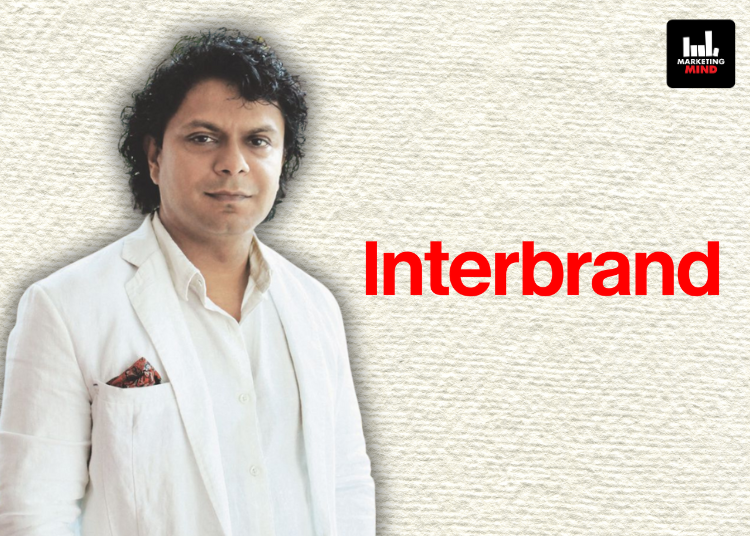
This was the environment Ashish Mishra decided to challenge. When Interbrand launched its India office in 2013, Mishra, now CEO of Interbrand India and South Asia, began a clear mission: to establish brands not merely as logos, but as living business assets that generate tangible economic value. To achieve this, his team pioneered the Best Indian Brands league table, partnered with conglomerates like Godrej, and successfully shifted brand-building from a marketing tactic to a strategic imperative.
Today, Mishra observes a nation caught at a critical juncture. While many Indian companies remain anchored in legacy mindsets that equate branding with mere advertising, a growing number are embracing dynamic, value-driven strategies. For him, the compass for this transition has always been simple: the human truths that define how people think, feel, and connect with experiences.
Under Mishra’s guidance, Interbrand India and South Asia worked to bridge this divide. They help businesses understand that strong brands drive loyalty, command premium, and ensure long-term growth, but only when they are built on authentic insights into human behavior. In the current era defined by digital velocity, short-lived trends, and rising consumer skepticism this foundational principle has become absolutely vital.
This philosophy serves as a direct challenge to the common, short-sighted focus of modern marketing. Mishra has emphasised that chasing short-term marketing metrics often distracts from what truly defines a brand.
“Performance marketing is not an alternative to branding. It’s a tool to track and sharpen marketing plans. The foundation of brands is that one principle that will always be relevant to human truths. Not to be mistaken with customer insights that work for an ad campaign, human truth is a truism built around a deeper need and is timeless,” he explained.
Furthermore, he has warned, without this foundation, businesses risk becoming commodities, interchangeable and incapable of commanding choice, loyalty, or premium.
From Commodities to living assets
This fundamental shift in perspective from short-term campaigns rooted in ‘insights’ to long-term value creation based on ‘human truths’ is what powered Interbrand’s most enduring contribution in the country. One of Mishra’s most enduring contributions has been his push to treat brands as economic assets. When Interbrand pioneered the concept of brand valuation globally, it allowed practitioners to participate meaningfully in boardroom conversations.1 Bringing that thinking to India required years of effort.
“When we started the India office in 2013, branding and advertising were interchangeably used. That’s why I insisted on creating the Best Indian Brands league table in our very first year to drive the understanding of brands as living business assets. Over the last decade, that conversation has matured significantly,” Mishra added.
He has further highlighted that corporate and B2B brands have often embraced brand valuation faster than FMCG players, particularly in high-stakes situations like mergers and acquisitions, where goodwill directly impacts financial outcomes.
The rising economic value of these “living assets” is now intrinsically linked to an entirely different corporate currency: trust. With India, like much of the world, facing a growing trust deficit in institutions, brands have had to step in to bridge the gap. For Mishra, empathy has been the foundation of this shift.
“People are becoming increasingly cynical about promises and claims. Progressive businesses are building trust by focusing on delivering what truly matters. In India, brands like Tata or Godrej may be seen as more trustworthy than news channels or political leaders. That trust comes from consistently meeting or exceeding customer expectations,” he emphasised.
However, he has noted, empathy alone is insufficient. In a world where innovations are easily copied, brands must pair empathy with continuous innovation to maintain a competitive edge.
Experience beyond touchpoints
To execute this combination of empathy and innovation, Mishra argues, brands must move past focusing on isolated interactions. Mishra has argued that creating a strong brand isn’t about digital versus physical, it’s about building an integrated experience strategy.
“A great way of looking at branding is to have the brand strategy derived from business strategy, and brought to life by experience strategy. This is agnostic to touchpoints whether digital, offline, or hybrid and it all comes down to how the brand makes people feel,” he explained.
Moreover, citing global projects like Mini and Prince Akatoki hotels, Mishra has stressed the power of an “experience metaphor” to unify every interaction under one emotional promise.
This need for a unified, constantly evolving experience strategy is why Interbrand has abandoned the concept of static identity. The traditional notion of fixed brand positioning, he has argued, is no longer sufficient. Instead, Interbrand has promoted the concept of “iconic moves.”
“The pace of change in customer expectations is so high that fixed positioning seems outdated. Brands today must act as verbs, not adjectives. Incrementalism doesn’t work; you need iconic moves to propel brand trajectories. Switch, for instance, has done this brilliantly by redefining public mobility through its partnerships on Mumbai’s and London’s double-decker buses,” Mishra noted.
Gen Z and the ‘Matter Paradox’
One of the biggest forces compelling brands to execute these “iconic moves” is the arrival of a new generation with entirely different values. Mishra has coined the “Matter Paradox” to describe the gap between Gen Z’s activism and their actions. Yet, he has cautioned against judging younger consumers by older generational standards.
“Earlier generations often judge Gen Z based on their own criteria. Deferred gratification was seen as a virtue, but for Gen Z, deferred gratification is no gratification. To truly resonate, brands must see them as people, not just customers. That’s why we encourage partners to bring Gen Z into teams and even onto horizon boards,” he added.
Gen Z’s focus on authenticity also sharpens the scrutiny on a critical area of corporate strategy: sustainability.3 As climate change climbs corporate agendas, Mishra has warned of the risk of superficial action. “Large companies, especially in auto and energy, face a paradox. Their core models are traditional, but the ecosystem is shifting rapidly. That’s why so many fall into greenwashing. The answer lies in calibrated trajectories and iconic moves that authentically integrate sustainability into business, not just communication,” he emphasised.
AI with a brand lens
The shift toward authenticity and dynamic movement is now being put to the ultimate test by the rapid ascent of technology. On artificial intelligence, Mishra has been unequivocal: technology without brand vision can be damaging. “AI can accelerate commoditisation if you lose sight of the brand. In the short term you may gain, but long term you risk loyalty, preference, and premium. Keeping the brand central, and using AI to drive agility, convenience, and personalisation, is far more powerful,” he explained.
To truly lead in this new landscape of AI, authenticity, and rapid change, even industry veterans must adapt. Mishra has admitted that to stay relevant, he had to let go of long-held industry conventions. “If I were to pick one mindset to unlearn, it’s the obsession with painstaking perfection. The world today values spontaneity over polish. That’s why social influencers thrive while many old-school ad giants struggle to reinvent themselves,” he said.
He has also cited Jio’s creation as a turning point in rethinking categories entirely, moving from rigid definitions to what he calls “Arena brands” that democratize experiences beyond traditional boundaries.
The future of Indian Brands
This movement beyond rigid categories represents the single greatest opportunity for future value creation. For Mishra, the biggest opportunity for Indian brands lies in breaking free from category silos. “We need to stop thinking of brands within categories and start thinking of categories within brands. Healthcare brands are losing to tech players like Apple. Banks had the networks and talent but lost payments to GPay. The opportunity losses are all around us and only those willing to transcend boundaries will create quantum value growth,” he emphasised.
As Interbrand continues to shape these conversations, Mishra has concluded, one principle remains constant: brands are not merely logos or campaigns, but living assets rooted in human truths. In an era of shifting trust, rising Gen Z influence, and disruptive technology, that foundation has never mattered more.