






We’ve all been told to research before buying a phone, compare reviews before booking a hotel, and read the fine print before signing a document. Yet, when it comes to choosing the people who run the country, many of us have often settled for speeches and promises.
Tata Tea‘s Jaago Re took that everyday contradiction and turned it into one of the most powerful advertisements Indian television has ever seen.
Released in 2007, the campaign has never tried to convince audiences that its tea tasted better or brewed faster. Instead, it has served something far stronger. A wake-up call. At a time when election campaigns were largely filled with promises, slogans and speeches, Tata Tea has asked an unexpectedly simple question: If every important job requires an interview, why shouldn’t the people running the country go through one too?
Created by Lowe Lintas, Jaago Re has gone on to become one of Indian advertising’s defining examples of purpose-driven communication, proving that brands can spark conversations that extend far beyond supermarket shelves.
The commercial has opened like countless election stories before it.
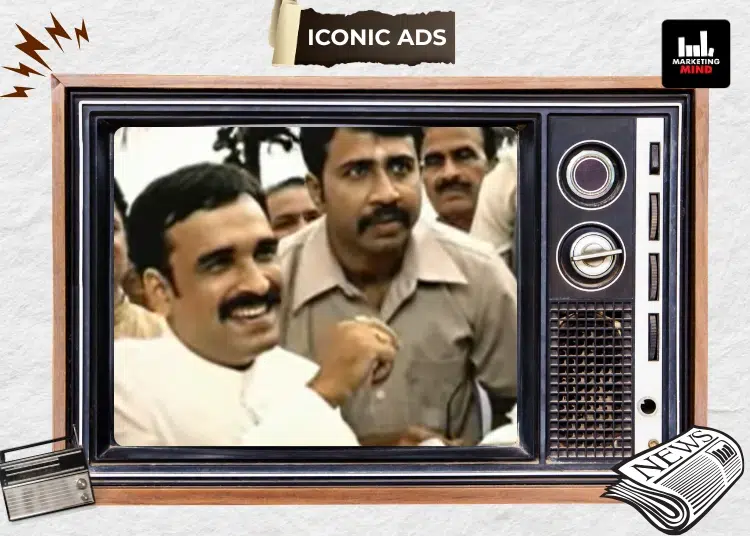
A politician, accompanied by his entourage, moves from one house to another, asking people for their votes. Played brilliantly by Pankaj Tripathi, the candidate arrives at a modest home and confidently announces, “Main aapka vote maangne aaya hoon.” But it isn’t just the dialogue that has stayed memorable. As he says the word “maangne” (to ask), he instinctively makes a subtle snatching gesture with his hand, as though the vote already belongs to him. It has been a tiny acting detail, yet one that has quietly captured years of political entitlement in a single movement.
The homeowner welcomes him warmly. He politely offers him a seat and asks Ramu Kaka to bring a cup of tea. The politician barely settles in before introducing himself. “Bhawarlal Bhandari.”
What follows has completely flipped the familiar election script. Instead of immediately agreeing to vote, the man calmly asks, “Aapki qualification kya hai?” (What are your qualifications?)
The politician freezes. “Qualification?” he repeats, visibly puzzled.
The host smiles and lets the question pass. “Alright,” he says that tell me about your work experience. Trying to rescue the situation, the politician’s secretary proudly responds, that he has been in politics for the past 25 years.
But the homeowner isn’t impressed. He gently clarifies that work experience doesn’t simply mean the number of years spent in politics. It means roads built, water supplied, reforms introduced and lives improved.
In other words, What have you actually done? The politician, now visibly uncomfortable, blurts out that are you interviewing me?
The room bursts into laughter. His supporters echo mockingly, “Kaunsa job? Kaunsa job?” (What job?) As though the very idea sounds ridiculous. Then comes the line that changes the mood of the room entirely. The man looks at him and replies, ‘Sir, aapne itni badi job ke liye apply kiya hai…”
(Sir, you’ve applied for such a big job…)
He pauses. “…desh ko chalane ka job.” (…the job of running the country.)
The laughter disappears. So does the politician’s confidence. Without raising its voice, the advertisement has made its point. The film has gently reminded audiences that elections aren’t favours politicians do for citizens. They’re job applications submitted to the public.
As the politician quietly accepts his untouched cup of tea, the campaign’s unforgettable anthem begins playing. “Jaago Re, Jaago Re, Jaago Re… Jaago Re…”
The closing voiceover has delivered the campaign’s enduring message:
“Har subah sirf utho mat, Jaago Re.” (Every morning, don’t just wake up… wake up to awareness.)
The brilliance of Jaago Re has never rested in political criticism. Instead, it has shifted the spotlight onto the voter. Rather than asking citizens whom to vote for, it has encouraged them to ask better questions before they vote. That distinction has made all the difference.
Over the years, the campaign has evolved into a larger social movement addressing voter registration, civic participation and informed decision-making. Yet this particular film has remained its most memorable chapter because of its simplicity. No dramatic speeches. No sensational visuals. Just an ordinary living room, a cup of tea and one extraordinary question.
Nearly two decades later, Jaago Re has continued to feel remarkably relevant. Elections may have changed, political conversations may have grown louder, but the campaign’s central idea has remained timeless: democracy works best when citizens stop being spectators and start being interviewers.
Like the aroma of morning tea drifting through a sleepy household, the message has lingered long after the commercial ended. Because some cups of tea don’t just wake you up. They wake your conscience.