





For over two decades, SEO has largely followed a familiar formula: optimise for keywords, improve rankings and drive organic traffic. But as Google pushes deeper into AI-powered Search, that playbook is being fundamentally rewritten.
At I/O 2026, Google expanded AI Mode with more multimodal and conversational capabilities, reinforcing its vision of Search as an AI-first experience. Instead of presenting users with a list of blue links, Search is increasingly synthesising information, answering questions directly and helping users complete tasks within the interface itself.
The changes are forcing the SEO industry to confront a new reality. Visibility is no longer determined solely by where a page ranks, but increasingly by whether AI chooses to reference it. As Search evolves from a directory of links into an answer engine, the question is no longer just how to rank, but how to be cited, recommended and discovered.
To understand how these changes are reshaping search marketing, Marketing Mind spoke to industry players from SEO and digital marketing agencies. While the terminology may be evolving with concepts such as Answer Engine Optimisation (AEO), Generative Engine Optimisation (GEO) and AI Discovery Optimisation gaining traction, the consensus is that SEO is expanding beyond rankings and traffic to helping brands become authoritative sources that AI systems choose to surface and recommend.
Search is becoming a conversation

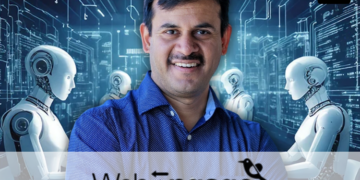
Prashant Puri, Co-founder and CEO at AdLift, believes this marks the rise of a more intent-driven search journey. “People looking for quick info are finding answers right on the search results page through AI Overviews. On the other hand, when people are looking to buy or compare things, their searches are getting longer and more conversational,” he observed. “Total organic traffic might drop, but the users who do click through have a much stronger intent to buy or engage.”

Saad Merchant, Co-Founder, Verve Media, echoes the sentiment, noting that AI summaries are creating more zero-click journeys and reducing CTRs even when rankings remain unchanged. However, he believes commercial and comparison-based searches will continue to drive meaningful traffic because users still seek validation before making decisions.
Perhaps the most visible change is in user behaviour. Instead of typing fragmented keyword combinations, people are increasingly searching the way they naturally speak.

“People no longer search using a few keywords. They search the way they naturally speak,” said Ajay Varma, Managing Partner, 0101.Today.
“Instead of searching for the best diabetes medicine or an investment app, someone is more likely to ask how they can manage diabetes naturally along with medication, or ask which investment platform is best for a first-time investor in India,” he exemplified.
That shift, he says, is already influencing how brands create content. Companies such as Tata 1mg and Practo have invested in educational content that answers genuine consumer questions instead of simply targeting keywords, making them more relevant in an AI-driven search environment.

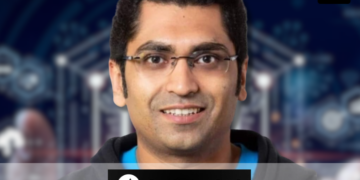
The change is also beginning to reflect in performance metrics. Dipesh Mishra, Group Head – SEO Strategy & Data at BC Web Wise, pointed to Google’s own observation that users in AI Mode ask questions nearly three times longer than traditional searches.
“On the BFSI accounts we run, impressions held up while clicks on ‘what is’ and ‘how to calculate’ pages dropped sharply,” he noted, adding that marketers should start analysing clicks-per-impression by query type rather than relying solely on overall traffic.
Ranking is no longer enough
If search behaviour is changing, so are the rules of visibility.
For years, higher rankings almost automatically translated into greater traffic. In an AI-first search ecosystem, that relationship is weakening as Google’s AI chooses sources based on factors beyond traditional rankings.
“Keywords still map demand. They no longer earn the citation,” says Mishra. Drawing from industry studies, he notes that branded web mentions now correlate more strongly with AI Overview visibility than backlinks, while only a minority of AI citations originate from pages ranking in Google’s top 10 results. Across several beauty e-commerce clients, he says, ingredient explainers and comparison pages containing original insights are increasingly being surfaced over conventional category pages.
Puri sees the same trend. “Ranking and getting cited have become two different challenges,” he says. “A lot of AI citations come from deeper, niche pages that do not rank in the top three traditional blue links.”
According to him, structured data remains important because it helps AI understand webpages, but originality has become the real differentiator. “A big piece of this is what we call information gain. Brands that publish original data get cited much more often than those that just comment on existing trends.”
Merchant describes the transition as one from keyword optimisation to knowledge optimisation. AI systems, he says, increasingly reward comprehensive topical authority, first-hand experience, proprietary research and well-structured information rather than isolated keyword-focused pages.
Varma believes this demands a broader shift in mindset. “Keywords still matter, but they are no longer enough,” he added. “Brands need to stop thinking only about keywords and start thinking about becoming the most trusted source in their category.”
AEO & GEO aren’t replacing SEO
As AI reshapes Search, new acronyms such as AEO and GEO have rapidly entered industry conversations. Yet practitioners largely see them as an evolution of SEO rather than an entirely new discipline.
“I see them as the natural evolution of SEO rather than completely new disciplines,” Varma pointed out. “SEO helped brands get discovered on search engines. AEO helps answer questions directly. GEO focuses on helping AI platforms understand and recommend a brand accurately. The objective hasn’t changed. Discoverability has.”
Puri shares a similar view, describing Generative Engine Optimisation as “the natural next step for SEO” as answers move “off a static web page and right into an interactive AI interface.” Rather than creating separate AI optimisation strategies, he believes AI visibility should become part of every content and technical SEO audit.
Merchant agreed that the fundamentals remain unchanged. “Traditional SEO focused on helping search engines rank pages. Today’s optimisation focuses on helping AI systems understand, trust and reference your content,” he says. Brands should therefore prioritise topical clusters, concise answers, original research and strong technical SEO.
Mishra, however, argued that one aspect is genuinely different. “Eighty percent of it is rebranded SEO,” he says. “But the answer unit replaces the page as the thing being optimised. Your visibility now depends on what third-party sites say about you.”
That distinction reflects a broader shift, from optimising webpages for algorithms to building an ecosystem of trusted information that AI can confidently reference.
Success will be measured differently
The evolution of search is also forcing marketers to rethink success metrics.
“For years, success was measured through rankings, traffic and click-through rates,” says Varma. “Those metrics will continue to matter, but marketers will increasingly need to understand whether AI is recommending their brand, citing their content and recognising them as an authority.”
Puri believes Citation Share (how frequently a brand appears in AI-generated responses compared with competitors) will become one of the defining metrics of AI discoverability. Beyond simply counting citations, he says brands must also monitor whether AI describes them accurately and positively.
Merchant expects marketers to broaden their dashboards to include AI visibility, citation share, branded search growth, engagement quality and conversions. “The focus should shift from ‘How many people clicked?’ to ‘How often is our brand influencing decisions?'”
Mishra similarly recommends tracking AI citation share across platforms such as Google AI Overviews, ChatGPT, Gemini and Perplexity, alongside branded search lift, assisted conversions and competitive share of voice. In his experience, branded search often improves before referral traffic from AI platforms begins to scale.
The new competitive advantage is trust
Despite growing concerns over declining organic traffic, none of the experts believe Google’s AI push signals the end of SEO.
Instead, they see it accelerating a transition from optimising pages to building authority.
Original research, expert commentary, proprietary data, comparison content, strong technical foundations and third-party credibility are emerging as the assets AI systems value most. Technical SEO still matters, but increasingly serves as the foundation rather than the differentiator.
“Instead of asking how to rank higher, brands should ask how they can become the most trusted answer in their category,” says Varma.
Merchant echoes that sentiment. “The future belongs to brands that become authoritative sources of knowledge, not just publishers of optimised content.”
Google’s AI-first vision doesn’t eliminate SEO. Rather, it expands its scope. The challenge for brands is no longer limited to earning a place on the first page of search results. Increasingly, it is about earning a place in the answer itself.