






The Indian snacking market has undergone a dramatic transformation over the past five years. What was once driven largely by taste and convenience is now increasingly influenced by ingredient awareness, healthier alternatives, and instant accessibility through quick commerce.
As consumers become more discerning about what they eat, brands are finding that winning shelf space is only one part of the challenge, earning trust and staying relevant requires continuous education, product innovation and consistent availability.
The Healthy Binge has witnessed this evolution from the front row. Founded in 2019 with the vision of making nutrition-rich foods a part of everyday lifestyles, the brand entered the market long before millets became a mainstream conversation. Since then, it has expanded from a small startup into a growing FMCG business spanning retail, quick commerce, institutional sales and exports, while navigating changing consumer behaviour and an increasingly crowded healthy snacking category.
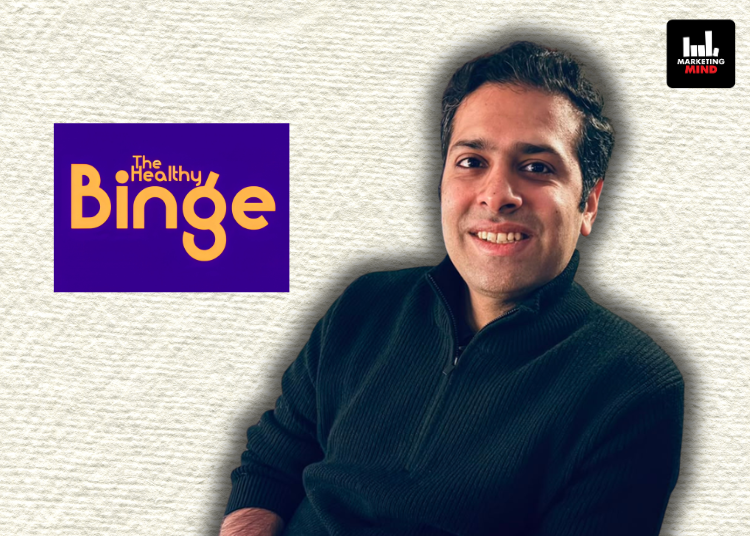
In conversation with Marketing Mind, Karan Korke, Co-founder and Chief Marketing Officer (CMO) at The Healthy Binge, spoke about building a category before consumers were ready for it, why he believes taste matters more than marketing claims, how quick commerce has fundamentally changed purchase behaviour, the lasting impact of Shark Tank India, and why distribution, not branding alone, will determine the next generation of FMCG winners.
Building A Category Before Consumers Were Ready
Before millet became a buzzword, The Healthy Binge was among the early brands attempting to make grains like ragi, jowar and rajgira relevant to modern snacking.
The company simultaneously worked on fortified rice for government nutrition schemes while experimenting with healthier snack formats that could seamlessly fit into everyday consumption.
“We had zero idea about how to do all these things,” Korke recalled. “We went to China, sourced the machinery, got it here, learned the manufacturing process and supplied it to states like Haryana and Punjab. We actually felt good about doing something impactful.”
The consumer side, however, demanded a different kind of education.
“For the first couple of years, we had to educate people about what ragi is and what jowar is because a lot of people simply weren’t familiar with them,” he said. “Now, because of the International Year of Millets and so many companies entering the space, people understand the category.”
That early conviction has paid off. As awareness around healthier ingredients has increased, so has the category itself.
Growing Through Trial, Error And Customer Conversations
Unlike many digitally native brands that begin with performance marketing, The Healthy Binge started by standing outside retail stores and participating in flea markets to understand consumer behaviour firsthand.
“We had no idea how to do marketing initially,” Korke admitted. “We were experimenting, learning from our mistakes.”
The team regularly travelled from Pune to Mumbai every weekend to showcase products, gather feedback and understand whether consumers actually enjoyed what they were creating.
One pleasant surprise came early.
“Luckily, we did get the product right in terms of taste, texture, crunch and spice levels,” Korke said. “A lot of investors told us that usually brands don’t get it right the first time, but fortunately we did.”
Only after validating the product offline did the company begin investing in Amazon advertising, influencer collaborations and eventually quick commerce, where consumer habits would evolve rapidly.
Q-Comm Didn’t Just Add A Channel, It Changed Consumer Behaviour
Few developments have influenced the business as dramatically as the rise of quick commerce.
A few years ago, ecommerce contributed nearly 50-60% of The Healthy Binge’s revenue. Today, quick commerce accounts for around 60-65%, reflecting changing buying habits across the FMCG industry.
“People are used to convenience now,” Korke noted. “Our product is in the impulse category. When they see the packaging or the videos on quick commerce listings, they instantly feel they need it and they order it.”
Retail, however, continues to remain a critical pillar, with the company present across 200-250 stores in Mumbai and Pune. Another 10-15% of revenue comes through institutional partnerships with offices such as Google, Amazon, Netflix, JP Morgan and BCG, where employees often discover the products before purchasing them elsewhere.
According to Korke, these touchpoints complement rather than compete with each other.
“Our TG is office-goers who want convenient snacks without too much hassle,” he explained. “Sometimes they sample the product in their office and later buy it through quick commerce, or vice versa.”
Taste Is What Sells In India
The healthy snacking aisle has become increasingly crowded with brands promoting protein, calorie counts, clean labels and functional nutrition. While Korke acknowledges that consumers today are more informed, he believes brands risk confusing them by constantly chasing the latest health trend.
“We want to be a fun snacking brand and not somebody who’s making tall claims,” he said. “Taste is what sells in India.”
Instead of positioning the product around numbers, The Healthy Binge focuses on offering consumers an alternative that delivers better nutritional value without compromising on flavour.
“The calories you’re having are mindful calories instead of empty calories,” Korke explained. “But we don’t want to become a brand that’s only talking about protein or calories.”
He also believes ingredient branding will continue gaining prominence across categories.
“When consumers look at labels saying ragi chips or jowar chips, they now instantly associate them with healthier products,” he observed. “Ingredient branding has picked up big time in India, and I think it’s only going to grow further.”
The Shark Tank Effect Didn’t End After The Episode
For an emerging consumer brand, Shark Tank India Season 2 proved to be a defining marketing moment.
“It was a much-needed marketing boost,” Korke said. “For a young food brand, getting that kind of visibility and trust is a blessing.”
The impact was immediate.
“As the episode started airing, within the first five or six minutes we started seeing spikes in orders on our phones,” he recalled. “Within a month, we saw a 7-9x jump in sales.”
Even years later, the appearance continues to generate export enquiries through viewers discovering the company via YouTube.
The visibility also strengthened another important asset: brand recall.
“Some customers even remember us simply as ‘the purple packet’,” Korke said. “That’s a good thing because creating mind space today is extremely difficult.”
“Attention spans have gone for a toss,” he added. “Packaging has played an important role for us, especially in this category where you need to stand out.”
Distribution, Not Just Branding, Will Define The Next Five Years
As healthier snacking continues to evolve, Korke believes innovation, taste and pricing will remain important, but none of them can replace strong distribution.
“The most important thing is distribution,” he stated. “The product has to be good, the pricing has to be right and you need continuous innovation. But what is ultimately going to scale is how many touchpoints you have across the country.”
No amount of marketing, he argued, can compensate if consumers are unable to find the product when they want it.
“If it’s not available across shelves, online, offline or on your phone, you’re not going to survive,” he said.
Looking back at the company’s journey, there is little he would fundamentally change. “I would keep the team the same,” Korke said. “A lot of the people who started with us are still here, and I love the way they’ve grown along with the company.”
The one thing he would revisit, however, is the company’s early go-to-market strategy.
“If I had a little more knowledge earlier, I would redo a few parts of how we approached distribution,” he noted. “That’s probably the biggest learning from the journey.”
For a brand that began by educating consumers about millets, The Healthy Binge now finds itself navigating a very different market, one where healthier ingredients have become mainstream, quick commerce has compressed the path to purchase, and attention is increasingly difficult to earn.
But through all those changes, Korke believes one principle has remained constant: consumers may discover a product through marketing, but they only come back if the product delivers.