







The logistics industry has undergone a visible transformation over the past few years. What was once considered a largely operational function has gradually become an increasingly important contributor to business efficiency and growth. Today, transportation decisions are no longer made only on the basis of movement and delivery. They are increasingly linked to productivity, operational continuity, profitability, and long-term business performance.
As businesses continue to scale and customer expectations around speed and reliability increase, the pressure on logistics systems has intensified. This shift has also changed the role commercial vehicles play within business operations.
Vehicles today are no longer expected to simply transport goods from one destination to another. They are increasingly expected to support operational efficiency, reduce downtime, improve output, and contribute to better decision-making across transportation networks.
This changing landscape is also influencing how manufacturers approach product development and how they position new launches in the market.
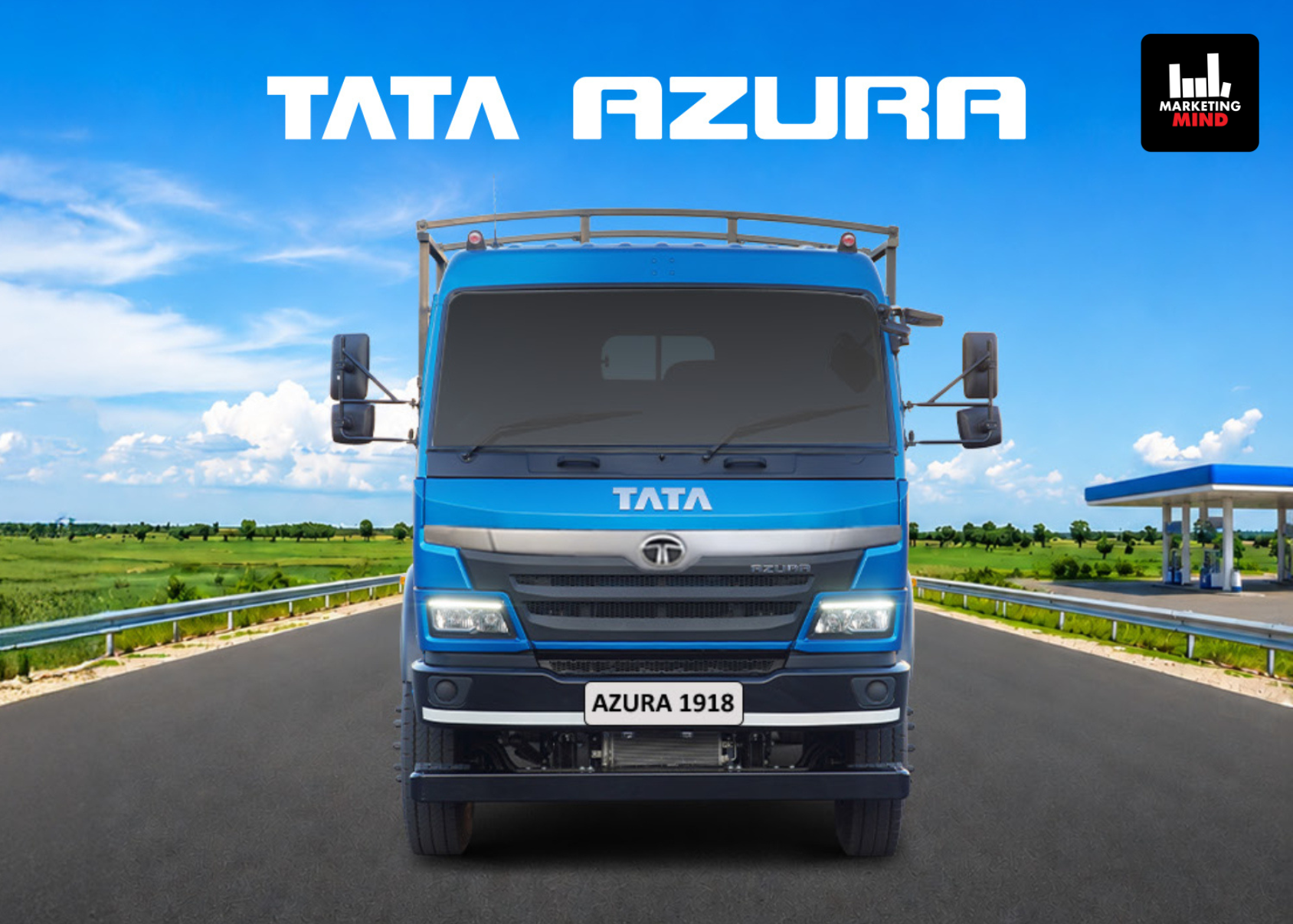
Tata Motors Commercial Vehicles’ introduction of the new Azura range reflects this broader shift taking place across commercial mobility.
Positioned around the idea of “Drive the Future of Productivity. Power the Next Mile,” the launch places equal emphasis on productivity-led outcomes alongside vehicle performance and highlights how transportation can contribute more meaningfully to business operations.
Commercial Transportation Is Becoming a Productivity Conversation
Commercial mobility has traditionally been associated with capability metrics such as engine power, payload, durability, and performance.
While these continue to remain important, expectations from businesses today have become significantly broader.
Fleet operators and transport businesses are increasingly looking for solutions that create operational advantages. Questions around uptime, efficiency, vehicle utilisation, driver experience, and technology integration have become just as relevant as technical capability.
For businesses managing large-scale transportation requirements, delays and inefficiencies can directly influence business performance. Every hour spent off the road may affect delivery timelines, while underutilised trips can impact operational efficiency. As a result, vehicles are gradually being evaluated less as transport assets and more as tools that support business growth.
This shift is creating space for products that combine performance with productivity.
A Move From Product Features to Business Outcomes
One of the more interesting shifts visible across industries today is how brands are choosing to communicate innovation.
Instead of focusing exclusively on what products offer, communication increasingly focuses on what products enable.
This transition can also be seen in the way Tata Motors Commercial Vehicles has introduced Azura.
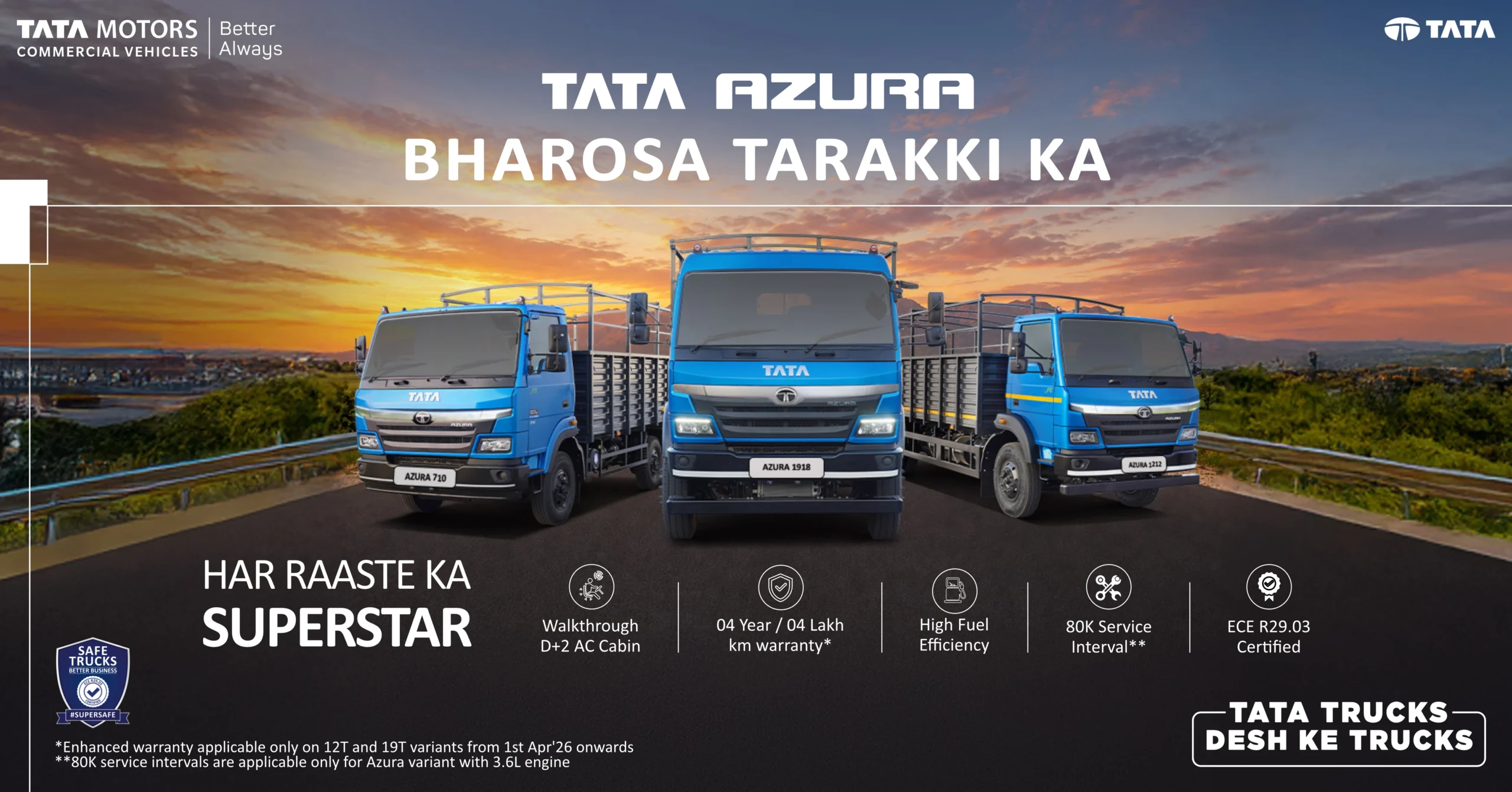
Rather than centring the conversation only around specifications, the messaging highlights themes such as uptime, payload capability, and productivity.
At a broader level, this reflects an understanding that commercial transportation decisions today are often linked to operational efficiency and long-term business value.
The proposition of More Uptime, More Payload, More Profits positions transportation not as an isolated business function but as a contributor to operational efficiency and business growth.
Building for the Realities of Modern Logistics
The demands placed on transportation networks continue to evolve.
Businesses are expected to move larger volumes while maintaining reliability and controlling operational costs. Delivery timelines continue to become tighter and expectations around consistency continue to rise.
In this environment, productivity becomes one of the most valuable differentiators.
The Azura range has been introduced with a focus on supporting these requirements.
With payload capacity of up to 12.6T and power output of up to 168 HP, the offering is positioned to support businesses that require both capability and efficiency in day-to-day operations.
At the same time, modern commercial mobility increasingly extends beyond mechanical performance.
Safety continues to play a larger role as businesses seek more reliable operations. Driver comfort is becoming equally important as operators recognise its influence on consistency and day-to-day usability.
The inclusion of driver-centric cabin design reflects this shift.
Connected intelligence is positioned as an added layer intended to support better operational visibility and more informed decision-making across fleet operations.
More Than a Product Launch
Product launches often reveal more than product innovation. They reveal changing market priorities.
The launch of Azura reflects how expectations from commercial mobility are evolving.
The conversation is gradually moving from horsepower to productivity, from carrying capacity to business outcomes, and from transportation to operational enablement.
As logistics becomes increasingly integrated with business growth, commercial vehicles are expected to create value beyond movement.
With Azura, Tata Motors Commercial Vehicles enters this conversation with an offering built around capability, safety, comfort, and connected mobility designed to support modern transportation requirements.
Because increasingly, the future of logistics may not be defined only by how far businesses can go, but by how efficiently they can grow along the way.