




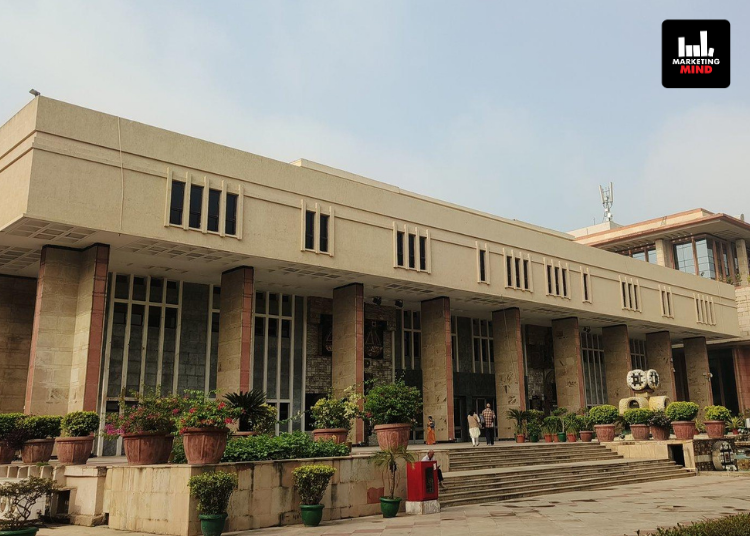
The Delhi High Court has restrained operators of several fantasy gaming applications from using trademarks associated with Dream11 and from replicating the interface of its mobile application. Justice Jyoti Singh has passed the interim order while hearing a suit filed by Sporta Technologies, the operator of Dream11.
The court has also directed the Department of Telecommunications (DoT) and the Ministry of Electronics and Information Technology (MeitY) to inform internet service providers to block access to websites hosting these allegedly infringing applications, as per media reports.
The order has followed claims by Sporta Technologies that several real-money gaming applications operating under the names “Come,” “Come Sports,” and “Come x Dream11” have copied Dream11’s trademarks, branding, and user interface. The company has stated that these apps have been promoted widely on social media platforms such as Facebook and Instagram.
Dream11 has informed the court that its fantasy sports platform, launched in 2012, has developed into a digital sports entertainment service where users create virtual teams of real players and compete based on live match performances. The platform has recorded over 200 million registered users and more than 100 million downloads on Android devices.
The company has also stated that it owns several registered trademarks including “Dream11,” “Dream Sports,” and “Dream11 Champions,” among other Dream-branded variations. It has further highlighted partnerships with global and domestic sports organisations including the International Cricket Council (ICC), Board of Control for Cricket in India (BCCI), the Indian Premier League (IPL), La Liga, and the NBA.
According to the suit, the company discovered in December 2025 that multiple entities were advertising real-money gaming apps using names similar to Dream11. Following this, the company has received user complaints in January and February 2026, prompting an investigation.
The investigation has revealed that the operators were distributing the applications through downloadable APK files outside official app stores and had registered multiple domain names to host the software. The suit has identified more than 21 domains allegedly linked to the infringing apps, including come-dream11.com, dream11come.com, comesports.in, come11game.com, comedream11.live, and comeapp-dream11.com.
The court has observed that the defendants appeared to have copied Dream11’s trademarks, branding and promotional materials in a manner likely to mislead users into believing the applications were associated with or endorsed by Dream11.
The court has further noted that the defendants had used Dream11’s marks alongside footage from the company’s earlier advertisements to suggest that the rogue application was a relaunch or “comeback” version of the Dream11 platform.
As part of the interim relief, the court has restrained the defendants and anyone acting on their behalf from using the “Dream11” or “Dream Sports” trademarks or any deceptively similar marks, incorporating them into domain names, mobile applications, websites or advertisements, and copying Dream11’s copyright-protected mobile app interface or promotional material.
The court has also instructed DoT and MeitY to notify internet service providers to block the identified domain names hosting the applications.
Additionally, Dream11 has been permitted to notify intermediaries including domain registrars, internet service providers and social media platforms such as Google and Meta if it discovers additional websites that allegedly infringe its intellectual property rights.
“From a plain comparison as brought forth in the above table, Plaintiff prima facie is correct that Defendant No. 1 has deliberately and with an intent to cash-in on the goodwill and reputation of the Plaintiff launched its ‘Come’/’Come Sports’ real money fantasy gaming, casino and rummy mobile applications and in doing so it has used and is continuing to use and reproduce identical trademarks of the Plaintiff as also copyright material and it needs no reiteration that general public is being deceived into believing that the services provided by Defendant No. 1 emanate from the Plaintiff and/or have some association with or by endorsed by the Plaintiff,” the Court stated.