






In little more than a decade, India’s advertising industry has been flipped on its head. Where TV once dominated budgets and print still carried prestige, digital is now the first call for brands. Short-form video, influencer tie-ups, e-commerce integrations, and platform-native storytelling drive both reach and revenue, redefining what success looks like in modern marketing.
Interactive Avenues (IA) has been at the frontline of this shift. Founded in 2006 and acquired by IPG Mediabrands in 2013, it has grown into one of India’s largest full-service digital agencies, employing more than 800 specialists across creative, media, commerce, and data. From FMCG heavyweights like Mother Dairy to automobile brands such as Honda, IA manages a portfolio that spans both legacy multinationals and digital-first challengers.
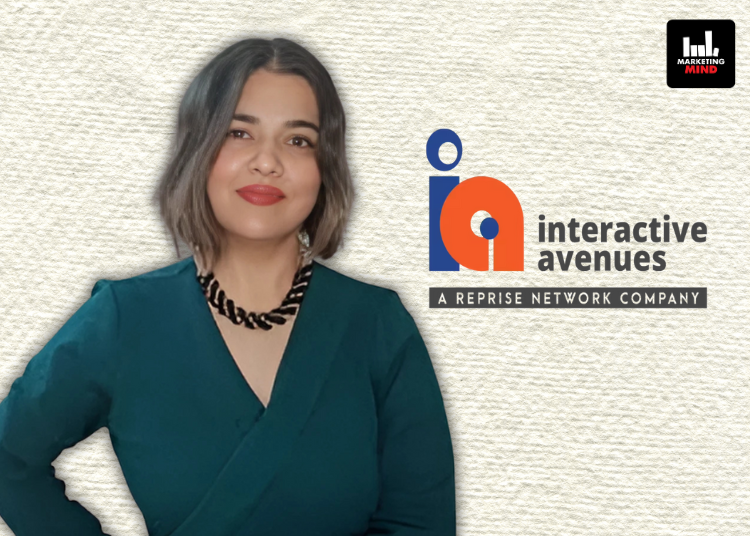
At the helm of Interactive Avenues’ creative vision is Aditi Mathur, Vice President – Creative & Content, who has worked across servicing, strategy, and content creation before stepping into a leadership role. She has seen how technology can both accelerate and flatten creativity, and in her view, the industry risks mistaking algorithmic output for original thought.
The timing is significant because audiences themselves have evolved. Consumers now spend more time on Instagram Reels, YouTube Shorts, and gaming platforms than on television, and brands need to meet them where they are. Unlike agencies that bolted digital onto traditional setups, IA’s DNA was born online, giving it a first-mover advantage in understanding these platform-native behaviors.
The paradox of this transformation is striking. While digital gives brands new reach and data-driven insights, it also demands greater creativity and human intuition. How do agencies balance algorithmic efficiency with storytelling that resonates emotionally? That question sits at the heart of the next chapter for India’s advertising ecosystem.
A new disruption: AI in the mix
That positioning also puts IA at the sharp edge of advertising’s next disruption: artificial intelligence. From automating ad placements and segmenting audiences to generating copy and visual assets, AI has begun to blur the lines between efficiency and creativity. Clients are eager to explore what it can unlock. Agencies, meanwhile, face the tougher question: can machines really create, or do they only remix what humans have already made?
For Aditi Mathur the timing is critical. Having worked across servicing, strategy, and content creation before stepping into a leadership role, she has seen how technology can both accelerate and flatten creativity. In her view, the industry risks mistaking algorithmic output for original thought.
“AI will only regurgitate what has already been done,” Mathur said. “It’s not thinking of new things. It’s taking references. That’s the paradox. We’re calling it creativity, but where’s the real creator?”
Mathur’s concerns reflect a broader anxiety in creative teams where algorithm-driven content is becoming ubiquitous. “Just that content is not mine. Everything that the AI tool is telling me, I’m doing that. The engagement is low. The moment you bring in humanness to it, rawness to it, the AI will not be able to get it,” she explained when asked how AI-generated content stacks up against human-driven strategies.
“AI will collate everything and give you the same,” Mathur reflected. “But how are the jobs going? AI is supposed to help with productivity, but it is also taking a few jobs,”She added.
This, however, is not the whole story. Mathur also explored how AI might change work culture. “What if all of us understood that with AI we can work three days a week and still maintain the same productivity?” she proposed, suggesting that automation could lead to more flexible schedules rather than mass unemployment.
She also noted that AI’s effects may be felt more in middle-layer roles. “Now we have a manager, three people below senior managers. Those middle-layer jobs can become agents. AI is making workflows easy, error-free, and trackable, reducing the need for operational manpower.”
Yet for Mathur, creativity remains untouched by automation. “Creativity is never going to be replaced. Storytellers are never going to be replaced. You need human intelligence to draw the nuances to understand why something works.”
Creativity thrives on experience and Gen Z insights
Advertising in the digital age is no longer just about channels or campaigns it’s about communities and experiences. The pandemic accelerated this shift, showing brands that audiences engage more deeply when content resonates on a human level. “COVID made everyone realize that digital is also a community, it’s not independent,” Mathur said.
At the same time, a new generation of consumers entered the market, changing the rules of engagement. Gen Z, now present both as workers and as consumers with disposable income, brought behaviors that were unfamiliar to many advertisers. “Then came the influx of Gen Z — not just in the workforce, but also as consumers with money in their pockets. That really baffled advertisers,” Mathur explained.
Their expectations forced brands to rethink storytelling approaches. Unlike previous generations, Gen Z values authenticity over polish. “So advertising also changed with the influx of Gen Z’s as their target audience, because their behavior was so different from millennials or the older generation. They were seeking value out of everything,” she said.
Mathur added that unconventional formats often outperform glossy productions. “They were like, ‘Yeah, you’re telling me one thing, but the brand values don’t match. And your storytelling is off. Overproduction is glossy, and I’m not interested. But give me a shaky video if it tells a good story, and I get hooked on it, that works for me better,’’ she explained.
E-Commerce’s layered influence
The rise of online shopping has created new touchpoints for advertisers, making campaigns more complex but also more measurable. “E-commerce changed advertising. Nobody talks about it in this term, but being part of an advertising agency, you see how much advertising itself has changed because e-commerce has become part of our daily lives,” Mathur said.
This shift has forced marketers to tailor messages across multiple stages of the customer journey, from product discovery to checkout, adding nuance to creative planning.
Alongside evolving audiences, Mathur has observed changes on the client side as well. Many organisations now have younger, less experienced decision-makers managing marketing budgets, which can affect campaign strategy. “I think what has been happening in the last three, four years is the juniorisation of clients. Yes, tech, AI. But experience also holds a lot of value. Experience helps you get a vision. But also experience gives foresight, which tells you what will happen 10 steps down the line,” she explained.
Less experienced clients often focus on immediate requests rather than strategic objectives. “When you work with somebody who’s not that experienced in marketing, they often end up getting what they asked for and not what they need,” Mathur said.
This, in turn, can constrain creativity. “Everyone’s trying to meet business goals, but creativity takes a little bit of a hit. What might be a great idea to me might just be a blah blip on your radar. Half of the cohort might not resonate with it. And when clients say, ‘This is exactly what I want,’ there is no room for discussion,” she added.
Attention spans and hyper-targeting
Finally, the changing attention span of consumers has reshaped how creative teams approach campaigns. Short, engaging, and personalized content is more critical than ever. “The medium has changed, the generation who’s the consumer now has changed. Our attention spans are very limited,” Mathur noted.
This has made hyper-targeted campaigns a key tool for advertisers. “We end up targeting very specific cohorts each time. It might not resonate at a mass level, and that’s fine. You are not pleasing everyone; you’re appealing to separate groups in separate ways, in their own language, with their own hooks. That’s very interesting,” she said.
A structured approach to experimentation
In an environment that demands measurable results, Mathur explained how IA’s structured approach allows space for both performance-driven campaigns and creative risk-taking. “We follow a 70–20–10 matrix: 70% for brand goals, 20% for impact, and 10% for experimentation. Even if it fails, it’s a learning experience,” she said, sharing how campaigns such as Dawat Rice’s “World Biryani Day” used AI to engage audiences in innovative ways exceeding targets by over 20%.
Integration across teams and services has also helped the agency stand out. “Our biggest differentiator is managing integrated accounts seamlessly,” Mathur said, pointing out that having all digital services in-house allows teams to collaborate efficiently and deliver consistent brand messaging.
Authenticity, too, plays a crucial role in campaign design. “If it seems completely foreign it is not authentic choosing the right property or person goes beyond who they are, but who their audiences are,” she explained.
For Mathur, data-driven insights are not just tools for distribution but are at the heart of content ideation. “Insight comes before the idea wherever data is pointing, you take insights out and then those insights lead to a wholesome idea,” she said.
She recounted how social listening data led to conversations around pets, prompting a brand to create limited-edition products aligned with consumer interest.
A co-pilot, not a replacement
Looking to the future, Mathur envisions AI not as a substitute but as a collaborator. “Human intelligence can pull at emotional strings and understand cultural shifts better than AI,” she said, reinforcing that strategy and storytelling remain rooted in human experience.
As marketers and agencies adapt to AI-driven workflows, Mathur’s position is clear: technology can enhance efficiency, but it cannot replicate the imagination, empathy, and lived experiences that define great storytelling. For Interactive Avenues, balancing data and creativity is not a dilemma, it’s an opportunity to lead the industry into its next chapter.