






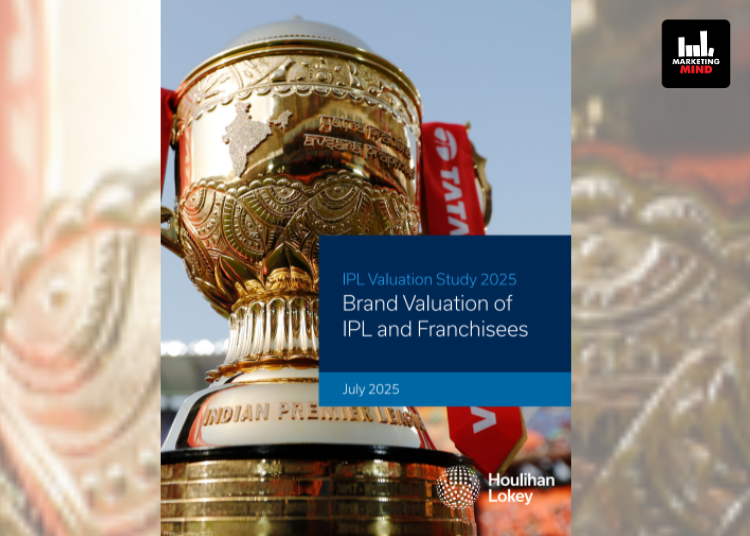
The Indian Premier League (IPL) has grown even bigger as a business, now valued at USD 18.5 billion, up 12.9% from last year. Its standalone brand value also rose by 13.8% to USD 3.9 billion.
Royal Challengers Bengaluru (RCB) has become the most valuable team in the IPL after winning their first-ever title this season. Their brand value rose to USD 269 million, up from USD 227 million last year, according to the 2025 IPL Brand Valuation Study by Houlihan Lokey.
Mumbai Indians took the second spot with USD 242 million, while Chennai Super Kings (CSK) dropped to third despite a small increase in value. Punjab Kings (PBKS) recorded the highest growth among all teams, with a 39.6% jump in brand value, followed by Lucknow Super Giants, which grew by 34%, the report added.
Highlighting the league’s increasing commercial strength, the BCCI earned ₹1,485 crore from associate sponsorships with My11Circle, Angel One, RuPay, and CEAT, a 25% increase over the previous cycle. In addition, the Tata Group renewed its title sponsorship with a ₹2,500 crore deal that runs through 2028.
The 2025 season also witnessed record-breaking viewership across digital and TV platforms. Over the opening weekend, JioHotstar garnered 1.37 billion views, 35% increase from last year with 340 million peak concurrent viewers and 21.86 billion minutes of watch time. On television, Star Sports drew 253 million unique viewers (up 14% YoY), contributing to a combined total of 49.56 billion minutes watched.
Capping off the season was a historic final featuring two teams chasing their first title. RCB’s victory over PBKS not only delivered a new champion but also set a new viewership record, with over 678 million views on JioHotstar, surpassing even the India-Pakistan showdown at the ICC Championship earlier this year.
“The IPL continues to set benchmarks in the sports business. Franchise valuations have soared, media rights deals have reached record highs, and brand partnerships have diversified across sectors. The league’s ability to attract global investors and sponsors reflects its status as a premier sports property with enduring appeal. In summary, the IPL represents a high-yield multi-asset class with diversified risks and a catalyst for cricket’s global transformation. By blending sport, entertainment, and commerce, it has redefined how cricket is consumed and commercialised. Its growth trajectory, led by OTT penetration, blend of youthful and diverse audiences, global awareness, and asset creation (IP deals, women’s league, new franchisees) is strong. As the sport continues to expand into new territories, the IPL’s blueprint will remain central to shaping the future of cricket on the world stage,” commented Harsh Talikoti, Director, Financial and Valuation Advisory at Houlihan Lokey.
“From day one, we saw IPL as more than a cricket league- it was a scalable business model with high visibility, secure revenue streams, and strong brand-building potential. It was a heady mix of sports and entertainment, which eventually had the potential to deliver huge audiences and revenues. We now operate with the mindset of a media-sport brand with multiple revenue verticals, not just a cricket team and that’s where real profitability lies. Over time, we have built a sustainable sports business- one that spans multiple leagues, drives platform-level content, attracts global brands, and creates IPs that outlast a season,” said Satish Menon, CEO of Punjab Kings.