

Marketing Mind
Newsletter
  • Home
  • Advertising
  • Marketing
  • Media
  • Business
  • What’s Buzzing
  • AdAura Awards
  • More
    • All
    • Case Studies
    • Celebrating Women Leaders
    • Guest Posts
    • Podcast and Video
    AI Didn't Change What Agencies Make, It Changed What They're For

    AI Didn’t Change What Agencies Make, It Changed What They’re For

    The Hunger To Keep Improving Is What Drives Me: Jitika Gupta

    The Hunger To Keep Improving Is What Drives Me: Jitika Gupta

    Campaigns Don't Build Brands, Customers Do

    Campaigns Don’t Build Brands, Customers Do

    How AI Agents Are Helping Brands Run Hyper-Local Campaigns At Scale

    How AI Agents Are Helping Brands Run Hyper-Local Campaigns At Scale

    Confidence Is Something You Build By Doing Things That Scare You: Priyanka Arora On Embracing Uncertainty

    Confidence Is Something You Build By Doing Things That Scare You: Priyanka Arora On Embracing Uncertainty

    Why Global Pop Culture Is The New Local Marketing

    Why Global Pop Culture Is The New Local Marketing

No Result
View All Result
  • Home
  • Advertising
  • Marketing
  • Media
  • Business
  • What’s Buzzing
  • AdAura Awards
  • More
    • All
    • Case Studies
    • Celebrating Women Leaders
    • Guest Posts
    • Podcast and Video
    AI Didn't Change What Agencies Make, It Changed What They're For

    AI Didn’t Change What Agencies Make, It Changed What They’re For

    The Hunger To Keep Improving Is What Drives Me: Jitika Gupta

    The Hunger To Keep Improving Is What Drives Me: Jitika Gupta

    Campaigns Don't Build Brands, Customers Do

    Campaigns Don’t Build Brands, Customers Do

    How AI Agents Are Helping Brands Run Hyper-Local Campaigns At Scale

    How AI Agents Are Helping Brands Run Hyper-Local Campaigns At Scale

    Confidence Is Something You Build By Doing Things That Scare You: Priyanka Arora On Embracing Uncertainty

    Confidence Is Something You Build By Doing Things That Scare You: Priyanka Arora On Embracing Uncertainty

    Why Global Pop Culture Is The New Local Marketing

    Why Global Pop Culture Is The New Local Marketing

No Result
View All Result
Marketing Mind
No Result
View All Result
Home What’s Buzzing

With Rise Of Neo-Creators, The Roles Of Content Makers & Consumers Are Merging: Consumed

MM Desk by MM Desk
October 24, 2024
in What’s Buzzing
A A
With Rise Of Neo-Creators, The Roles Of Content Makers & Consumers Are Merging: Consumed

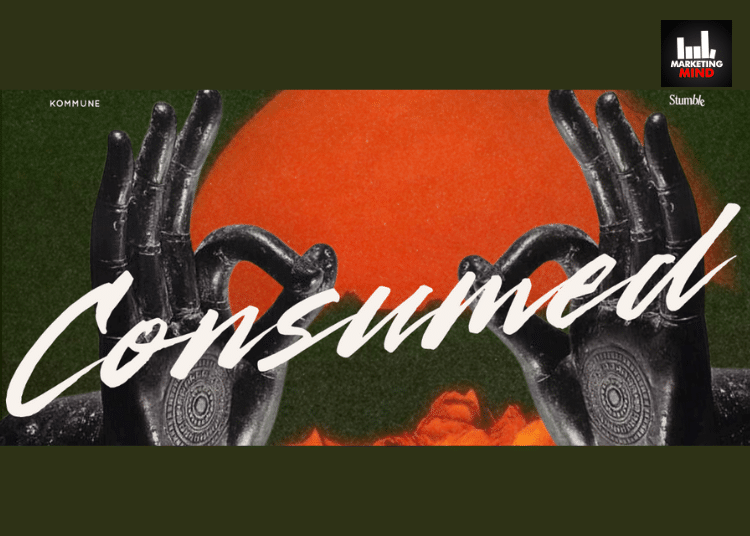
The rise of neo-creators blurs the line between content makers and consumers, this fosters parasocial relationships with their audience, as per “Consumed: A Deep Dive Into Consumer Culture In India”.

Kommune has partnered with its insights vertical, Stumble, to release its first culture report. This playbook explores both online and offline consumer culture and behaviour in India.

As per the company, the report offers tangible and actionable takeaways for brands and creators, using relevant case studies to support their analyses.

The insights are gleaned from research reports and insights from over 100 experts across 17 sectors like media, music, cinema, literature, and entrepreneurship- including artists, marketers, strategists, creators, and entrepreneurs, each of whom brings a distinct voice. The experts who have contributed to the report include Tanmay Bhat, Viraj Seth, Smriti Kiran, Amit Varma, Roshan Abbas, Mandovi Menon, Reema Maya, and more.

This report underscores the idea of culture as a living, evolving entity- not a fixed business metric or absolute truth. It aims to help brands, students, collectives, academics, organisations, and pretty much all of us understand and navigate cultural trends shaping our present and future.

It dives into five ‘Mega Trends’, each a powerful cultural wave shaping India’s content and consumption landscape. These Waves are composed of ‘Ripples’- micro trends that explain how these forces uniquely operate and create opportunities. Lurking beneath are ‘Undercurrents’, warning signs, and nascent forces that savvy individuals and businesses should note.

These trends offer a roadmap for planners, brands, creators, and agencies to navigate the complexities of the Indian consumer market in 2025. By understanding these forces, marketers can develop more targeted and impactful campaigns that resonate with the evolving needs and desires of Indian audiences.

Additionally, with lines blurring between creators and consumers, we witness the rise of a burgeoning new class- the Neo-Creator. This helps drive democratic content creation, fostering creative careers, redefining social capital, and opening up new opportunities for brands through the creator economy.

The report has created pathways for innovation by combining primary research methodologies with meticulous study of the success stories of brands like Duolingo, Try Guys, Reliance Jio, Mokobara, Ather Energy, and Beco spanning across 17 sectors.

Culture on Speed-Dial: Key Trends Shaping India’s Consumer Landscape- The five ‘Mega Trends’ identified in the report include-

  1. Default Mode: Online: One day, we logged in to the internet, and we never left. This section captures the omnipresence of our online engagement, transforming consumers into voracious content consumers. It offers insight into how creators and brands must align their voices, identities, and offerings to foster genuine connections.
  2. India + Bharat: This trend emphasises the diversity within India, advocating for brands to adopt hyperlocal strategies that resonate with specific regional identities.
  3. Compulsive Convenience vs. Conscious Consumption: Here, the report explores the tension between the desire for instant gratification and a growing interest in mindful, intentional purchasing behaviours.
  4. Worlds of One: This trend reflects how individuals are curating personal experiences and seeking community and belonging while grappling with feelings of isolation.
  5. Humans Rewired: This trend examines how technology’s integration into daily life is reshaping human interactions and societal structures, raising critical questions about our digital future.

Takeaways to how are India’s creators and consumers merging, diverging, and reinventing culture:

  1. As discussed above, the rise of neo-creators blurs the line between content makers and consumers.
  2. As on-demand content and digital streaming are on the rise, consumers are seeking curated content while dealing with FOMO on what’s beyond.
  3. There is an uptick in people wanting to unplug, seeking IRL extensions of their URL personas, giving rise to phygital communities like Cubbon Reads, Zomato’s District, and Nike Run Club.
  4. The Indian diaspora is growing. It’s important to find ways to stay connected, and hence, how we represent ourselves online is becoming a crucial part of our identity.
  5. ⁠People are seeking offline experiences to escape screen fatigue. While the idea of “buying experiences, not things” was popular, we often treat experiences as disposable objects; in fact, we hardly see things and experiences as different at all.
  6. The digital divide is widening. This creates a two-tiered world- those who are digitally connected and those who are not. India is a stark example of this divide.
  7. ⁠People are increasingly using credit to buy things they can’t afford, leading to a debt crisis. While financial literacy is improving, the credit boom is a major concern.
  8. Social media has changed our friendships, where we now microdose our friendships through soft check-ins and passive interactions- such as sending memes to each other and reacting to them without actually having a conscious interaction.

Speaking about the report, Roshan Abbas, Founder, Kommune India, said, “At Stumble, we’re cultural soothsayers decoding today’s technicolour chaos. As we went through reports and gathered opinions, we peeked into our crystal ball of post-pandemic trends, speaking to experts with surprising insights and tomorrow’s zeitgeist of our times. The output both surprised us and helped us make sense of our whirlwind present and glimpse the future that’s already here.”

Click here to access the full report.
Related Posts

Excitel Broadband Reappoints Aditya Jain As Chief Marketing Officer
Marketing

Excitel Broadband Reappoints Aditya Jain As Chief Marketing Officer

by MM Desk
July 22, 2026

Excitel Broadband has announced the return of Aditya Jain as its Chief Marketing Officer (CMO), effective July 2026. Having previously...

Spain Wins The FIFA World Cup, Brands Win The Marketing Moment
What’s Buzzing

Spain Wins The FIFA World Cup, Brands Win The Marketing Moment

by MM Desk
July 20, 2026

Spain's FIFA World Cup 2026 triumph has spilled far beyond the football pitch, quickly becoming a cultural moment that brands...

Latest

Every marketer talks about building awareness, few have to build it without talking about the product. India's alcobev industry has spent decades navigating that paradox. Direct product advertising isn't permitted, making surrogate advertising only one part of the marketing equation. The bigger challenge has always been earning something no media budget can buy: consumers who become advocates for the brand. For Debasree Dasgupta, Chief Marketing Officer, Pernod Ricard India, that's the category's biggest truth. “Consumers will always be your biggest advertisers,” she said. It's a philosophy born out of necessity. But it has also shaped how alcobev brands think about marketing itself. “The principles of marketing are the same whether it's personal care, beauty or alcobev. What changes is the complexity.” That complexity, according to Dasgupta, isn't just about navigating regulations. It's about understanding consumers, managing a diverse portfolio, and ensuring brands continue to grow despite having fewer traditional marketing levers than almost any other consumer category. India remains one of the world's most tightly regulated alcohol markets, where brands have to navigate different state regulations, on-trade and off-trade ecosystems, and restrictions on advertising products directly. For marketers, that has meant learning an entirely different language of brand building. Marketing hasn't changed, The rulebook has Dasgupta's own career has prepared her for exactly that. Rather than following a straight path, she has moved across FMCG, health and hygiene, beverages and now alcobev, picking up different lessons along the way. “I think the beauty is that I didn't have a linear career path, and I think it was very deliberate and intentional.” Each company, she said, has added a different layer to her understanding of marketing. “Unilever taught me to be extremely consumer-centric and always keep the consumer at the heart. Reckitt taught me commercial discipline, that marketing needs to lead to commercial and business growth. PepsiCo was about how brands stay relevant in culture.” Bringing those experiences together at Pernod Ricard has reinforced one belief. “The principles of marketing remain the same.” The environment, however, certainly doesn't. While referring to India as one of the markets where alcohol advertising is prohibited, she said, “The regulatory landscape is quite complex. That's the piece that one needs to wrap their minds around as you navigate and ensure that you're able to drive business growth.” That complexity extends well beyond regulation. “At a portfolio level, it's important for us to understand what is delivering the present and what will deliver tomorrow,” she said. “Where is growth coming from today, and where will growth come from in the future?” When consumers become the media channel Perhaps the biggest difference between alcobev and traditional consumer goods lies in how brands create awareness. Unlike an FMCG company, Pernod Ricard cannot advertise its alcohol products directly. “So the disadvantage that we have versus CPG is we cannot advertise products,” Dasgupta said. “We are in compliance with the guidelines that exist today.” Instead, the company builds visibility through compliant brand extensions such as packaged drinking water, while investing in passion points like cricket, music and digital platforms. “For us, the brand extension is a compliant business in itself and we can advertise that. We continue to double down on social, digital and influencer marketing for those businesses.” Furthermore, Dasgupta went on to say, “What we rely on is on-premise advocacy. We rely on sampling. We ensure that our liquids are extremely high quality so that when the moment of truth happens, consumers really love the product.” That has also meant new launches take longer to build. “Awareness build-up is much slower because consumers discover the product at the point of sale. That's very different from an FMCG brand.” Which naturally raises another question: if brands can't advertise products, who does the selling? “The consumers will always be your biggest advertisers,” Dasgupta said. “If you walk into an outlet and see someone drinking, it gives you confidence in the brand.” Word of mouth, she believes, becomes one of the category's most powerful marketing channels. “In a category where you can't advertise the product, consumers become your champions.” That consumer-first philosophy also shapes how global brands are adapted for India. For marketers outside the alcobev industry, the constraints may seem daunting. For Dasgupta, they've simply reinforced a timeless lesson. When the product can't do the talking, the brand, and ultimately the consumer, has to.

Consumers Are Our Biggest Advertisers: Pernod Ricard India’s Debasree Dasgupta On Surrogate Advertising

July 22, 2026
ANHAD Group Appoints Adil Altaf As CEO To Lead Real Estate Vertical

ANHAD Group Appoints Adil Altaf As CEO To Lead Real Estate Vertical

July 22, 2026
I&B Ministry Launches 'Gems Of India' Challenge To Spotlight Grassroots Digital Creators

I&B Ministry Launches ‘Gems Of India’ Challenge To Spotlight Grassroots Digital Creators

July 22, 2026
RVCJ Media Ranks Among India’s Top Social Brands In Comscore Weekly Scorecard

RVCJ Media Ranks Among India’s Top Social Brands In Comscore Weekly Scorecard

July 22, 2026
iCubesWire Launches iQ Conversational AI Platform For Creator Marketing Intelligence

iCubesWire Launches iQ Conversational AI Platform For Creator Marketing Intelligence

July 22, 2026
Aisle Elevates Chandni Gaglani As Executive Vice President & Head To Drive AI-Led Growth

Aisle Elevates Chandni Gaglani As Executive Vice President & Head To Drive AI-Led Growth

July 22, 2026
Facebook X-twitter Instagram Youtube Linkedin
Discover the latest trends in Marketing, Advertising, Startups & Media.​
  • About Us
  • Millennial Achievers
  • Contact Us
  • Privacy Policy
  • Become a Guest Contributor
  • About Us
  • Millennial Achievers
  • Contact Us
  • Privacy Policy
  • Become a Guest Contributor

To Advertise & Collaborate With Marketing Mind, Contact Us Here.

Subscribe to our newsletter for exclusive content.

By continuing you agree to our Privacy Policy & Terms & Conditions


©2026 All rights reserved. Digi Giant LLP

To Advertise & Collaborate With Marketing Mind, Contact Us Here.

Subscribe to our newsletter for exclusive content.

  • About Us
  • Contact Us
  • Become a Guest Contributor
  • Terms & Conditions
  • Privacy Policy
Facebook X-twitter Instagram Youtube Linkedin

©2024 Copyright. RVCJ Digital Media Pvt Ltd

Welcome Back!

Login to your account below

Forgotten Password? Sign Up

Create New Account!

Fill the forms bellow to register

All fields are required. Log In

Retrieve your password

Please enter your username or email address to reset your password.

Log In
No Result
View All Result
  • Home
  • Advertising
  • Marketing
  • Media
  • Business
  • What’s Buzzing
  • AdAura Awards
  • More

© 2026 All rights reserved. Digi Giant LLP

This website uses cookies. By continuing to use this website you are giving consent to cookies being used. Visit our Privacy and Cookie Policy.