






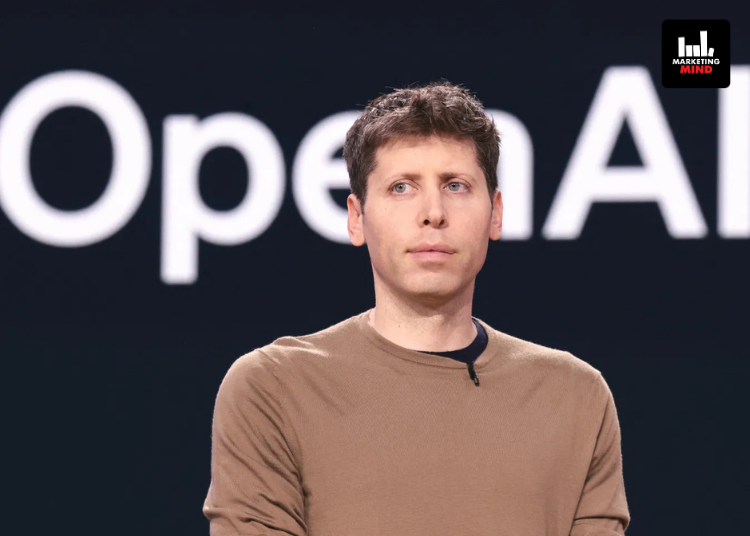
OpenAI has been laying the groundwork for a potential initial public offering that could rank among the largest ever, but chief executive officer Sam Altman has said he is not enthusiastic about running a public company. He has indicated that while he sees some merit in OpenAI going public, the role itself does not appeal to him.
Sam Altman said it on a podcast with Alex Kantrowitz, where he has discussed his views amid growing speculation around OpenAI’s listing plans. OpenAI has not confirmed a timeline for an IPO, but recent reports have suggested that preparations have been underway.
“Am I excited to be a public company CEO? 0%,” Altman said in an episode of the “Big Technology Podcast” published on Thursday. “Am I excited for OpenAI to be a public company? In some ways, I am, and in some ways I think it’d be really annoying.”
OpenAI has been reported to be in early discussions around an IPO, with The Wall Street Journal putting preliminary valuation talks at around $830 billion. Reuters has earlier reported that the company could be valued at as much as $1 trillion, citing sources familiar with the matter, and that chief financial officer Sarah Friar has been eyeing a 2027 listing, with a possible filing in late 2026.
Altman has said he does not know whether OpenAI will go public next year and has declined to share details on fundraising or valuation. OpenAI has not responded to media queries on the matter.
Despite his reservations, Altman has acknowledged potential advantages to an IPO, particularly access to public capital markets. “I do think it’s cool that public markets get to participate in value creation,” he said. “And in some sense, we will be very late to go public if you look at any previous company. It’s wonderful to be a private company. We need lots of capital. We’re going to cross all of the shareholder limits and stuff at some point.”
An IPO has been seen as a way for OpenAI to raise the significant capital required to compete in the artificial intelligence race. Founded as a nonprofit in 2015, the company has completed a major restructuring in October, converting into a more traditional for-profit structure. The move has given the nonprofit entity controlling OpenAI a $130 billion stake, reduced Microsoft’s holding to 27%, expanded Microsoft’s research access, and enabled OpenAI to pursue partnerships with other cloud providers.
OpenAI has also been intensifying its competitive posture. Earlier this month, Altman has declared a “code red” internally following strong momentum around rival AI models, including Google’s Gemini 3. The directive has focused the company’s resources on accelerating core AI development while temporarily pausing initiatives such as advertising and e-commerce.
That push has coincided with the launch of OpenAI’s GPT-5.2 model last week and a new image-generation model released earlier this week. Fidji Simo, OpenAI’s CEO of applications, has said the launch was not a direct response to Google’s Gemini 3, though the additional resources allocated during the code red helped speed up the rollout.
Altman has suggested that such high-intensity periods will continue as competition in AI intensifies. “I think that it’s good to be paranoid and act quickly when a potential competitive threat emerges,” he said. “This happened to us in the past. That happened earlier this year with DeepSeek. And there was a code red back then, too.”
Looking ahead, Altman has said similar efforts are likely to recur. “My guess is we’ll be doing these once, maybe twice a year, for a long time, and that’s part of really just making sure that we win in our space,” he said. “A lot of other companies will do great too, and I’m happy for them.”